
Ashtray Catalogue
[Link to Ashtray Page] [Link to Ashtrays the Wright Way! by Scott Vermillion]
How Ashtray became a dining story
Margaret Carney, Ph.D., curator
Introduction
Everyone has a story about ashtrays. Everyone. This exhibition tells a story that begins with the intersection of dining and smoking at the table. Part of the narrative is historical and part is a personal journey. Just like many dining experiences, it is a shared journey with memories to savor and laugh about, and lessons to be learned. Beyond the beautiful designs of many ashtrays there are appalling and devastating tragedies that link us all together. Come for the dishes; stay for the ashtrays. Leave with the knowledge that the conversation about dining and ashtrays will be ongoing and spirited.
How Ashtray became a dining story
Much like others, many memories from my childhood revolve around the dining room table. If we weren’t always gathered together for breakfast or lunch, we always came together as a family at dinnertime. And with the same certainty, there were always ashtrays in use at both ends of the dining table during and after the meal. Dozens of ashtrays were in their places in the kitchen, living room, bedrooms, and bathrooms. Ashtrays in the form of sculptural ceramic, glass, metal, bean bag fabric, and lots of plastic. The curtains and paint on the wall, originally a cheery grey, turned brownish. But I digress.
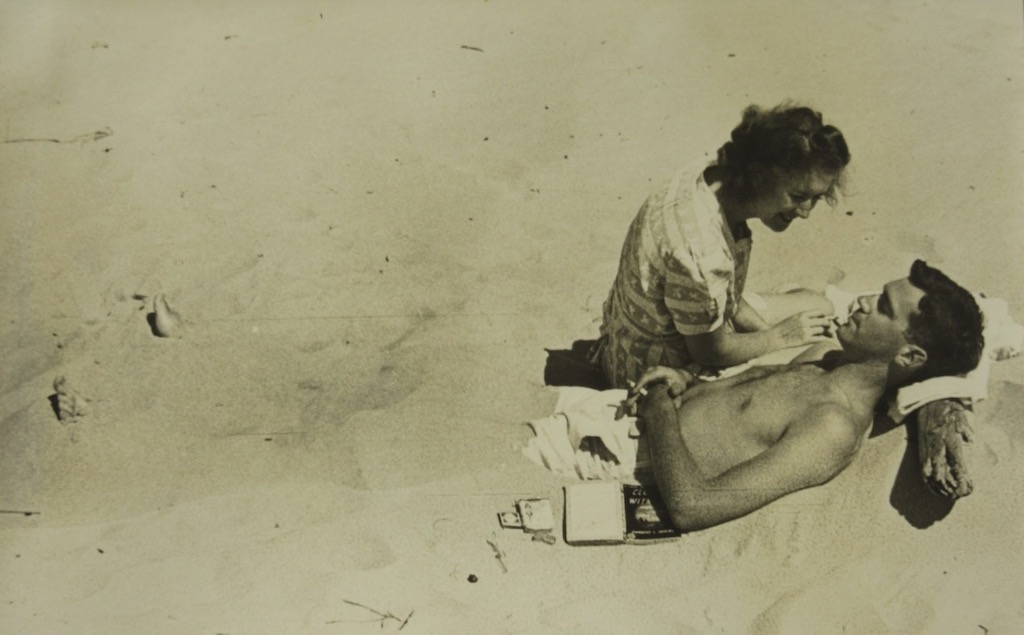
Everyone smoked in the 1950s. My father, a physician, smoked at home and at the hospital and clinic where he saw patients and taught. My mom smoked at her desk in our home where she conducted the business of running a family of six. They both smoked in the car. A photo taken in the 1930s on the shores of Lake Michigan in Ludington, Michigan captured them smoking on the beach. The beach must have served as their giant ashtray. They both died of smoking related diseases.
We emptied the ashtrays into the silent butler, a wooden device with a metal insert and hinged lid with a pheasant motif. We washed the stacks of metal and plastic ashtrays that smelled foul at all times. We washed the brown stains off the windows, and periodically the walls were repainted gray and the curtains dry cleaned. I thought everyone lived like this. It wasn’t until I got my own apartment that I realized that I didn’t get brown film on my windows. I didn’t smoke (at that time).
When the Dinnerware Museum was established in 2012, there was no hesitation on my part as curator to collect ashtrays for the IMoDD permanent collection as part of the overall dining experience. Afterall, ashtrays were commonplace by the late Victorian era. More recently, contemporary artists and the leading designers for industry had been designing beautiful and functional ashtrays during the 1930s and throughout the 1950s-1960s-1970s. Many popular sets of manufactured dinnerware had ashtrays that matched the shapes and patterns of the plates, bowls, and serving pieces. The ashtray was a part of dinnerware sets available worldwide especially during the mid-20th century.
The idea for Ashtray as an exhibition did not begin with any personal intent to champion anti-smoking. However, in 2026 as Ashtray opens as an exhibition at the International Museum of Dinnerware Design, it will be the 50th anniversary of my father, Dr. Robert G. Carney, dying of metastatic lung cancer. I don’t believe in coincidences, even though the topic and exhibition opening were not pre-determined by this knowledge.
Ashtray is not an all-inclusive exhibition. It is a collection of stories, with a selection of ashtrays and smoking-adjacent memorabilia. The exhibition is not intending to include the complete history of tobacco use, smoking, nor is it a comprehensive encyclopedic look at the world of ashtrays, tobacianna, cigars and pipes, cigarette lighters, etc. It is simply capturing dining memories filtered through personal experience, a veil of second-hand smoke exposure, and resulting stories. Additional resources concerning various aspects of the topic will be suggested throughout the exhibition and online catalogue.
While there are many articles and books devoted to the history and study of ashtrays, a good online introductory essay is “Ashes to Ashtrays,” by Neil A. Grauer from Vince McMahon Nov/Dec 99 the website publication Cigar Aficionado (https://www.cigaraficionado.com/article/ashes-to-ashtrays-1497)
The “missing link” intersection between smoking and dining
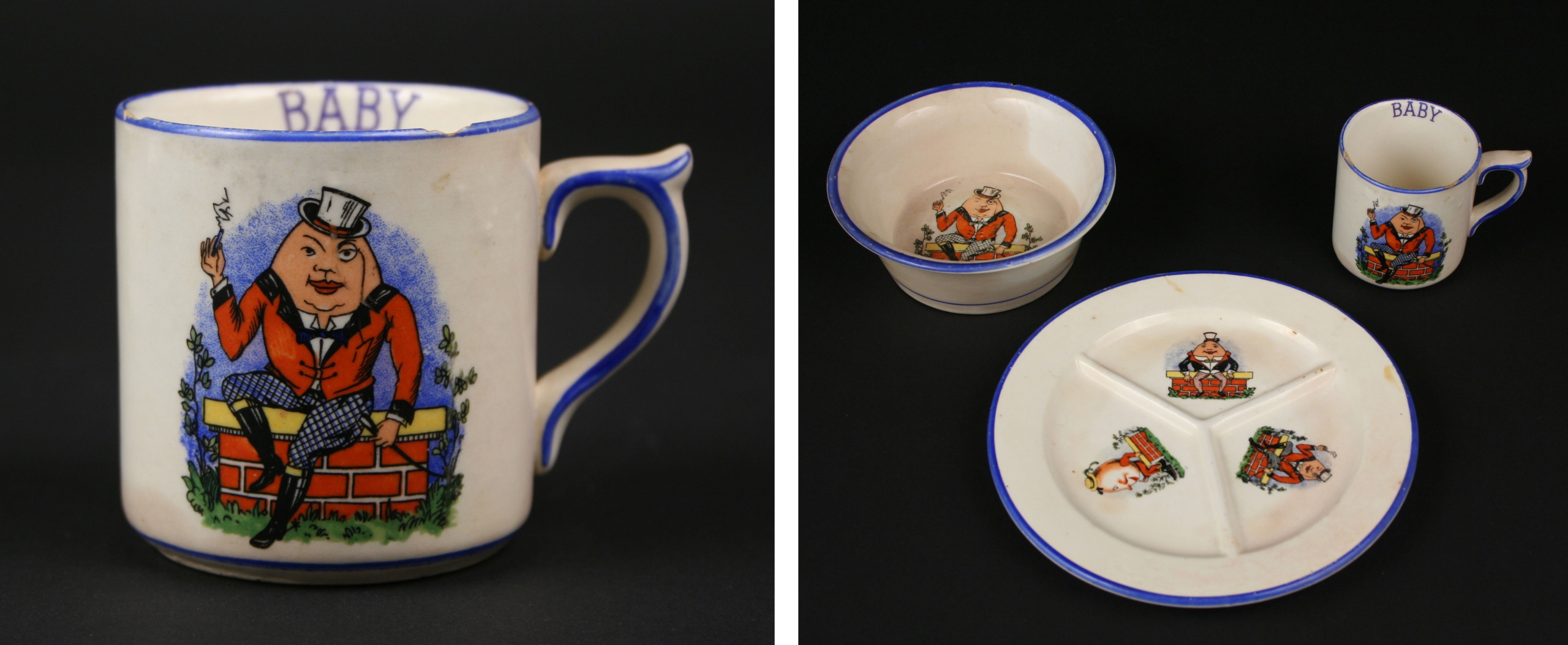
Perhaps my favorite smoking and dining related objects (and soon to be yours!?) selected for this exhibition is the 1920s-1930s era 3-piece ceramic baby dish set manufactured in Czechoslovakia. The pieces (IMoDD 2014.101) are top-marked “Baby” and yet the central image on the baby cup, and one of three distinct images included on the bowl and divided dish, is that of a natty Humpty Dumpty. He is seen fashionably dressed in a vivid red waistcoat, wearing fishnet stockings, holding a riding crop in one hand, and SMOKING a cigarette in the other! The jagged smoke emanating from the cigarette asks the viewer to read some message in the smoke signal. Many popular children’s nursery rhymes are associated, true or not, with a darker historic story. For instance, “Ring Around the Rosie” has been interpreted as being about the Great Plague of London in 1665. Similarly, “Humpty Dumpty,” which on the surface refers to a downfall that cannot be undone, has been interpreted as referring to England’s Richard III. It is a fabulous rabbit hole to trace the historic facts and match them with such nursery rhymes. This is truly the exact intersection of dining and smoking, not seen before or since, especially in terms of baby dishes.
How ashtrays may have been historically employed in the home
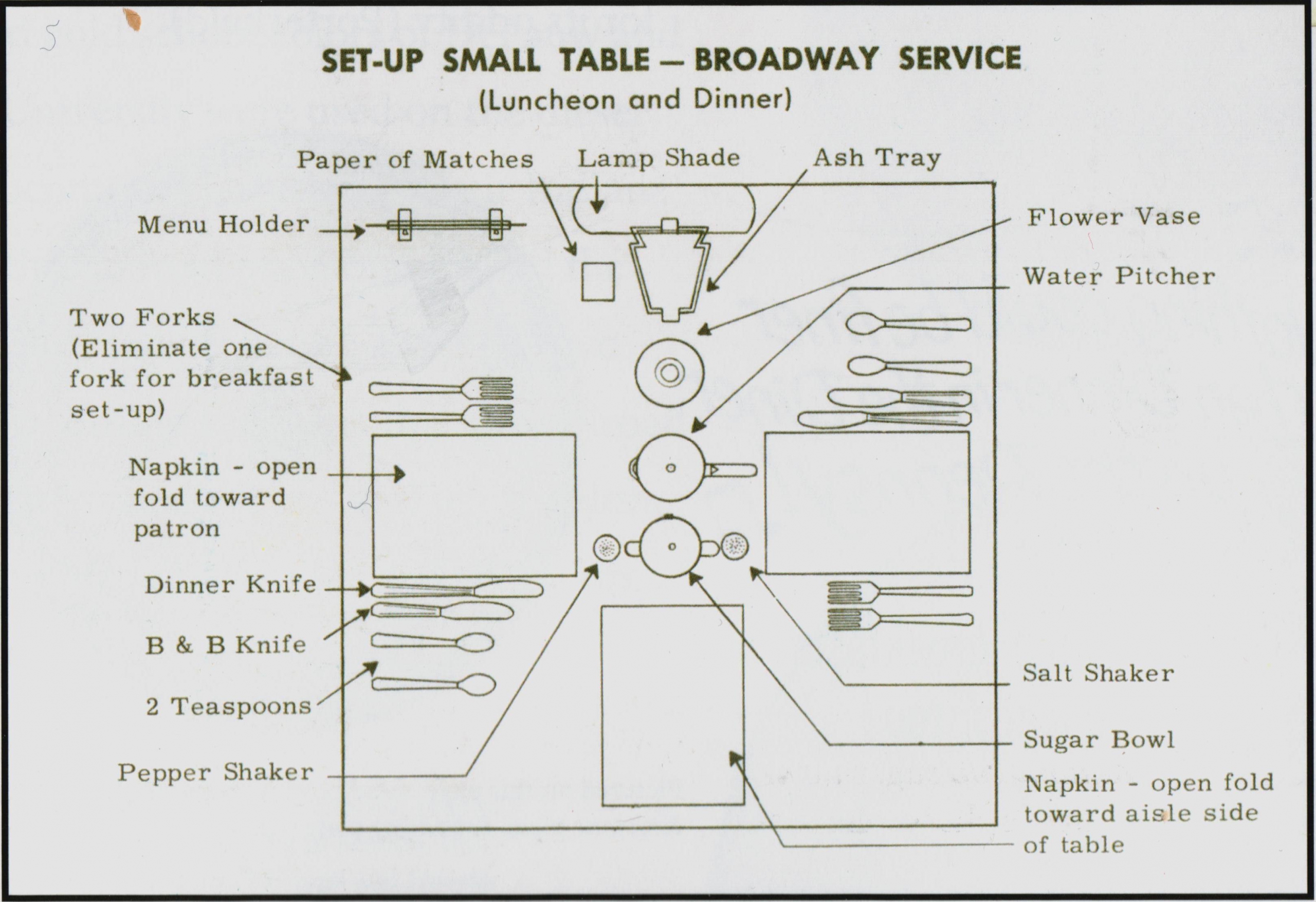
This exhibition explores the place and placement of ashtrays in the home, with a focus on the dining experience and the dining table. It double-checks what the etiquette mavens were dictating and what the actual practice was. Smoking has never actually been encouraged at the dining table during a meal. Even if ashtrays were placed on the table, virtually no one thought men or women should be smoking until after the meal. At one time in history the women might be separated from the men during smoking rituals after a meal, but in more recent times, due to health concerns, no one is encouraged to smoke at the table or even in indoor settings. Nonetheless, ashtrays were designed for the table and people smoked at the table and that is well-documented.
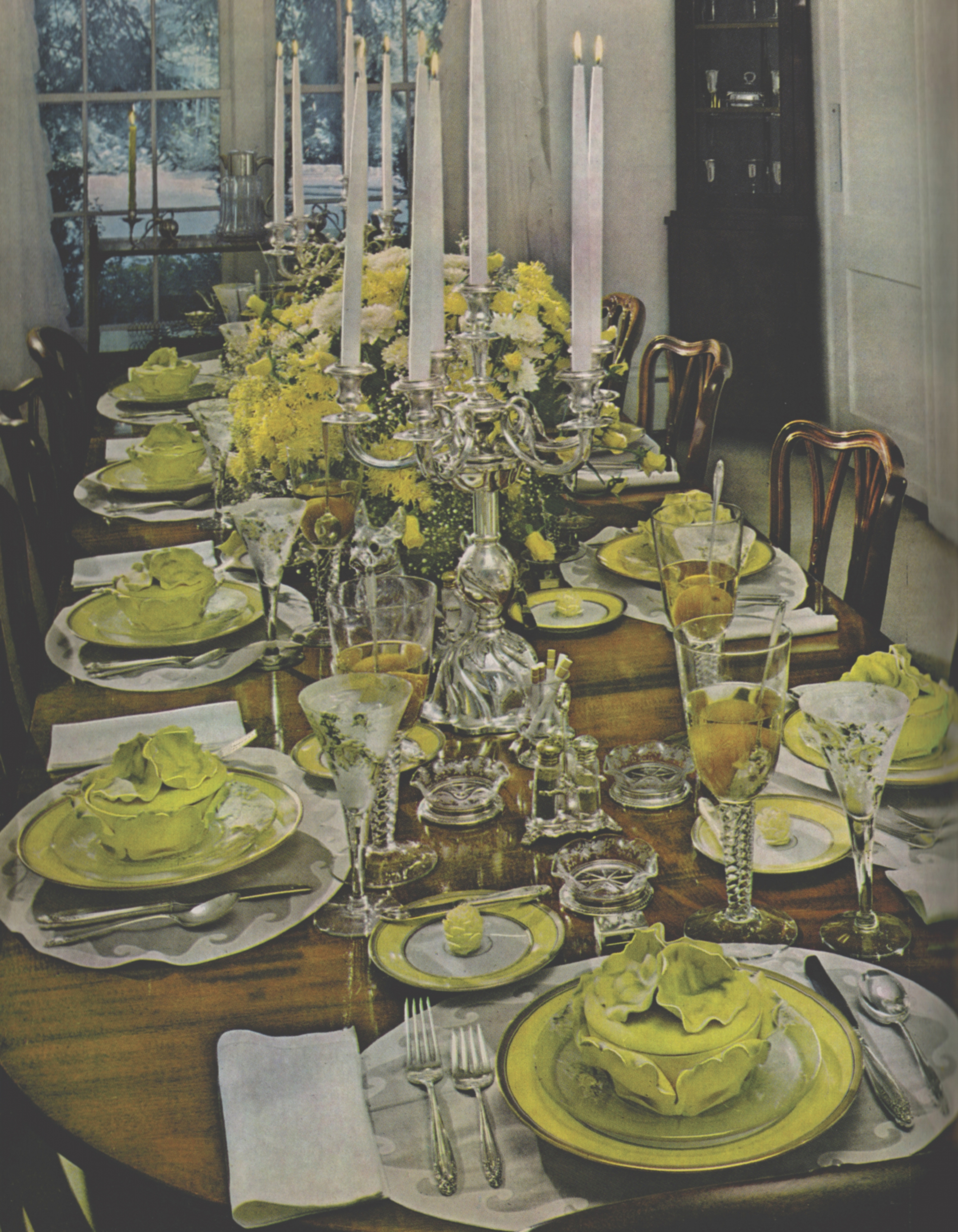
Everyone thinks of Emily Post and Amy Vanderbilt when it comes to etiquette, but there were other influential guides back in the mid-20th century. One was the American Hostess Library’s Book of Etiquette, 1956, which provided guidance about the hot topics of chewing gum, drinking, smoking, dieting, and borrowing and lending. The advice suggested that these were “all perfectly acceptable as long as their practice does not become an imposition on other people.” The book further recommends, on page 63, that while non-smokers were in the minority at that time, that it provides a helpful list of places where one should NOT smoke, including “when dancing, in church, in crowded elevators…”
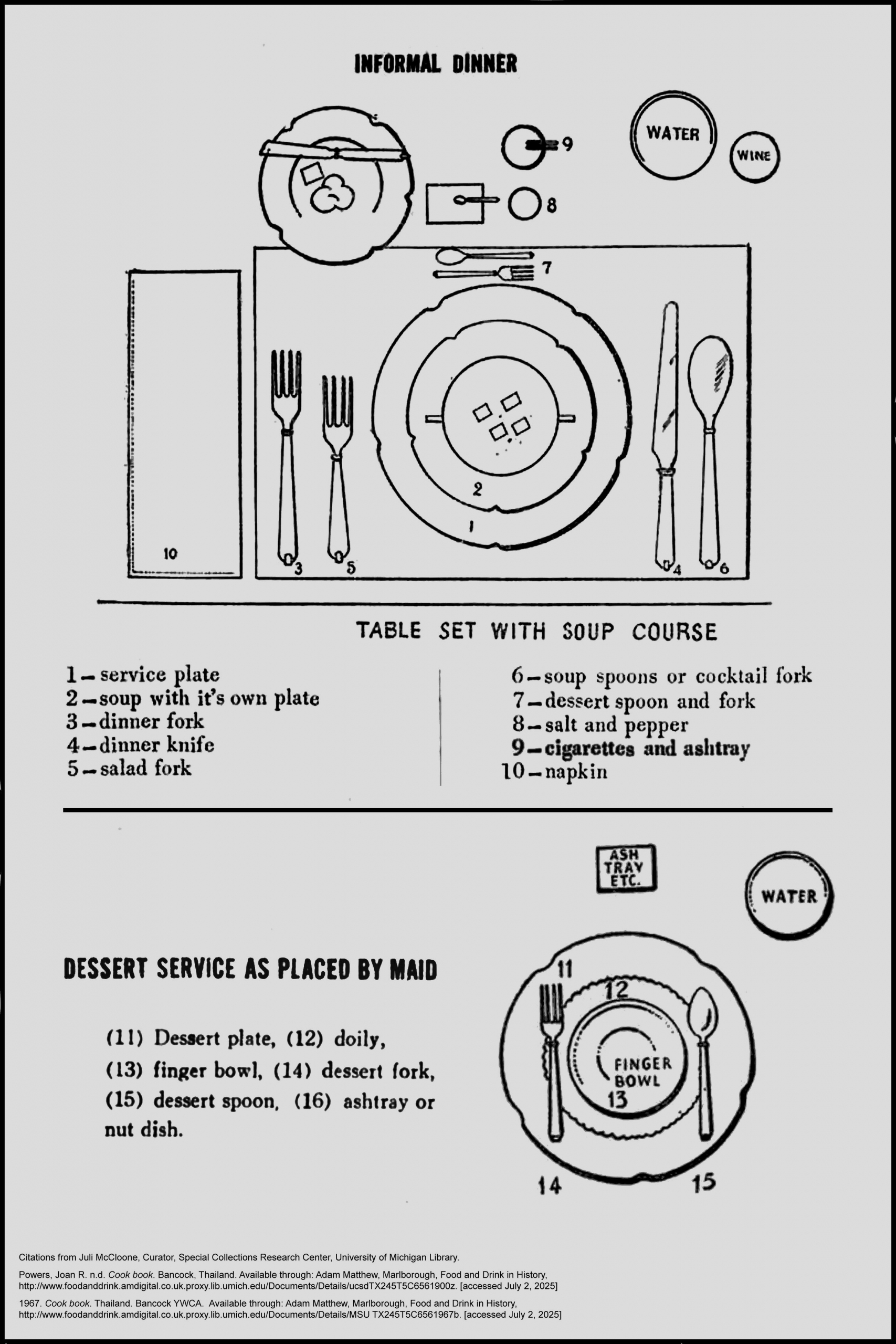
A search for table setting diagrams that included smoking paraphernalia led to queries at the University of Michigan Janice Bluestein Longone Culinary Archives and curator Juli McLoone, which turned up a Y.W.C.A. cookbook published in 1967 in Thailand. The cuisine is Thai. The book was intended to guide the maid as to how the table would be set with the ashtray and cigarettes above the place setting. Additionally, there are lovely and helpful illustrated books and magazine advertisements which include images of the placements of cigarettes in little cups with nearby ashtrays, but very few actual table setting linear diagrams which include the desired placement of these objects.
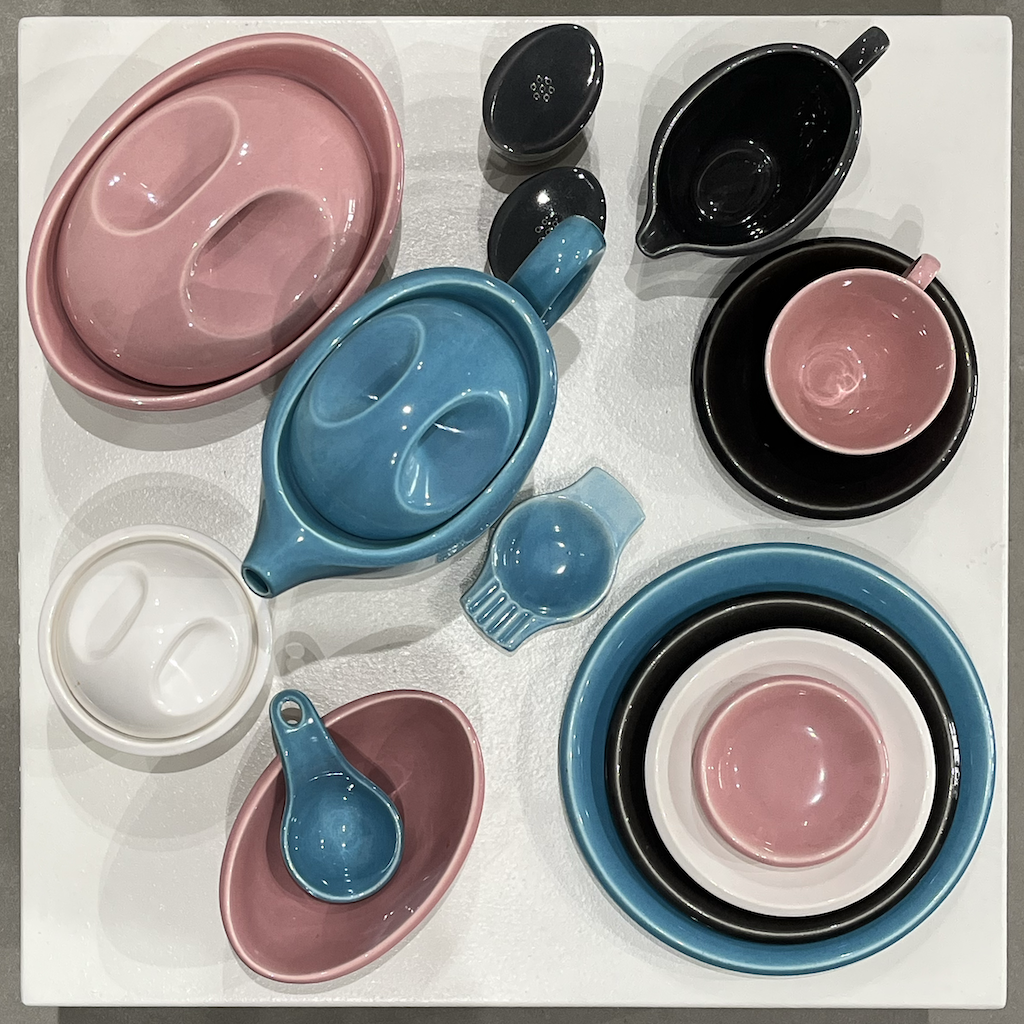
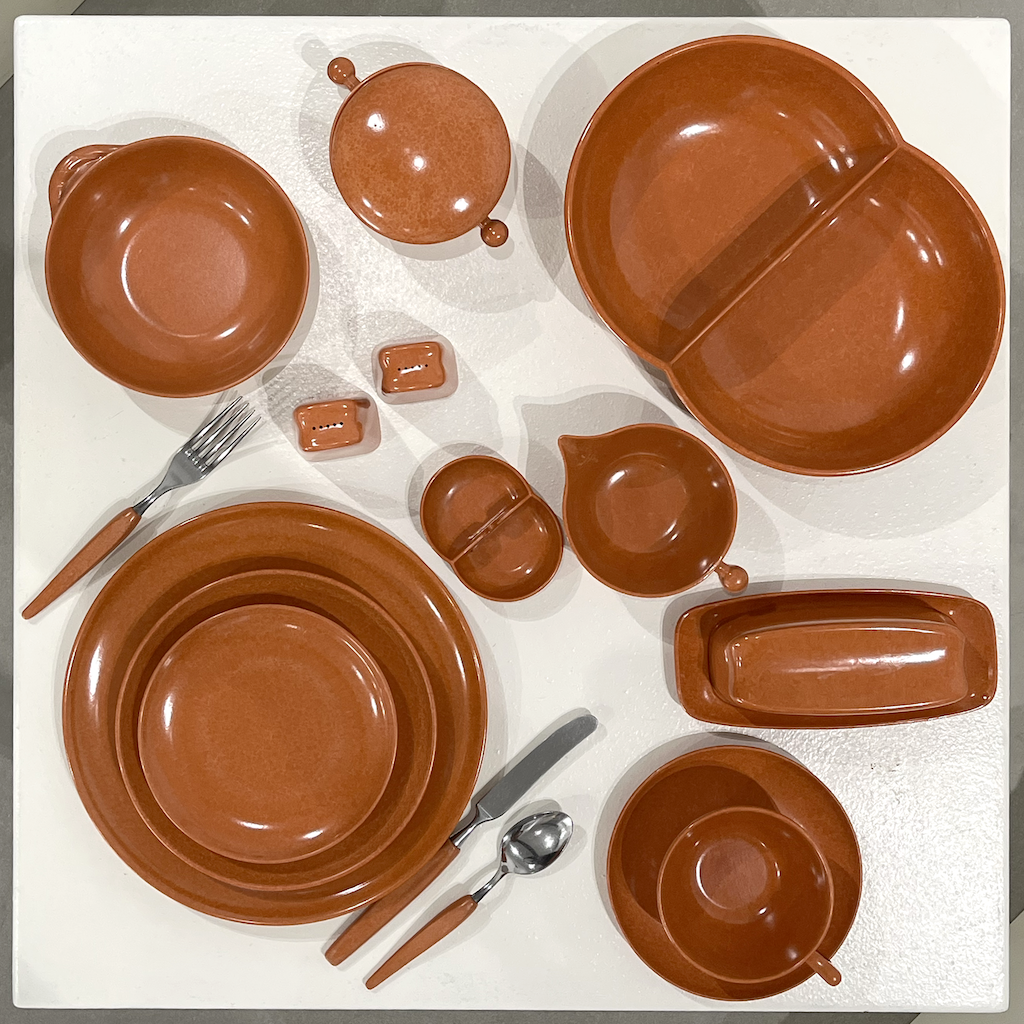
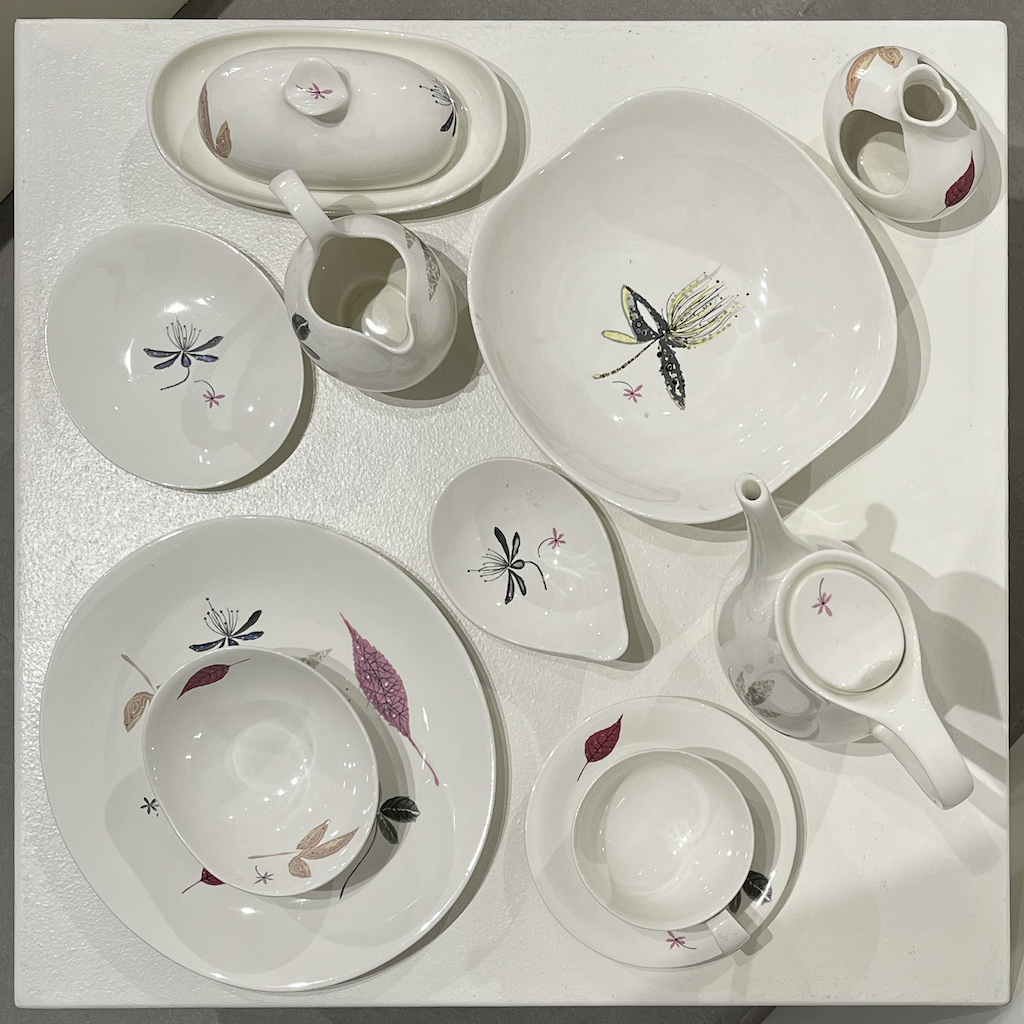
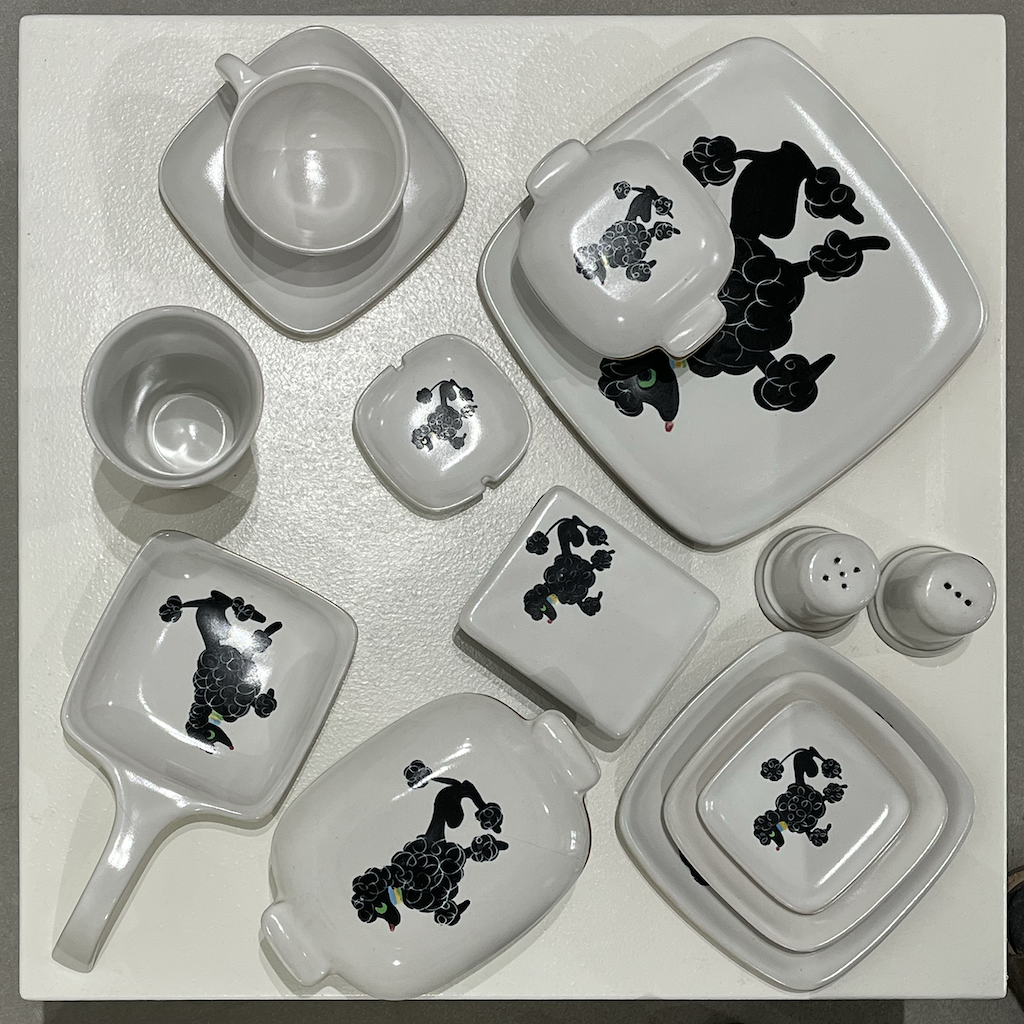
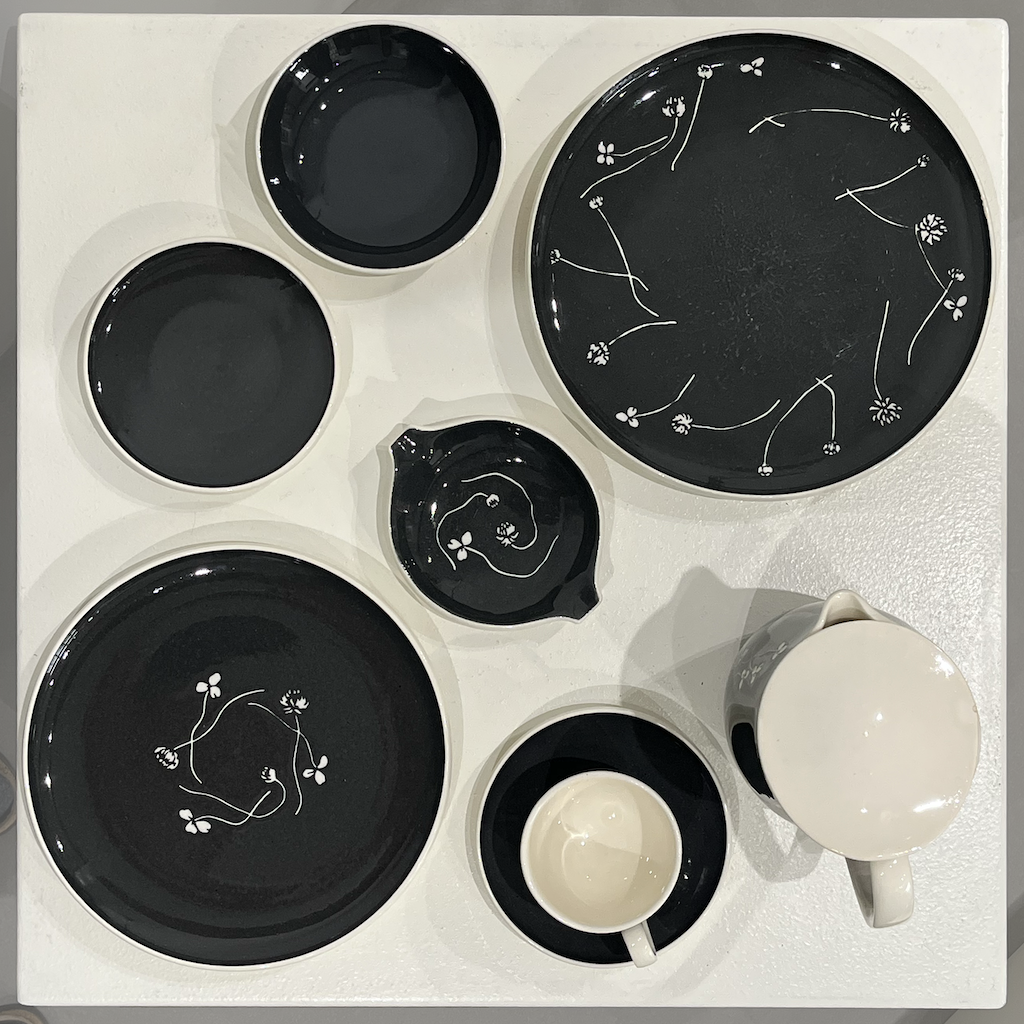
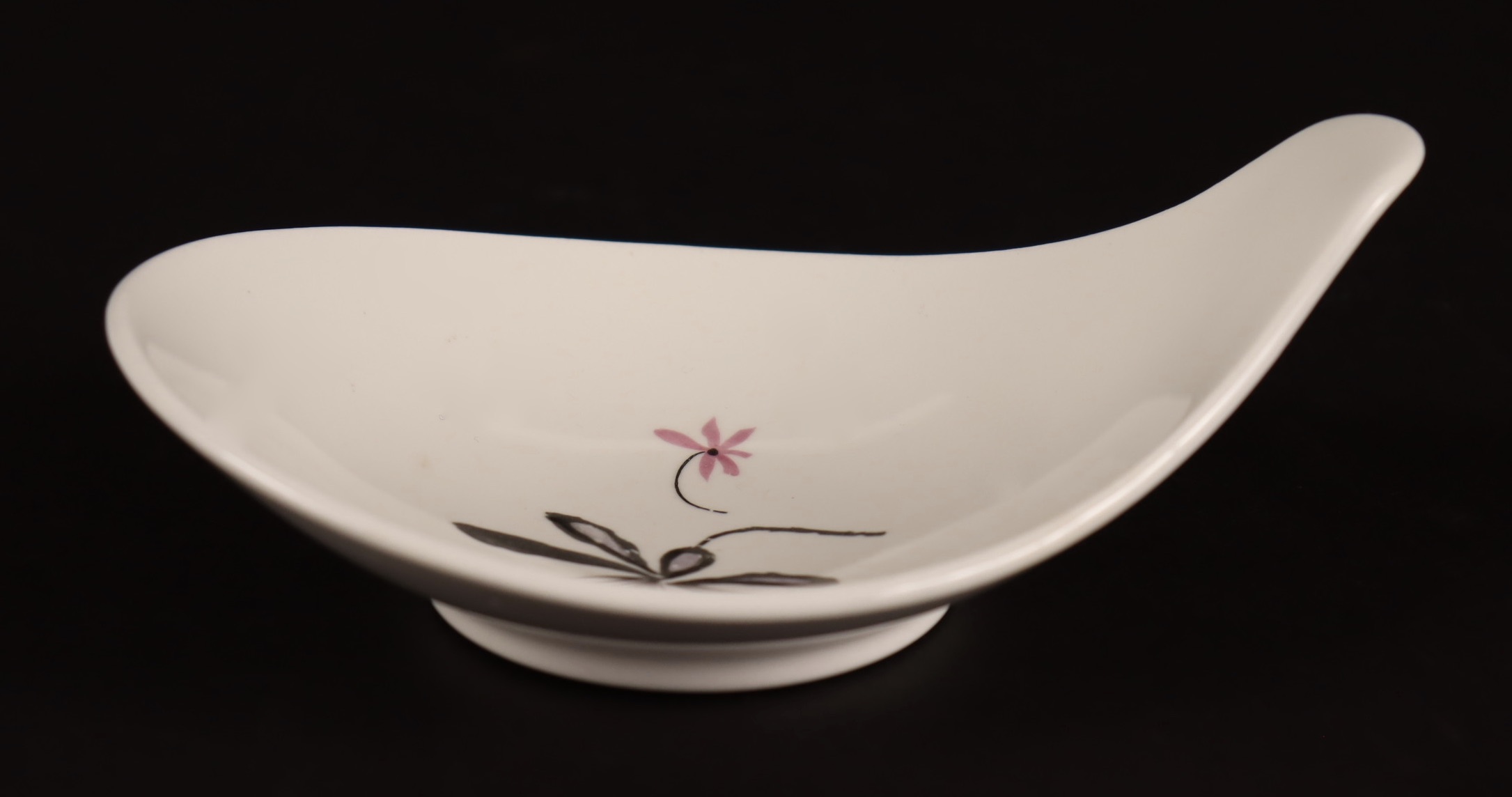
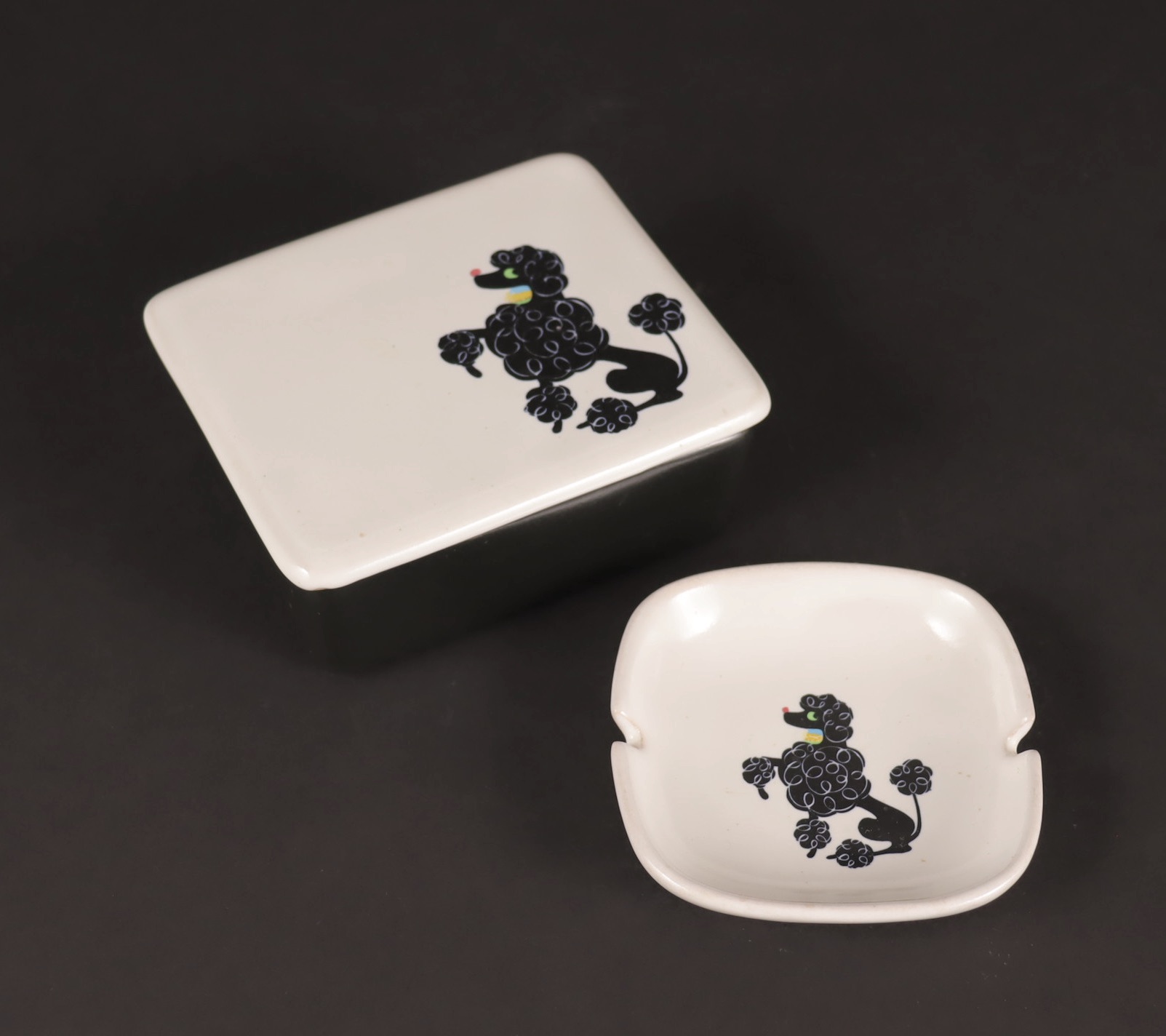
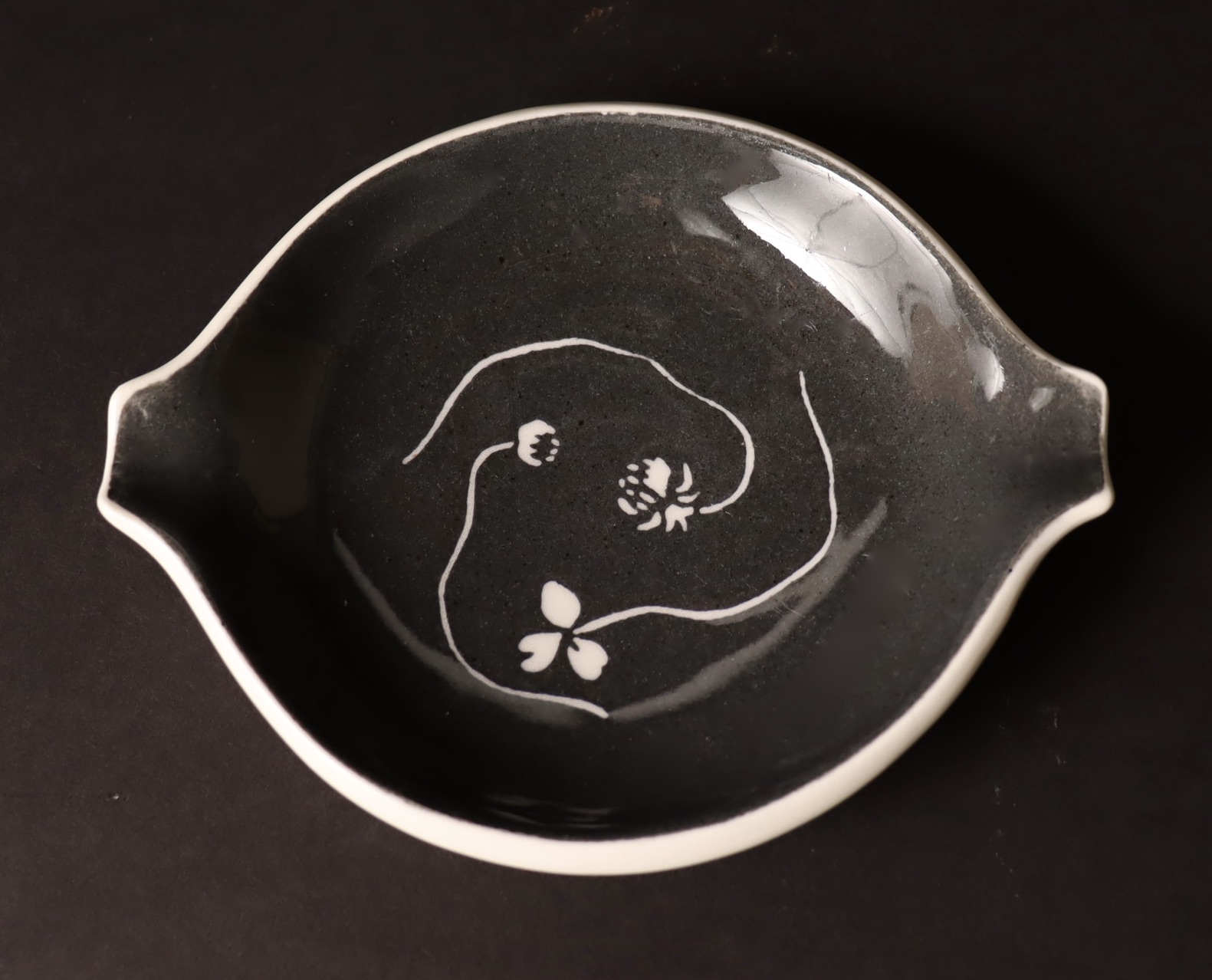
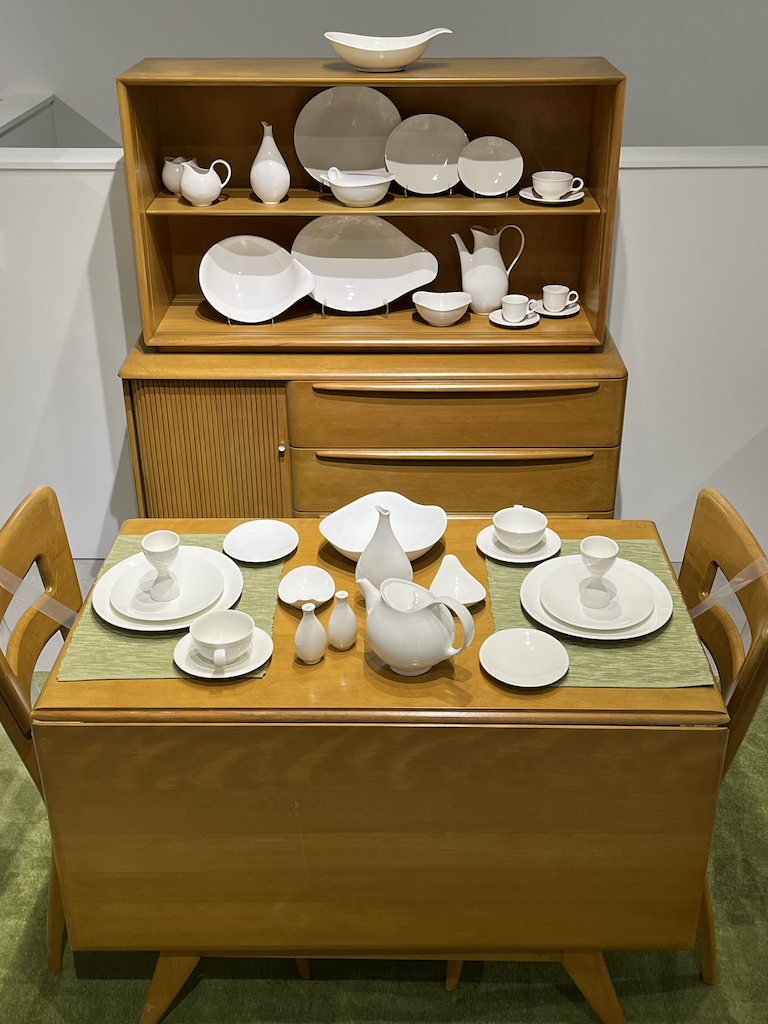
Ashtray includes several place settings that include matching ashtrays: Branchell’s Melmac Color Flyte in Copper Glow with individual matching ashtray shaped like a serving dish; Glidden Chi-Chi hand-painted poodles on stoneware with an ashtray and cigarette box from the 1950s; Don Schreckengost’s 1950s-designed Epicure line for Homer Laughlin, in four glazes, meant to be used as mix and match tableware, shown with the rare prototype ashtray in turquoise; Russel Wright’s 1950s Harkerware White Clover in Charcoal and White; and Eva Zeisel’s Caprice patterned Tomorrrow’s Classic from Hall China designed in the late 1940s and manufactured beginning in 1952.
 |
 |
 |
 |
 |
|
|
|
|
|
|
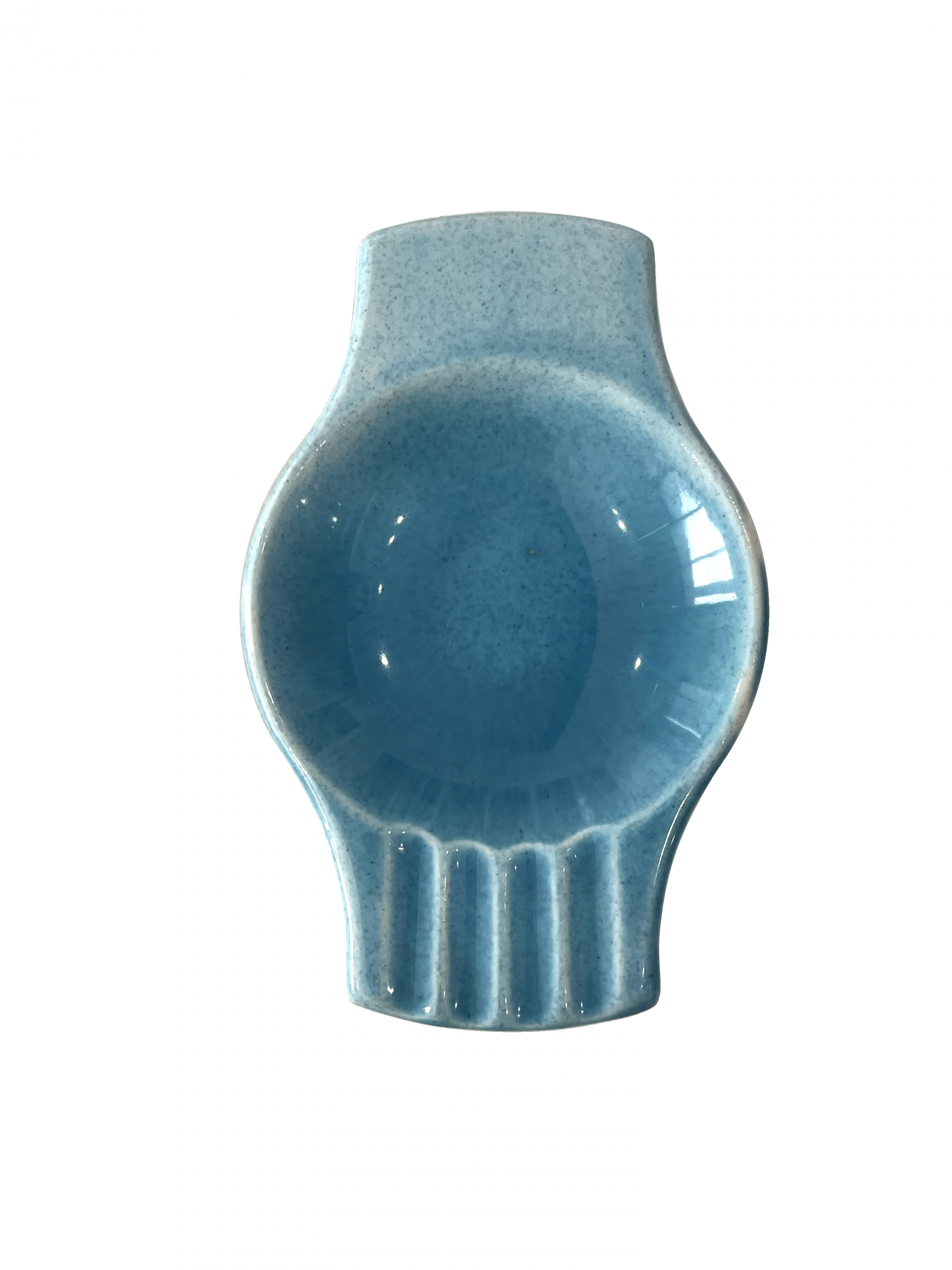
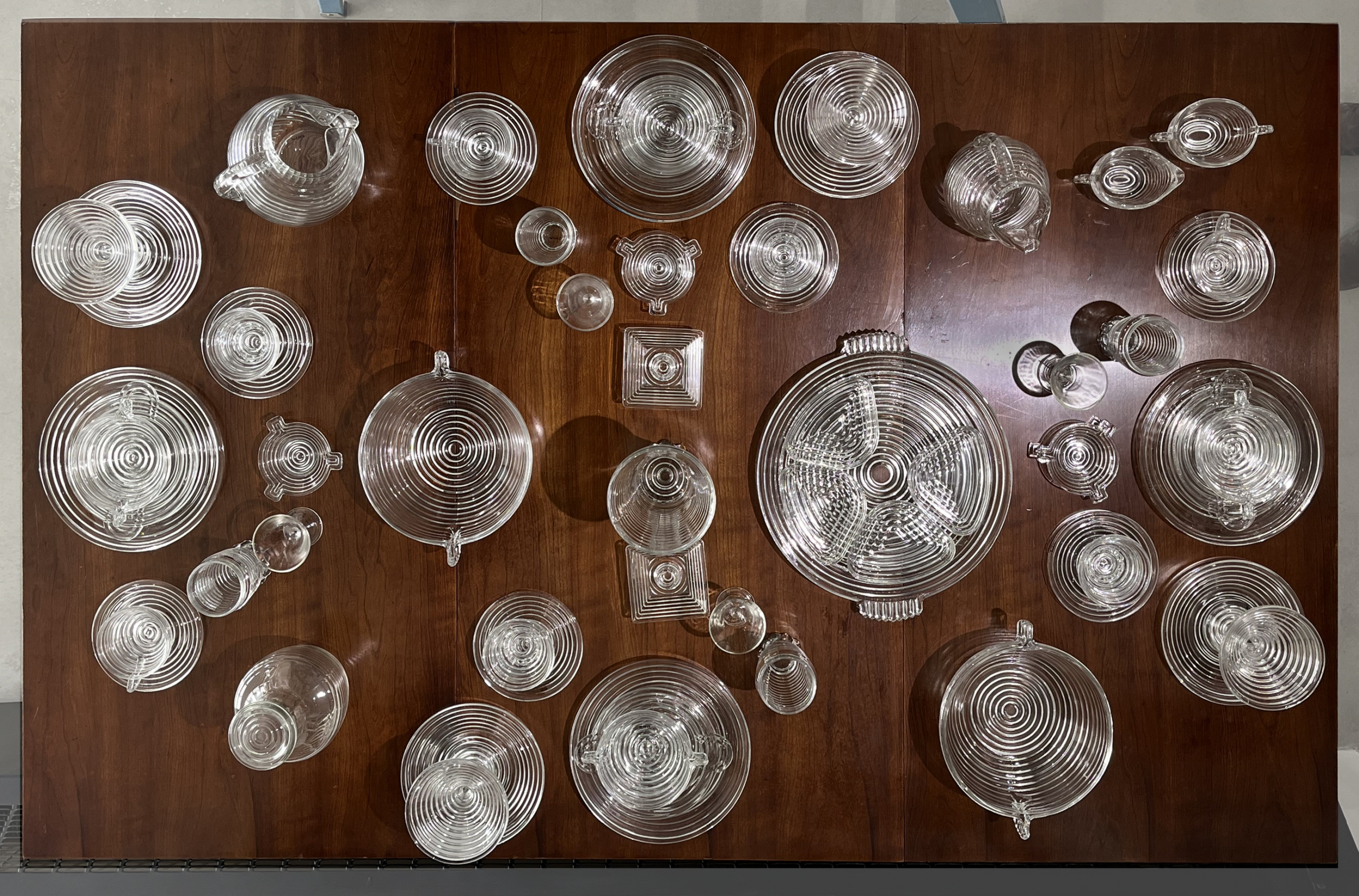
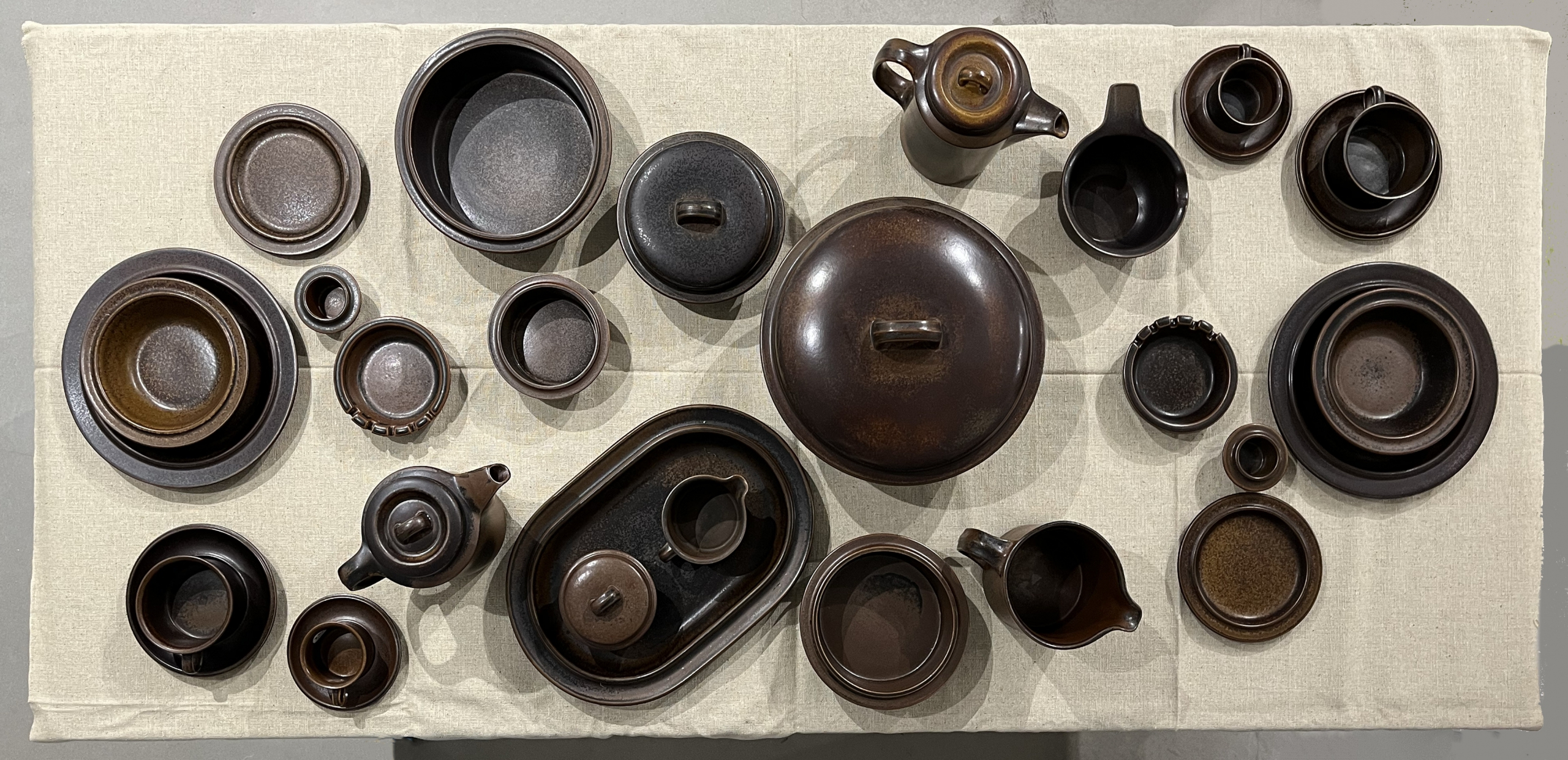
The exhibition includes three substantial tables laden with popular dining sets that indicate not only good design, but also sharing where the ashtrays may have been placed. These sets featured individual ashtrays that matched the dishes. Manhattan was designed by Anchor Hocking in the 1930s. The pieces have concentric circles created of clear glass and it has a very Art Deco feel to it. The small individual ashtrays would have been placed on the table above the dinner plate. Alternatively, it could have been placed on the table by the maid or butler after dessert was served. Another dinnerware service with a simple, beautiful ashtray as part of the dinner service is that created in Finland for the Arabia line Ruska, designed by Ulla Procopé in 1960. Eva Zeisel’s Hall China Tomorrow’s Classic in white from the 1950s that includes matching ashtrays/nut dishes are displayed on a Heywood Wakefield dining set from the Mid-Century.
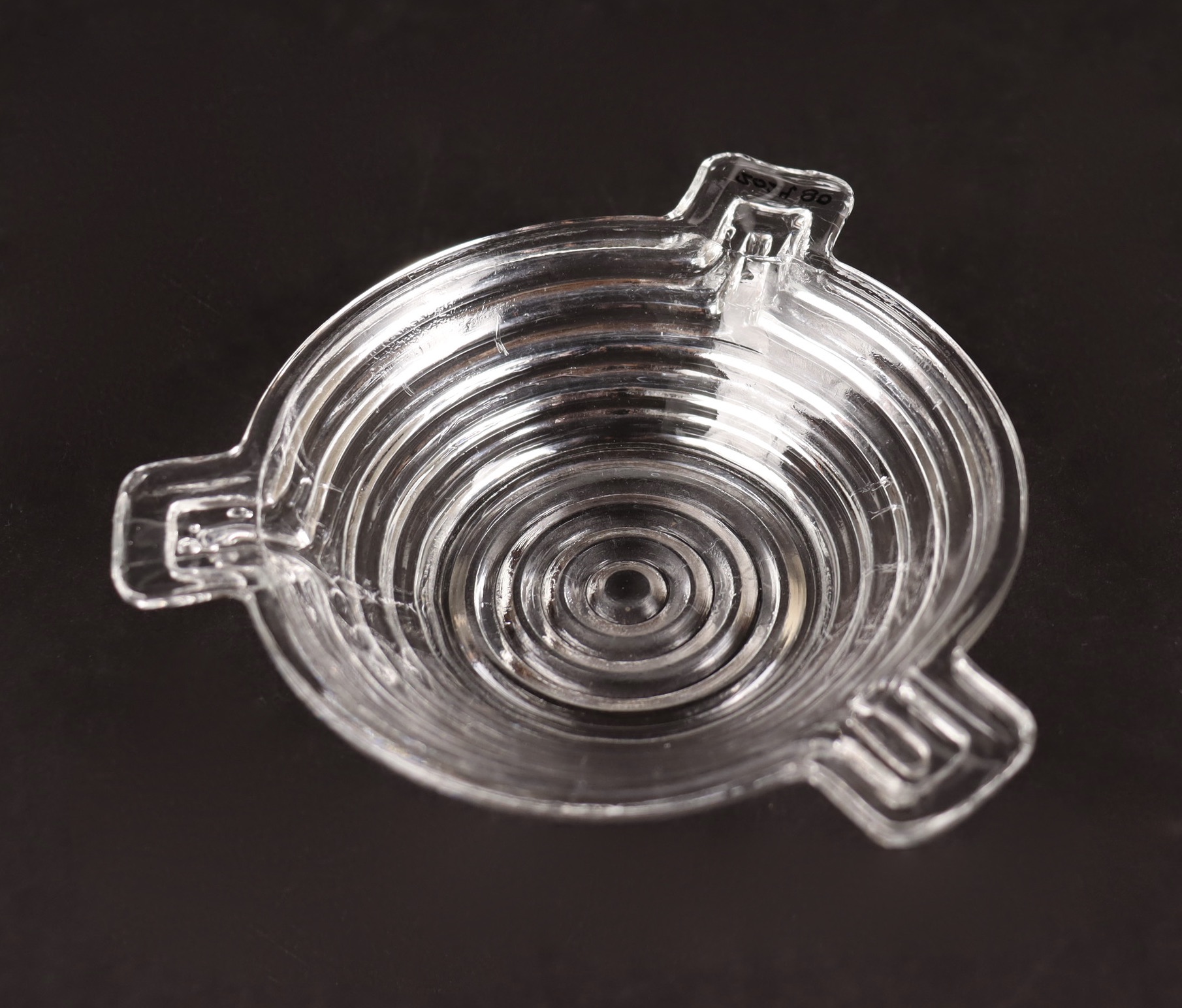 88-piece Anchor Hocking Manhattan clear glass dinnerware including 2 ashtrays, 1938-1943 glass 2 round ashtrays Diam: 4.5” IMoDD 2025.60 Gift of Harriet Flehinger IMoDD 2024.80 Gift of Suzanne and Doug Thatcher 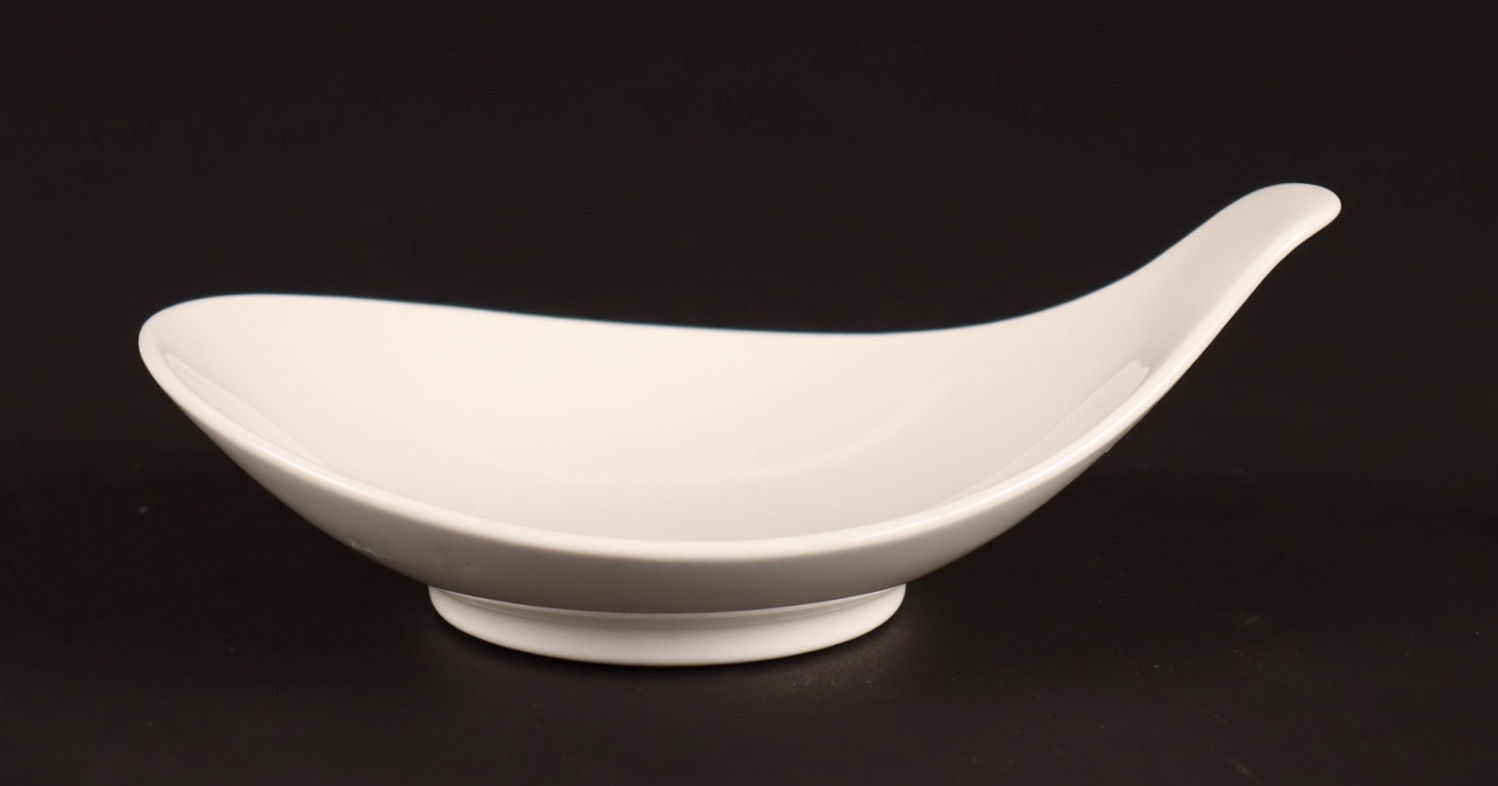
|
|

Ashtray aesthetics and good design
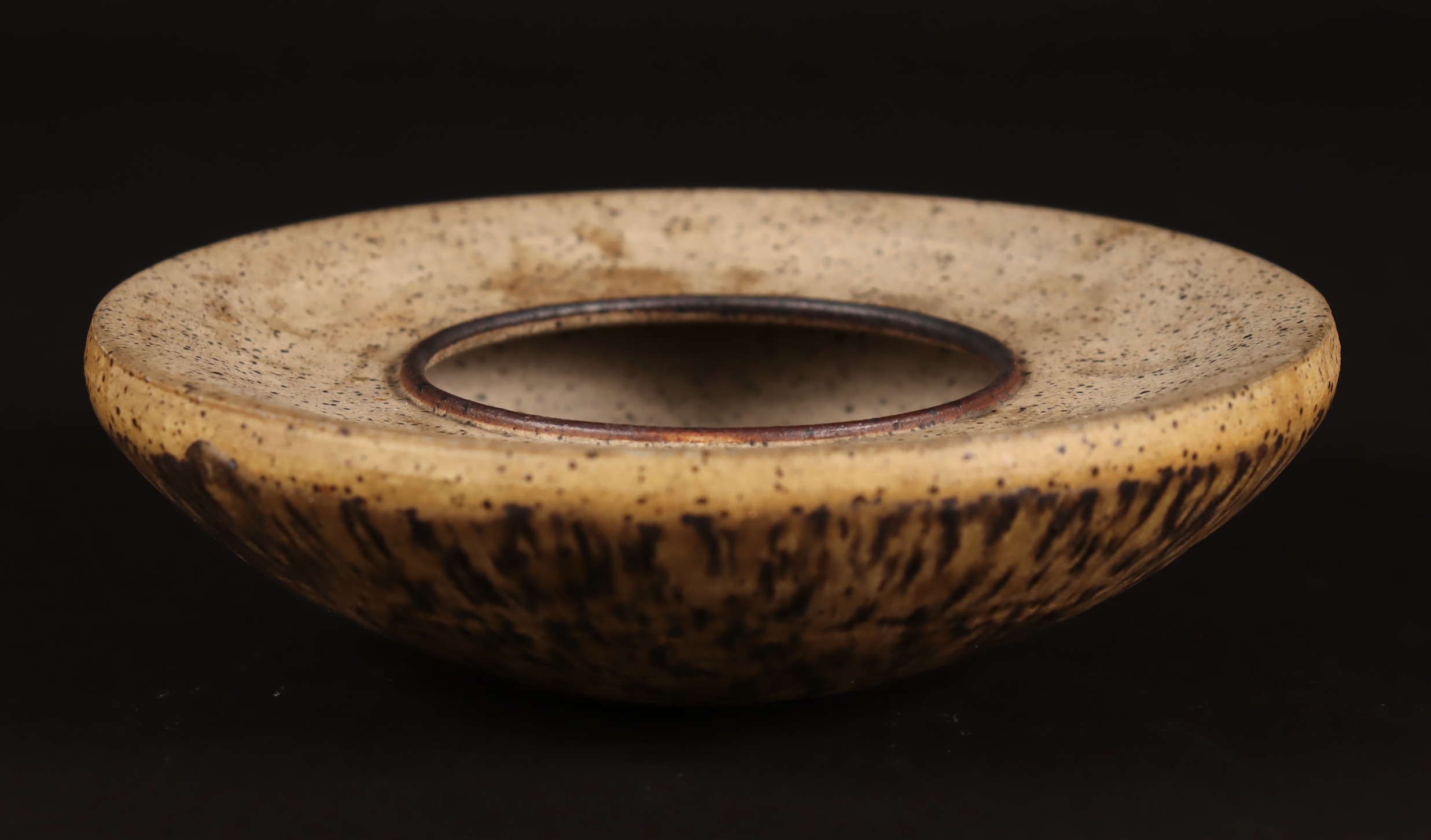
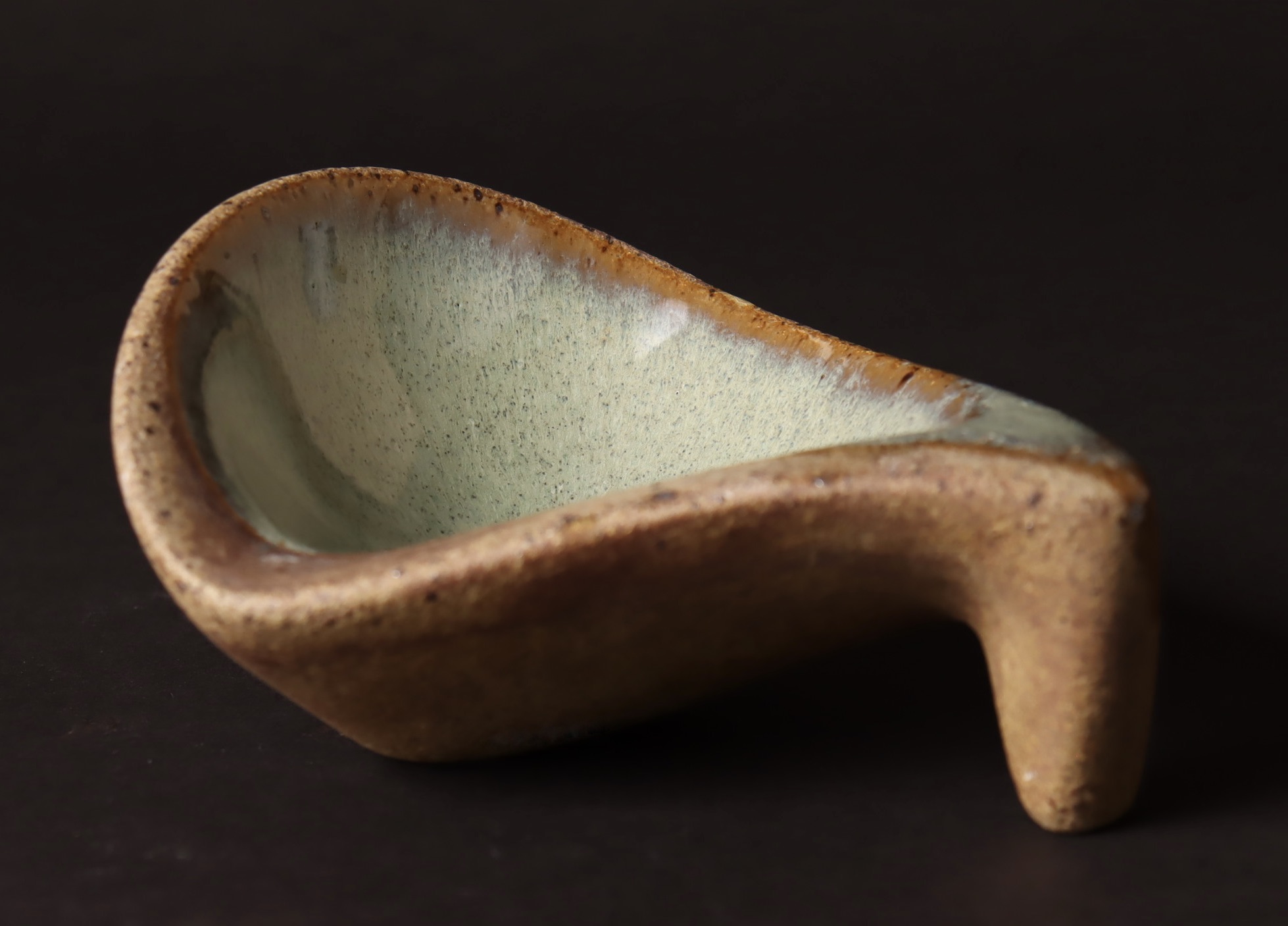
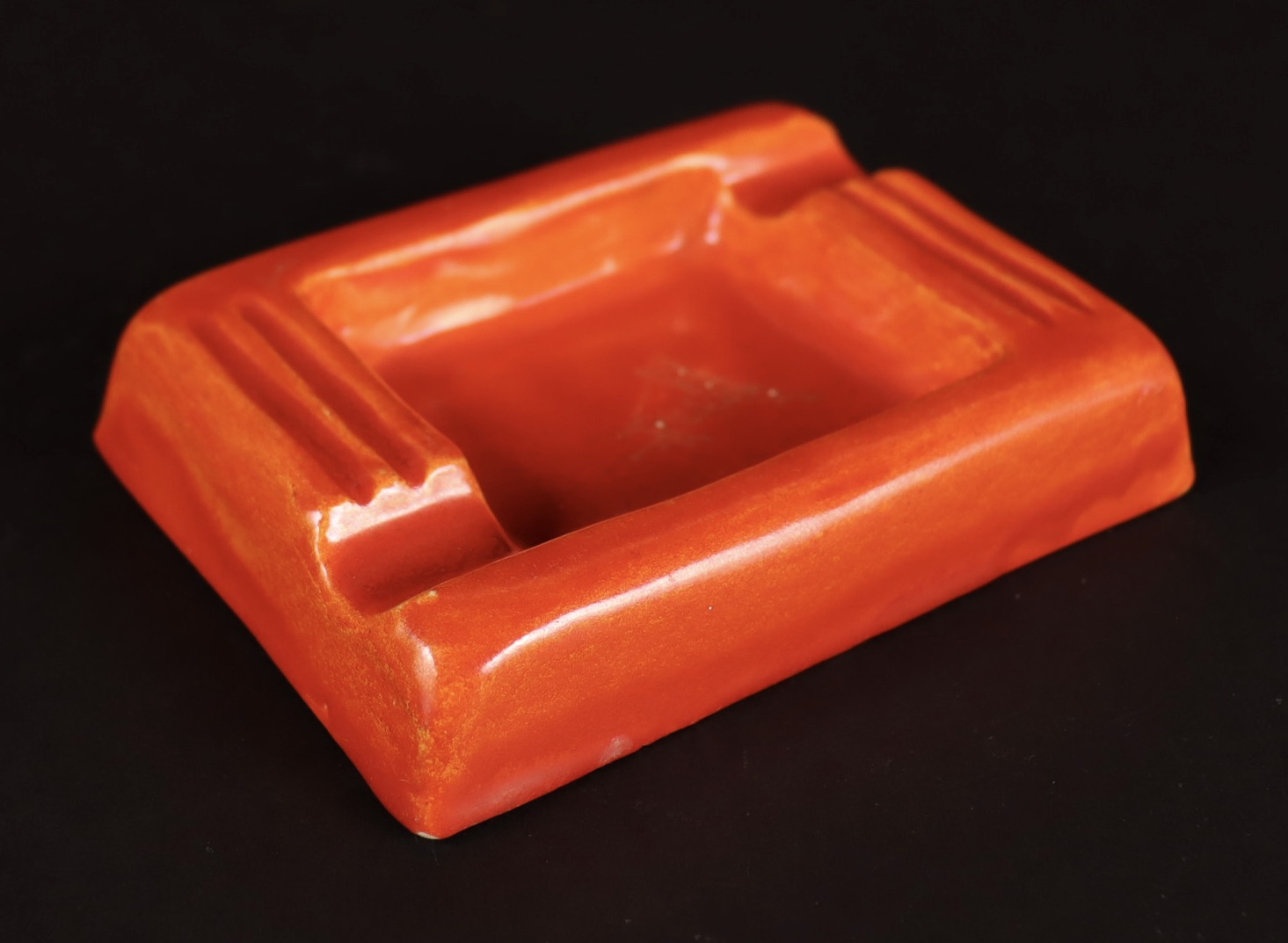
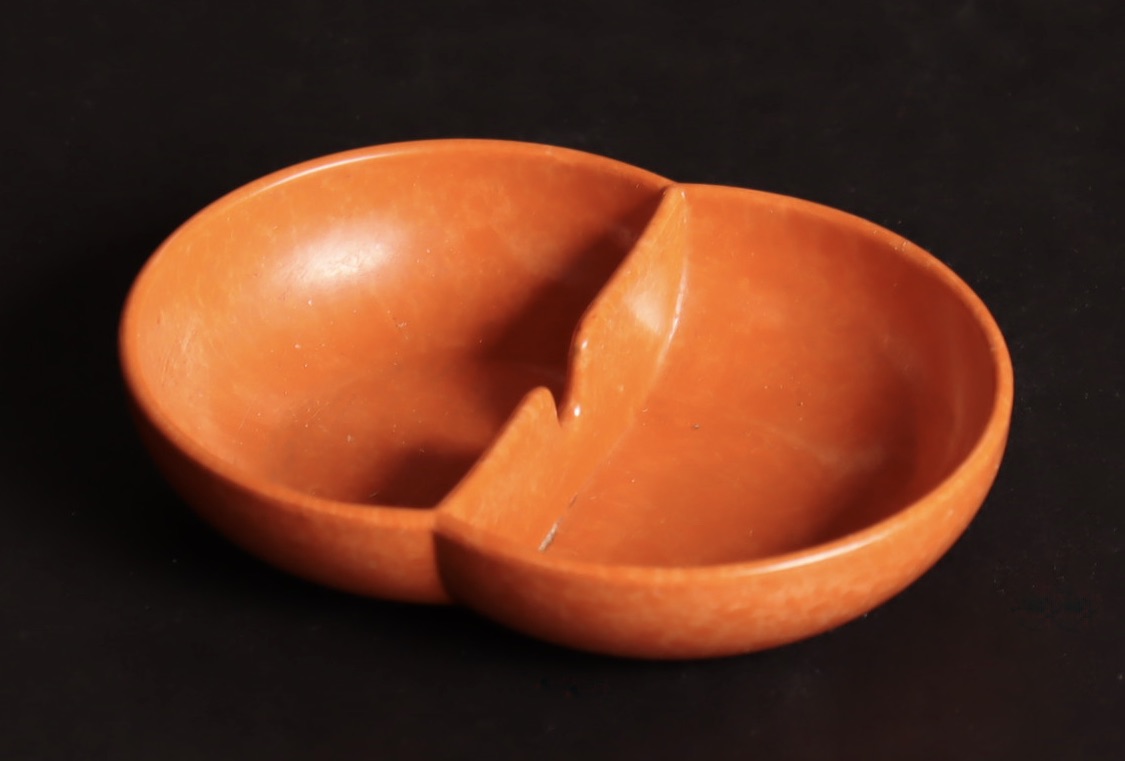
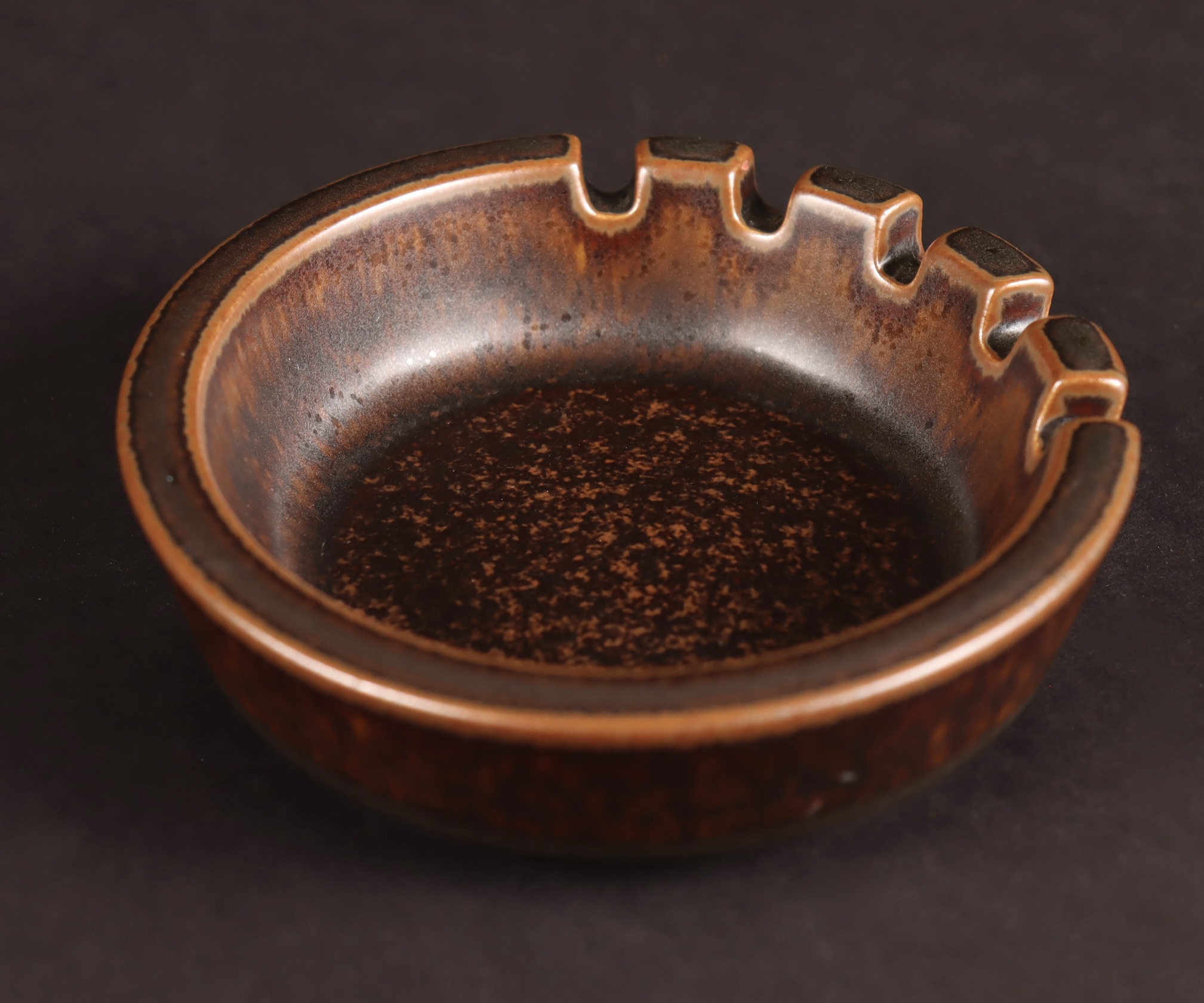
Contemporary artists created one-of-a-kind ashtrays especially during the mid-20th century. Examples created by Robert Turner and Ted Randall who both taught at New York State College of Ceramics at Alfred University are included in this exhibition. Both demonstrate modern design and signature glazes from the mid-century. In the 1930s, New York State College of Ceramics created a small mold-made ashtray that was intended to be a gift given to visitors to the College of Ceramics. It was glazed in a monochrome uranium orangey-red glaze that was at its height of popularity at the time. Similar radioactive glazes were used from California to Ohio to New York on everything from California Pottery to Fiesta ware. The story goes that these glazes were discontinued in 1942 when the uranium used to create these brilliant glazes was needed for the atom bomb. Get out your Geiger counter to test your uranium glazed dishware. You be the judge.
And ashtray designers were not only artists designing one-of-a-kind ashtrays. If one looks at the leading designers for industry such as Frederick Hurten Rhead, Eva Zeisel, Russel and Mary Wright, Glidden Parker, Kaye LaMoyne, Michael Lax, Edith Heath, Viktor Schreckengost, and Don Schreckengost, it is clear that by the mid-20th century ashtrays were part of dining, but sometimes incidental to tableware collections rather than prominent. Russel Wright’s American Modern line for Steubenville was the leading wedding china from 1939-1959, yet he did not design a specific ashtray for that set. Perhaps someone used a coaster as an ashtray, but it was not marketed as such. Russel and Mary Wright were both heavy smokers. Although Mary and Russel Wright designed several ashtrays that are featured in the exhibition, their daughter Annie Wright has loaned an ashtray that they did not design, but was one of Russel’s favorites. The designer is the German designer Hayno Focken and its condition indicates that it was often chosen as the smoking receptacle du jour.
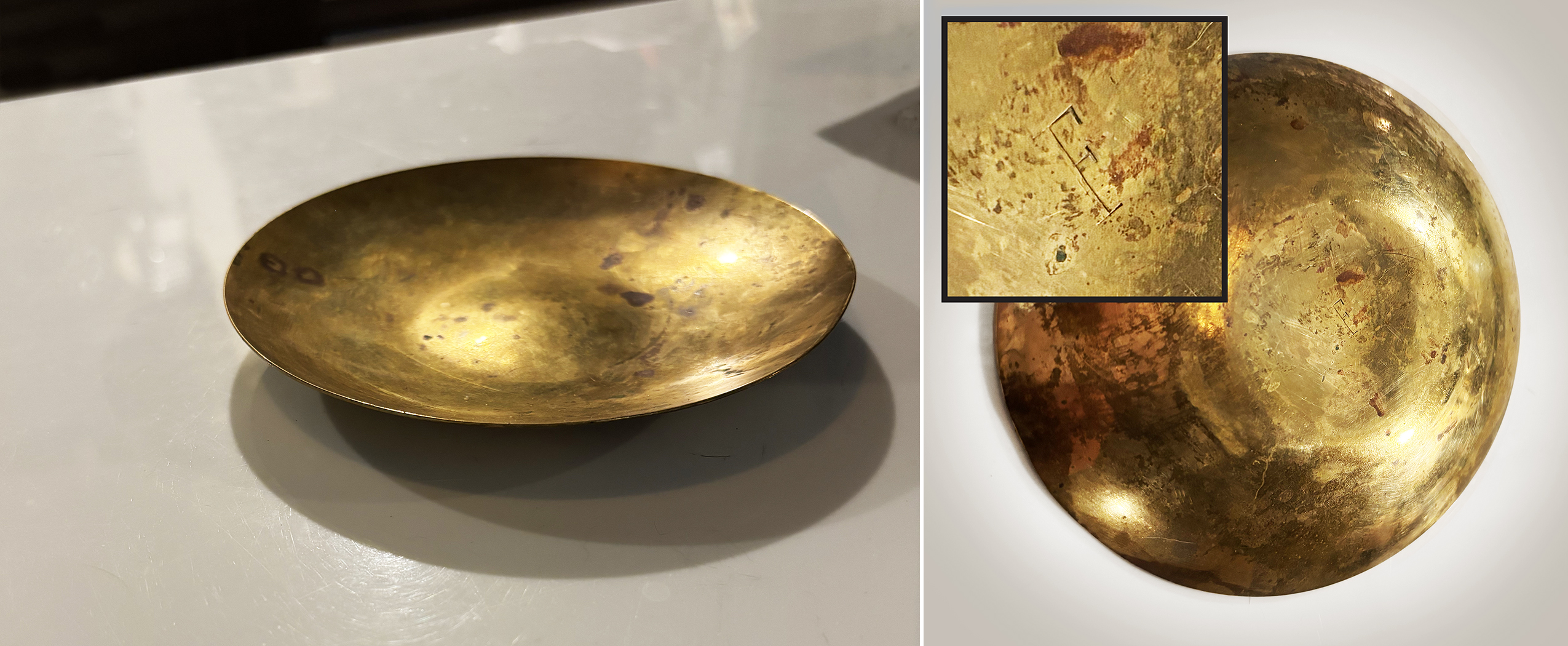
circular brass ashtray, ca. 1930s
Diam: 6”
On loan from Annie Wright
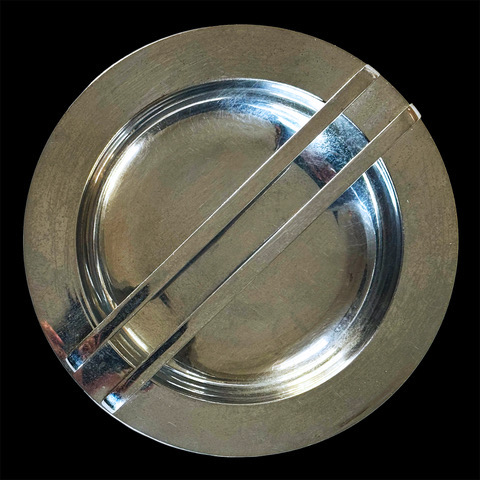
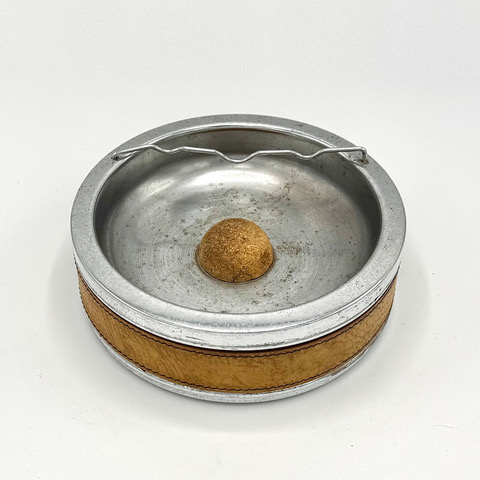
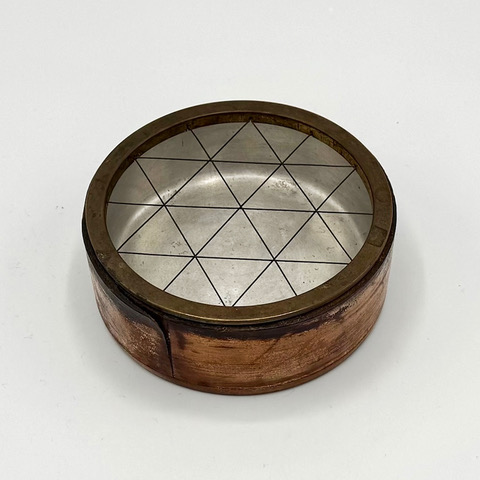
Two other examples of Russel and Mary Wright designed ashtrays that are in the permanent collection of the International Museum of Dinnerware Design are included in this exhibition. One is the Bauer fortune cookie shaped ashtray, and the other is a Harkerware White Clover example in charcoal and white. Researcher and collector Scott Vermillion interviewed Annie Wright to create an essay which is part of this celebration of Ashtray. Here is a link to that article. They will present a Zoom lecture on this topic for our IMoDD audience in March 2026 which will then become a YouTube video, which you will be able to find on our website for posterity to enjoy.
Eva Zeisel’s Tomorrow’s Classic line designed for Hall China was very popular in the 1950s. The bible regarding Eva Zeisel and her designs identifies an “ashtray” with that line. This was a small dish that lacks a clear recess to hold a cigarette. Others insist it was a nut dish. Eva Zeisel was a heavy smoker before she became a mother. For more information see the 2011 publication Eva Zeisel: Life, Design, and Beauty edited by Pat Kirkham.
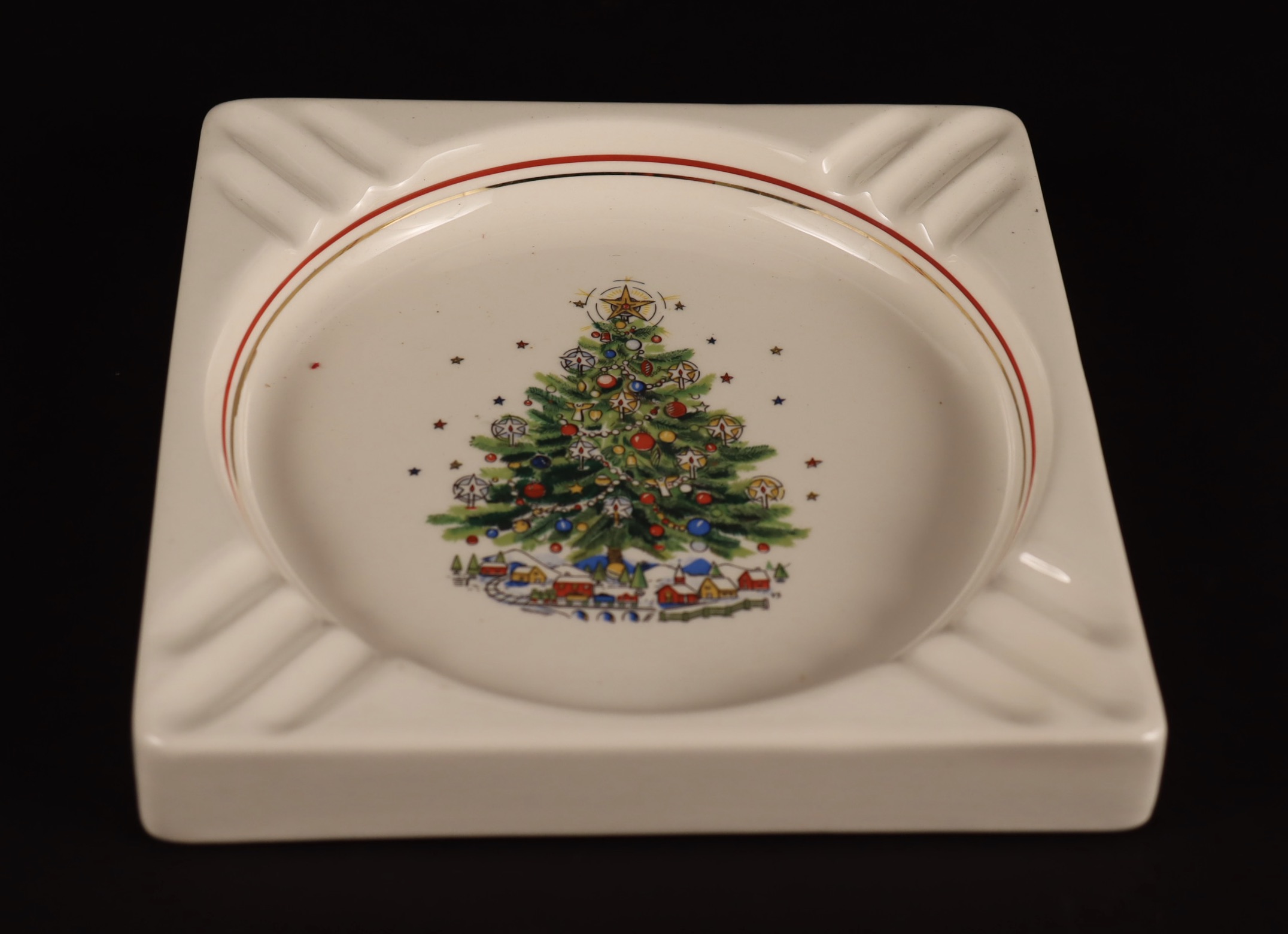
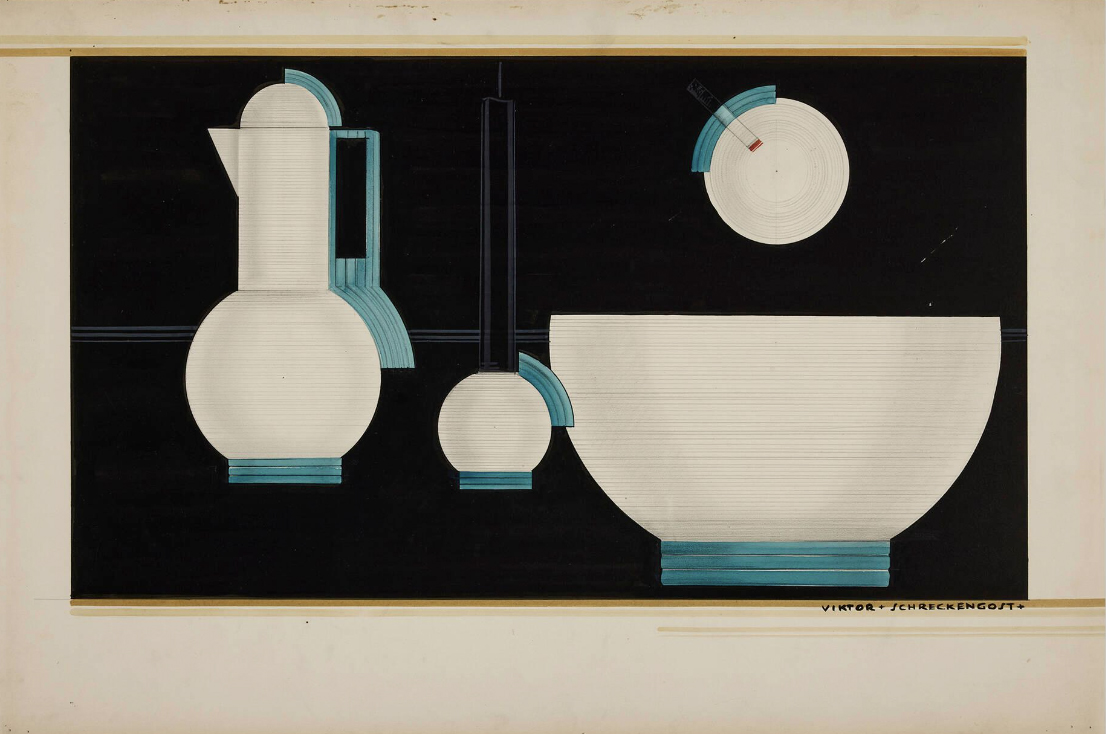
Viktor Schreckengost (and his brother Don) created many holiday-themed plates, glasses, and even ashtrays, with decorated Christmas trees and gifts beneath the trees. Designed for Salem China, these remain very popular with smokers and collectors. These date from the 1950s and are in sharp contrast to Viktor’s designs in the 1930s, which remain as gifts to the viewer in the form of original design renderings on permanent loan from the Schreckengost family, as well as one significant purchase by the International Museum of Dinnerware Design that shows a lit cigarette in place on the beautifully designed ashtray.
Viktor Schreckengost created more than one design rendering in the 1930s that never went into production, which revealed stunning airline dining snack sets with the ashtray built right into the streamlined rectangular compartmentalized tray, the ashtray placed as close to the beverage as humanly possible. Perhaps it is common and has just eluded this curator, but one 1930s Viktor Schreckengost design rendering features a 4-piece set including a bowl, a candle holder, a pouring vessel and an ashtray with a lighted cigarette. The fiery tip and signed design drawing is stunning and is a favorite object acquired by the International Museum of Dinnerware Design in 2025 and featured in Ashtray. It is just a wish that his designs could be resurrected and produced today.
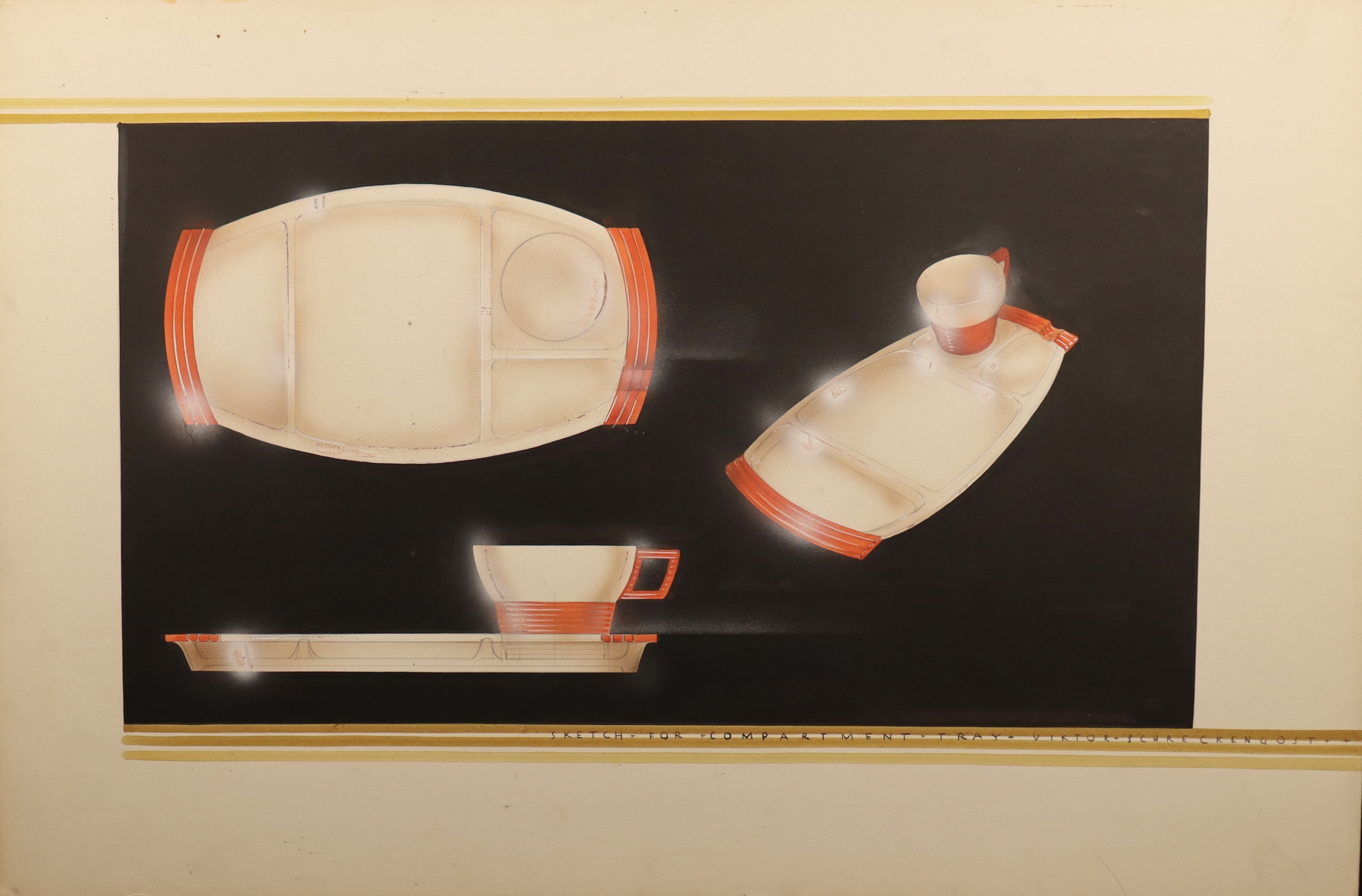
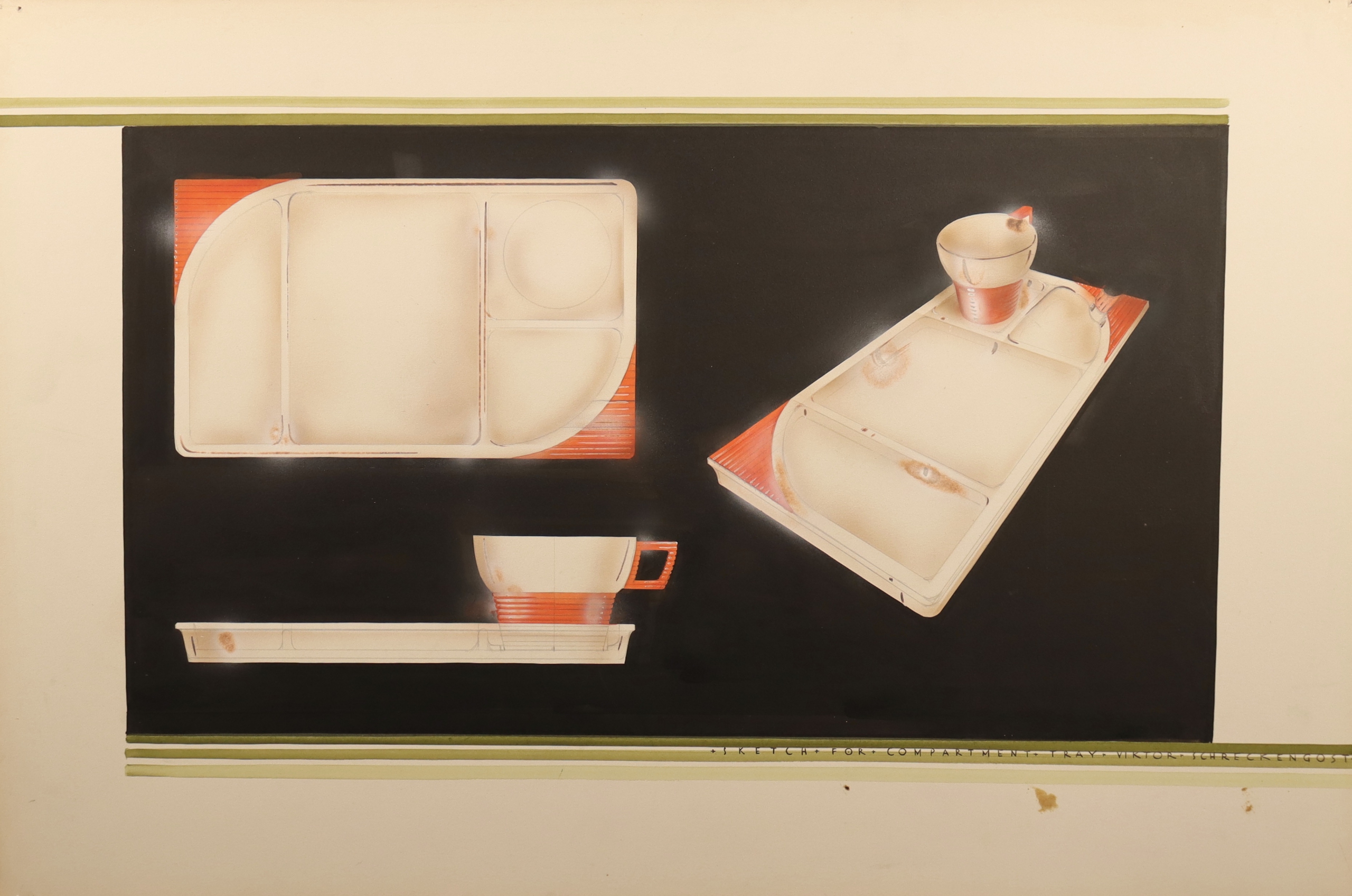
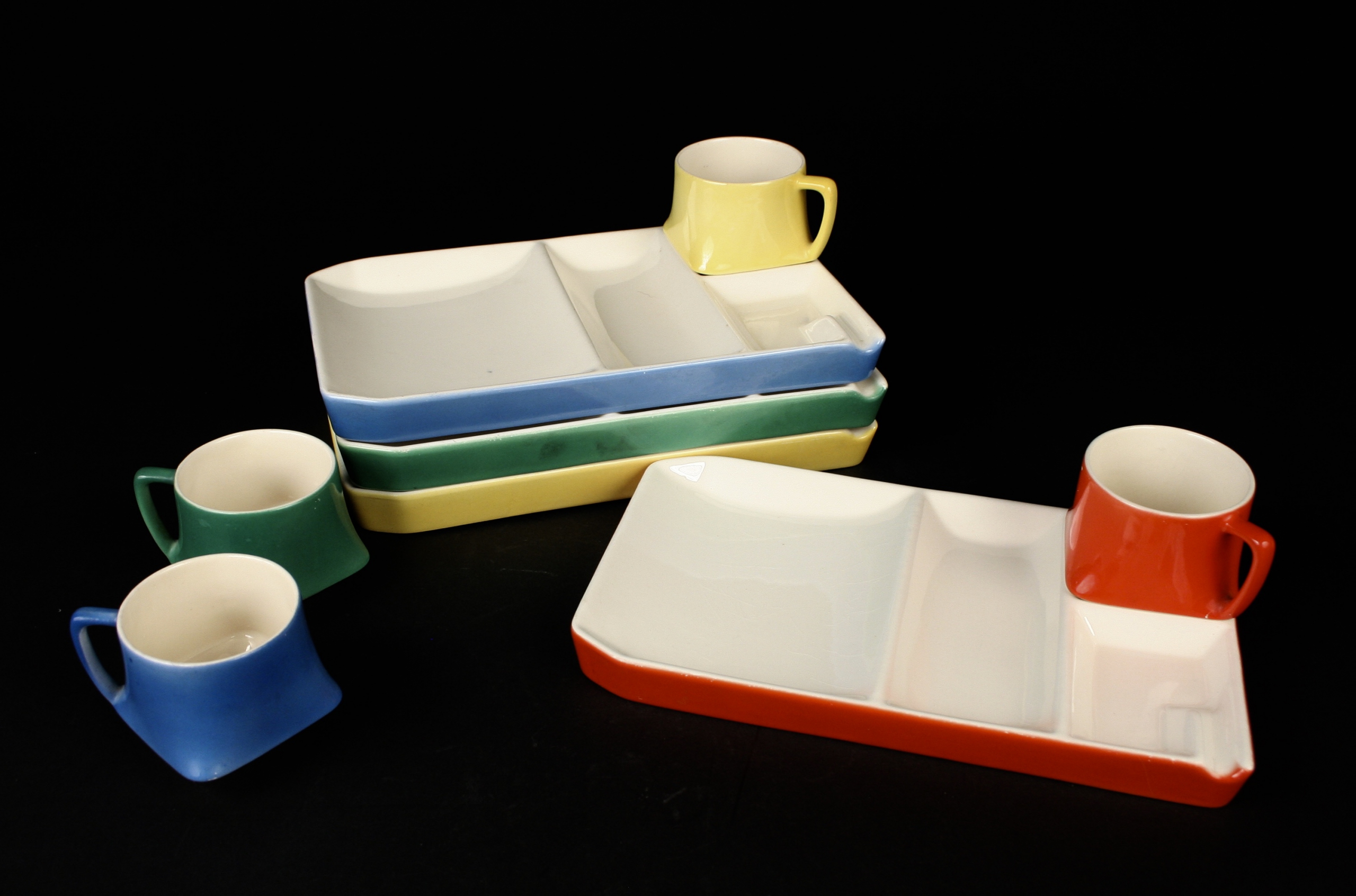
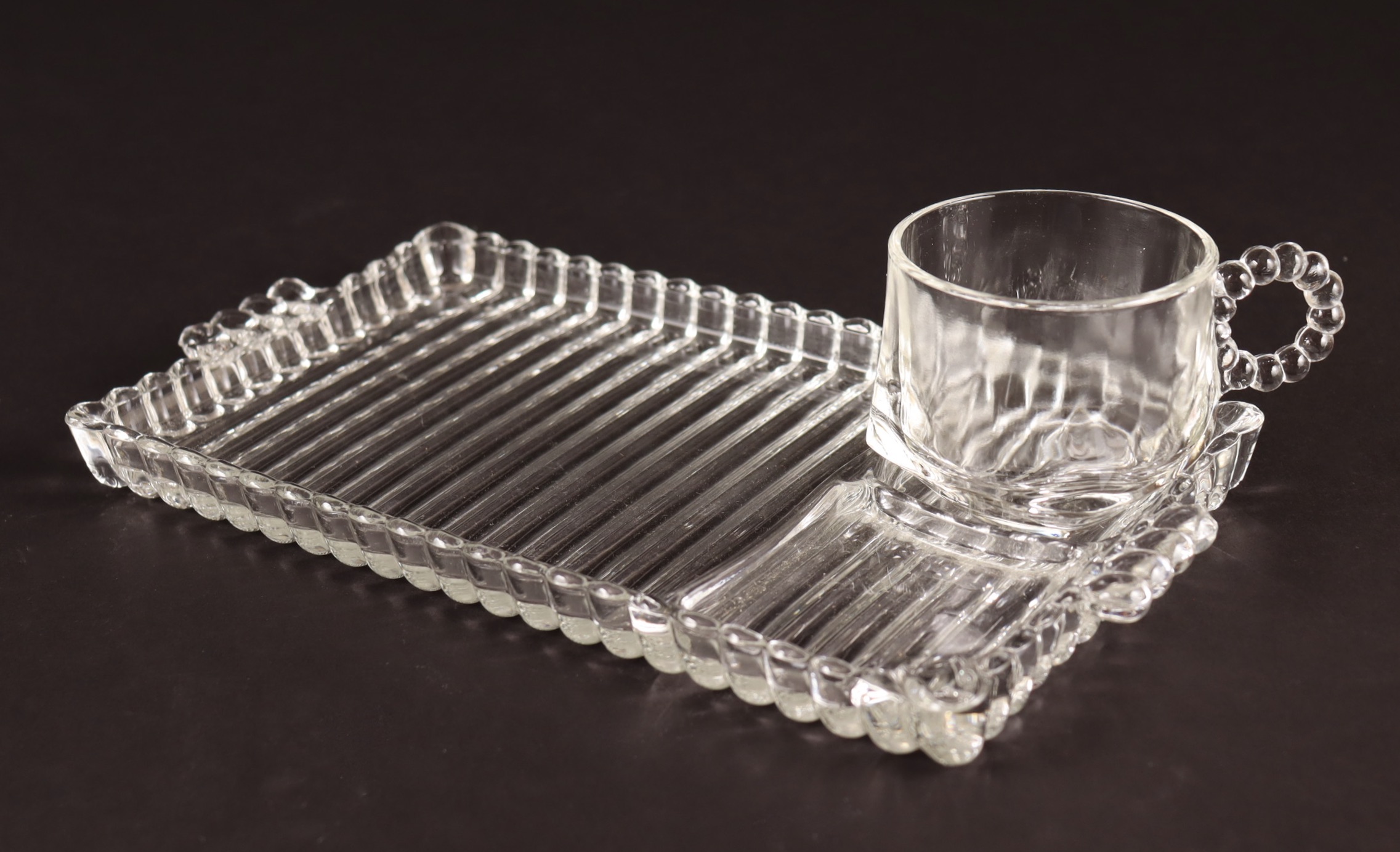
Similar designs with the compartmentalized ashtray built into the snack set were very popular and can be found in many ordinary unmarked sets by unidentified manufacturers in glass and ceramic. The Ashtray exhibition includes one of many in the IMoDD collection that was manufactured by Hazel-Atlas with the pattern called Candlewick. Additionally there are sets of brightly glazed, inexpensive snack sets that are basically a tray with compartments, including those intended for coffee and the ashtrays placed cozily by its side.
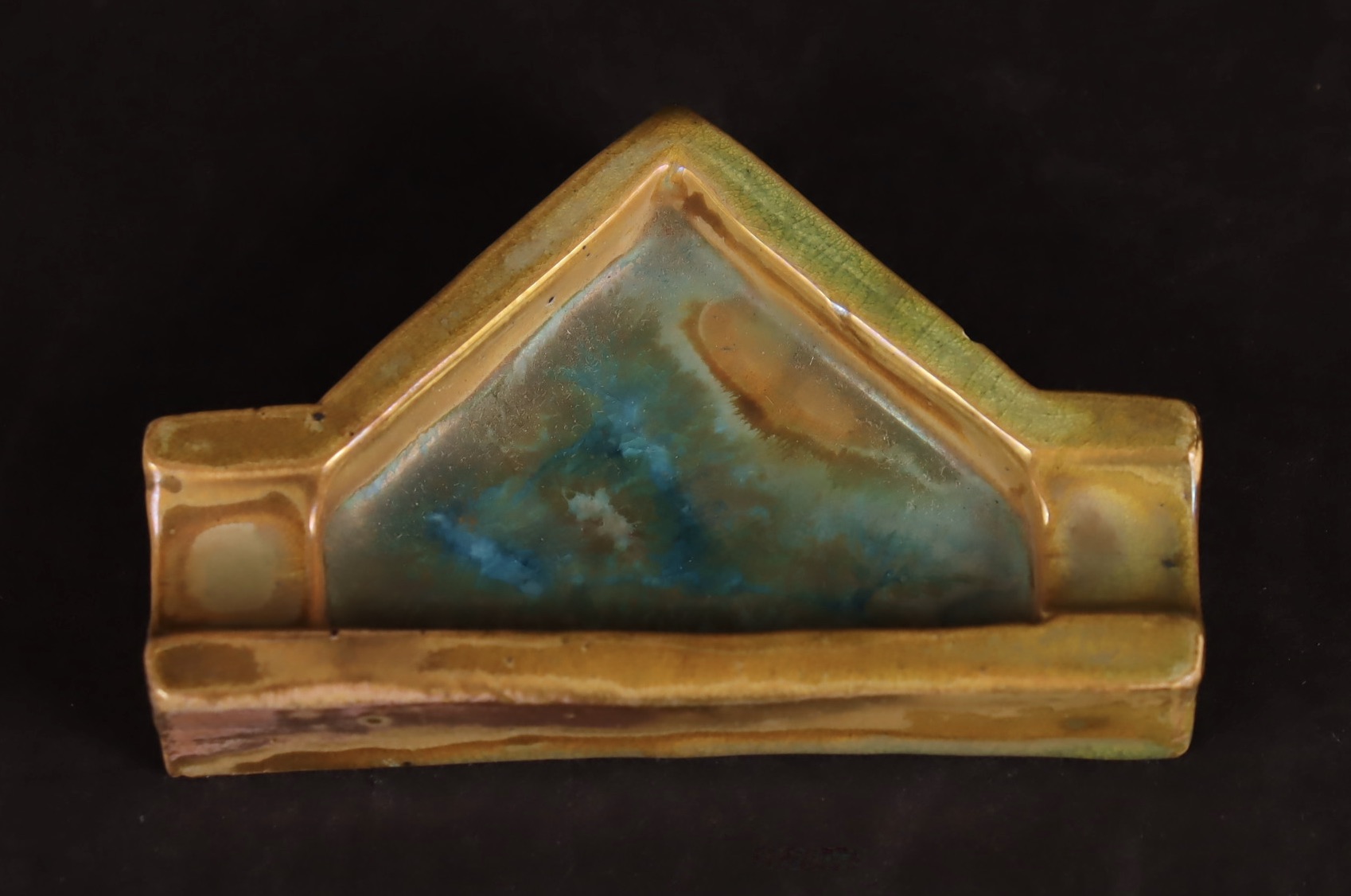
Pewabic Pottery, located in Detroit, one of the oldest continuous pottery studios and manufacturing operations in the United States, also created ashtrays. An intimate circa 1940s Art Deco style geometric piece with a beautiful Pewabic lustre glaze is included in this exhibition.
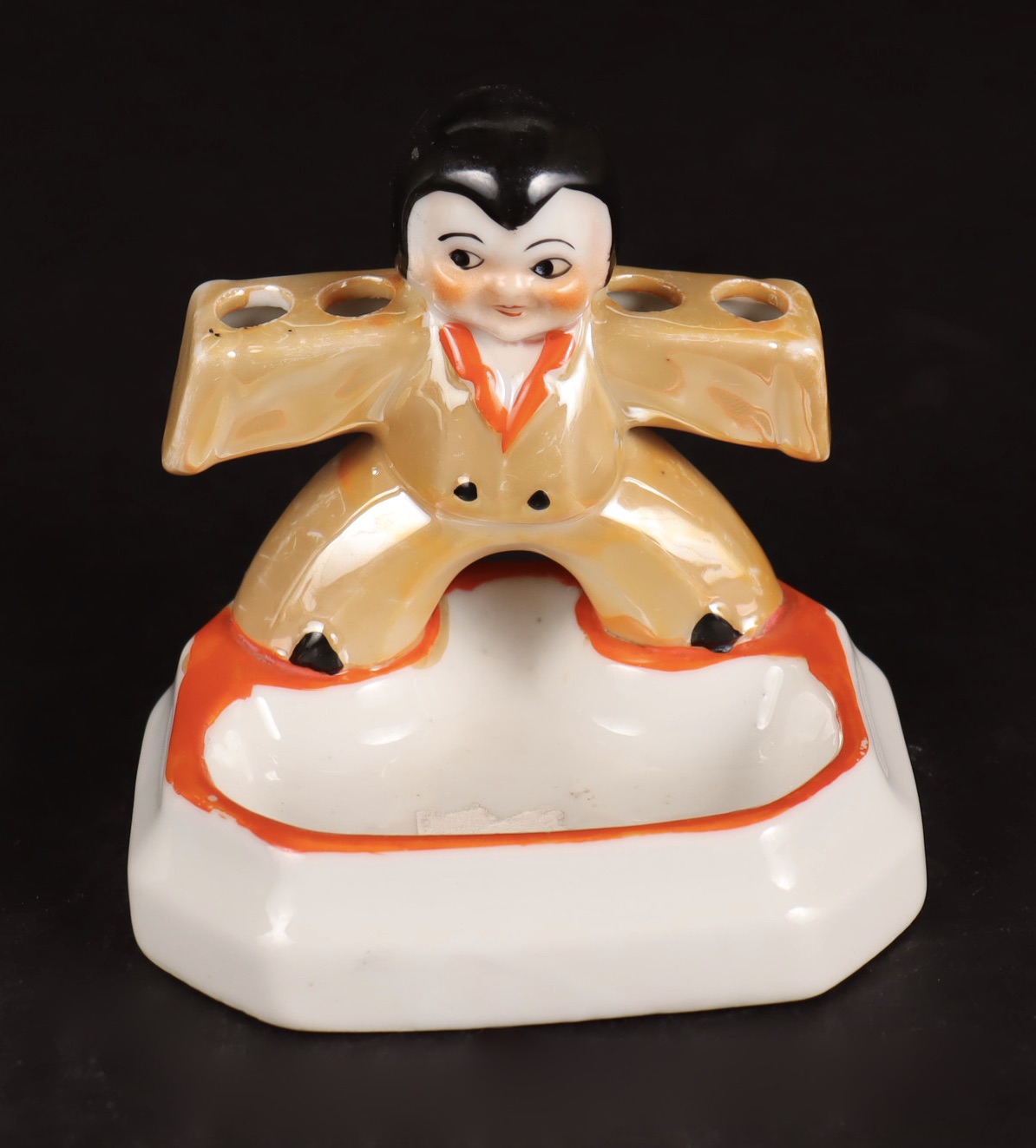
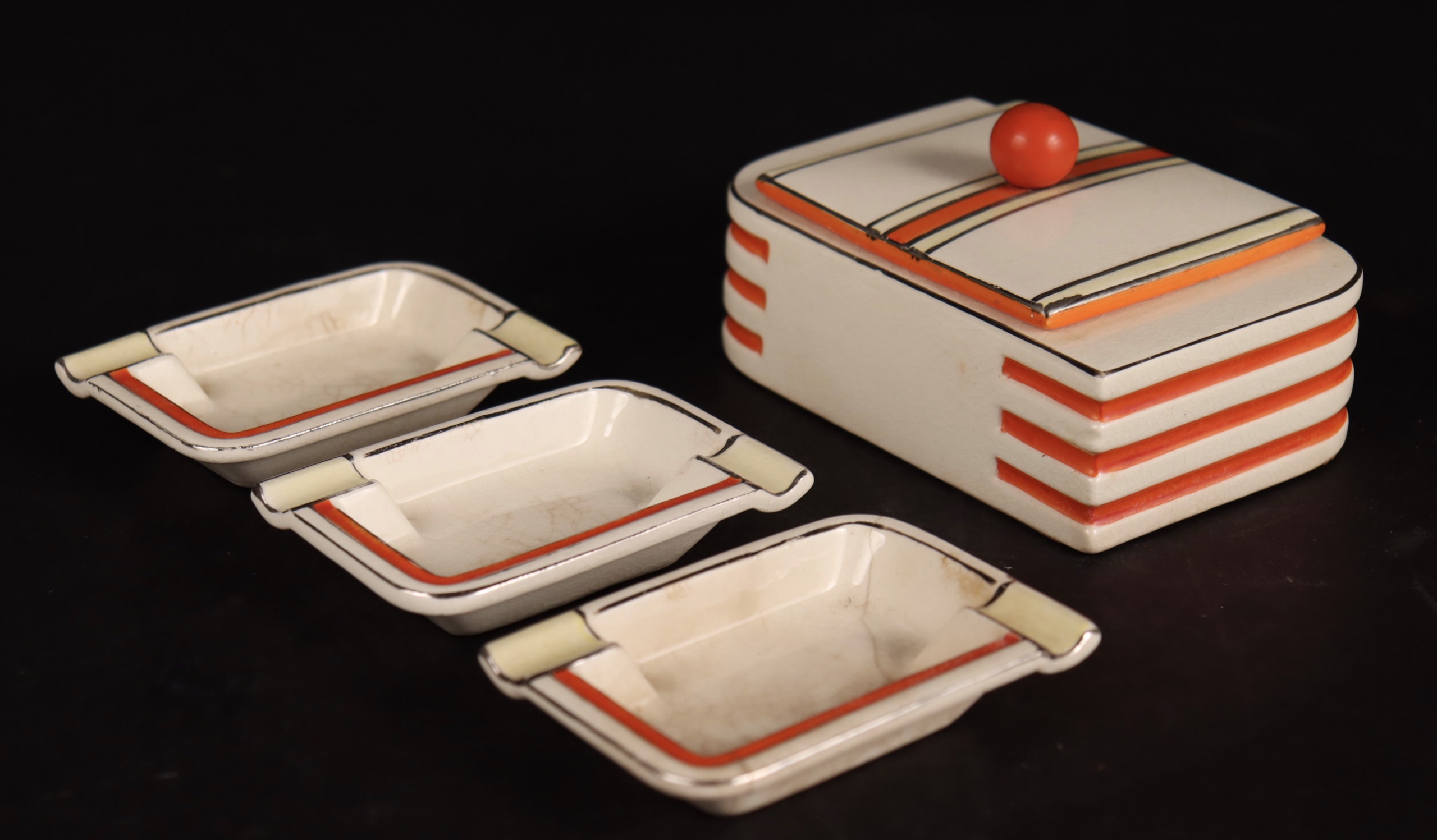
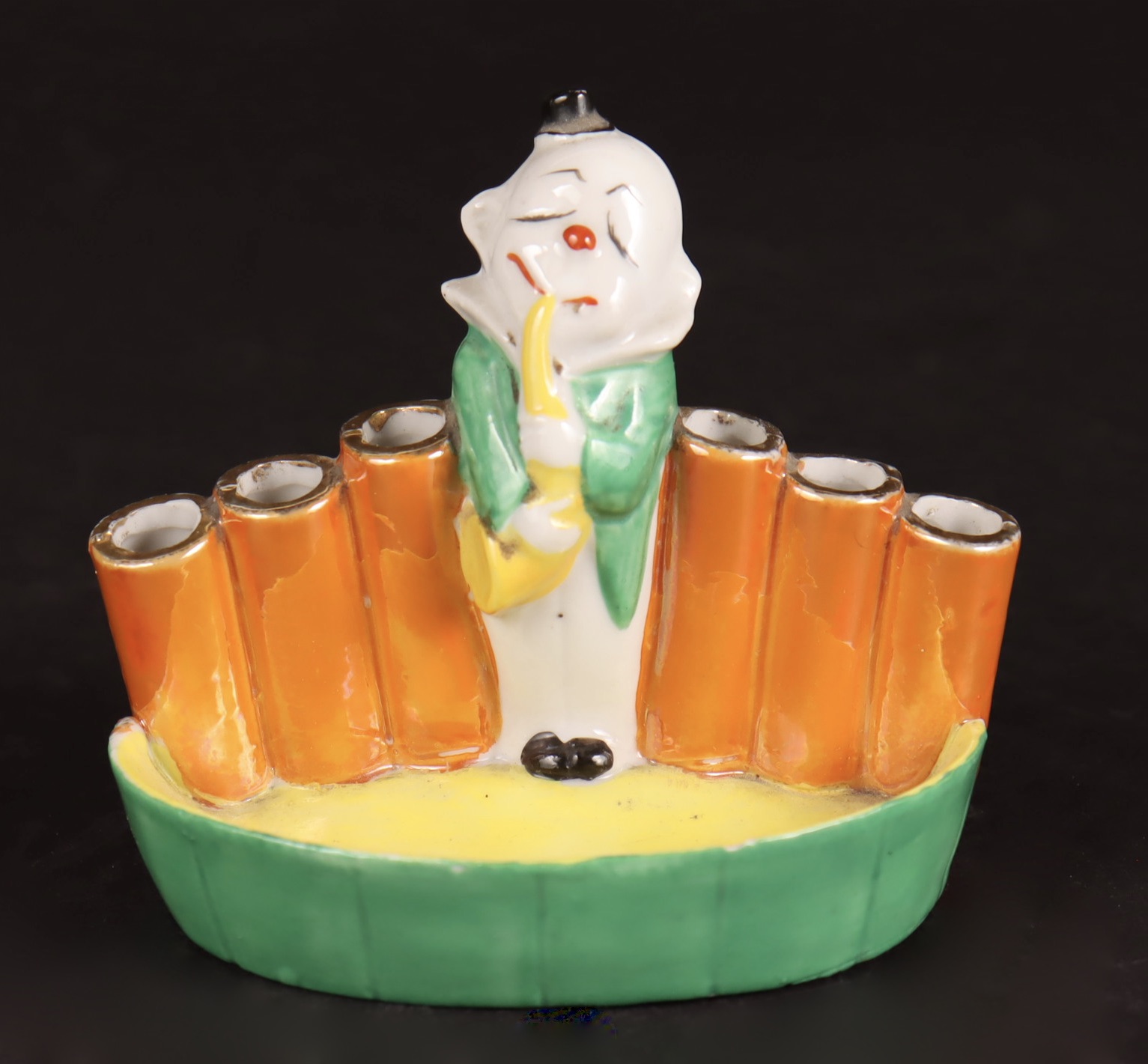
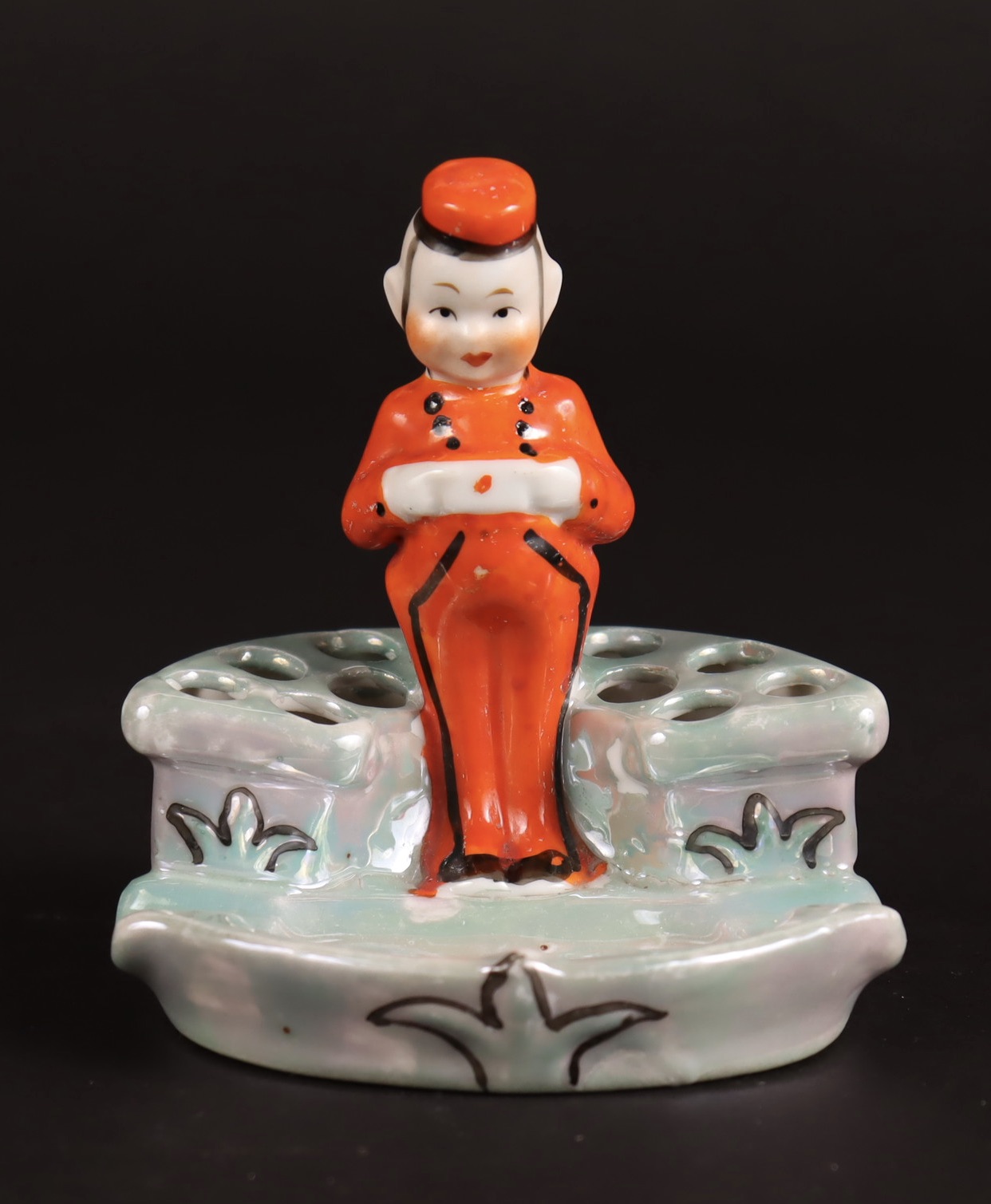
During the 1930s, when what we now refer to as Art Deco style dinnerware was fashionable, Japanese manufacturers created lovely and sometimes amusing ashtrays and accessories featuring small, charming figures of bell hops, saxophone playing clowns, and jauntily attired figures nestled among features to hold cigarettes, matches and ashes. They appear to have been designed for the tourist trade. This exhibition includes an example of an Art Deco cigarette box with three matching small individual ashtrays. The linear designs of black and orange striped glazes on a cream background are just perfect.
|
 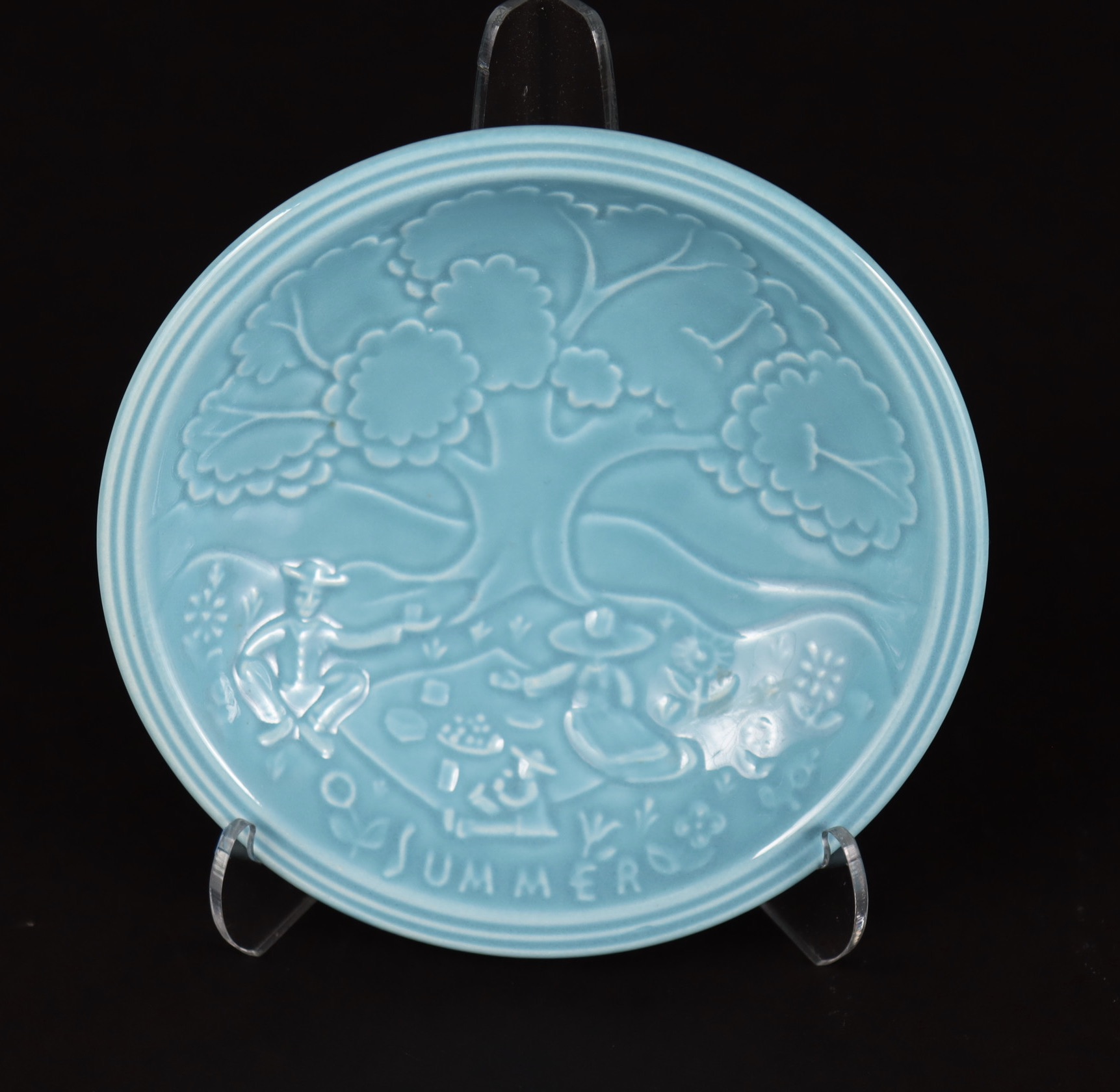 John Berrisford and Garvin Miller, designers New York World’s Fair Four Seasons: Summer turquoise ashtray, May 1940 earthenware, glazed Diam: 4.375” IMoDD 2025.140 Gift of Saarin Schwartz
|
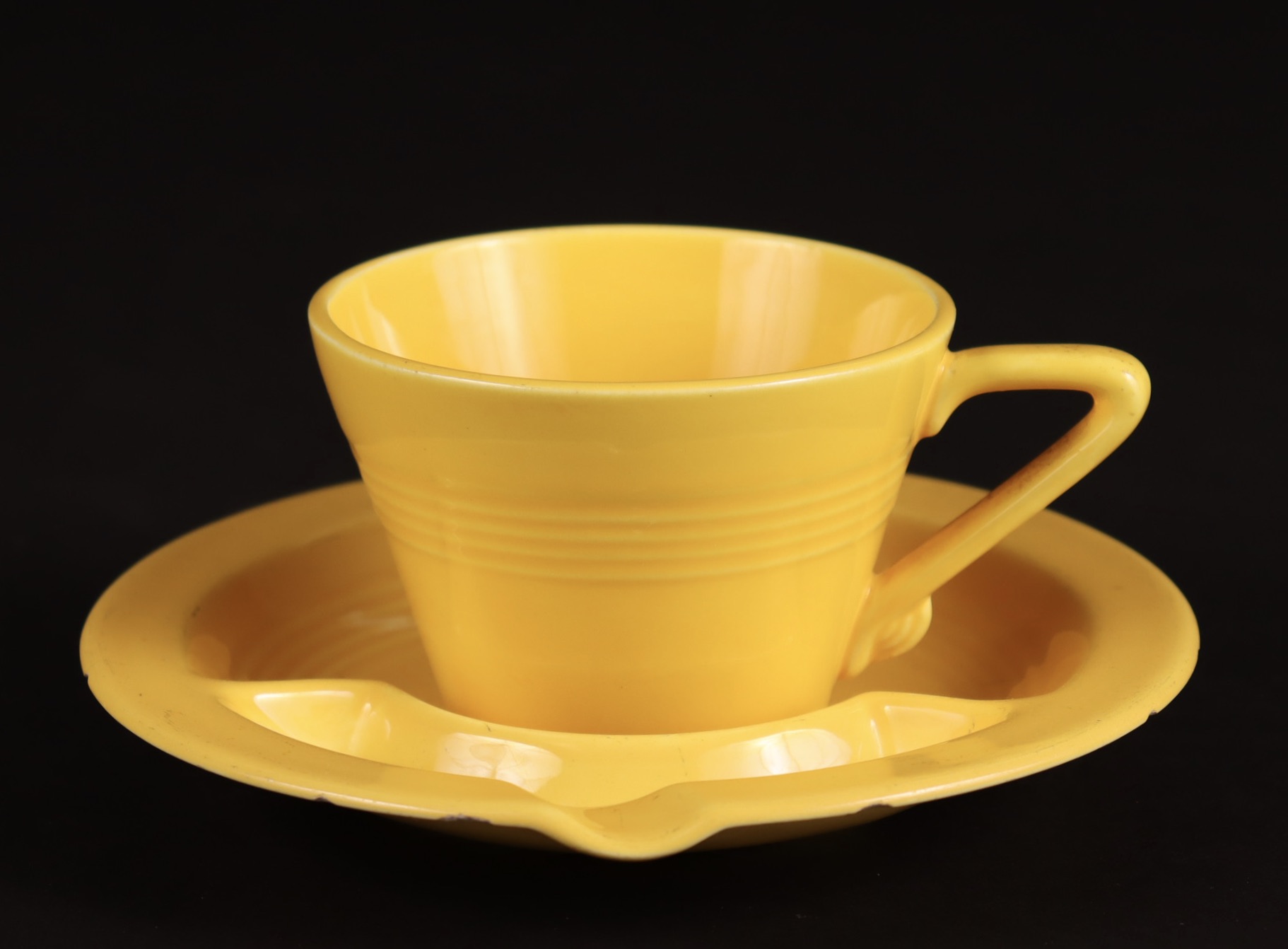
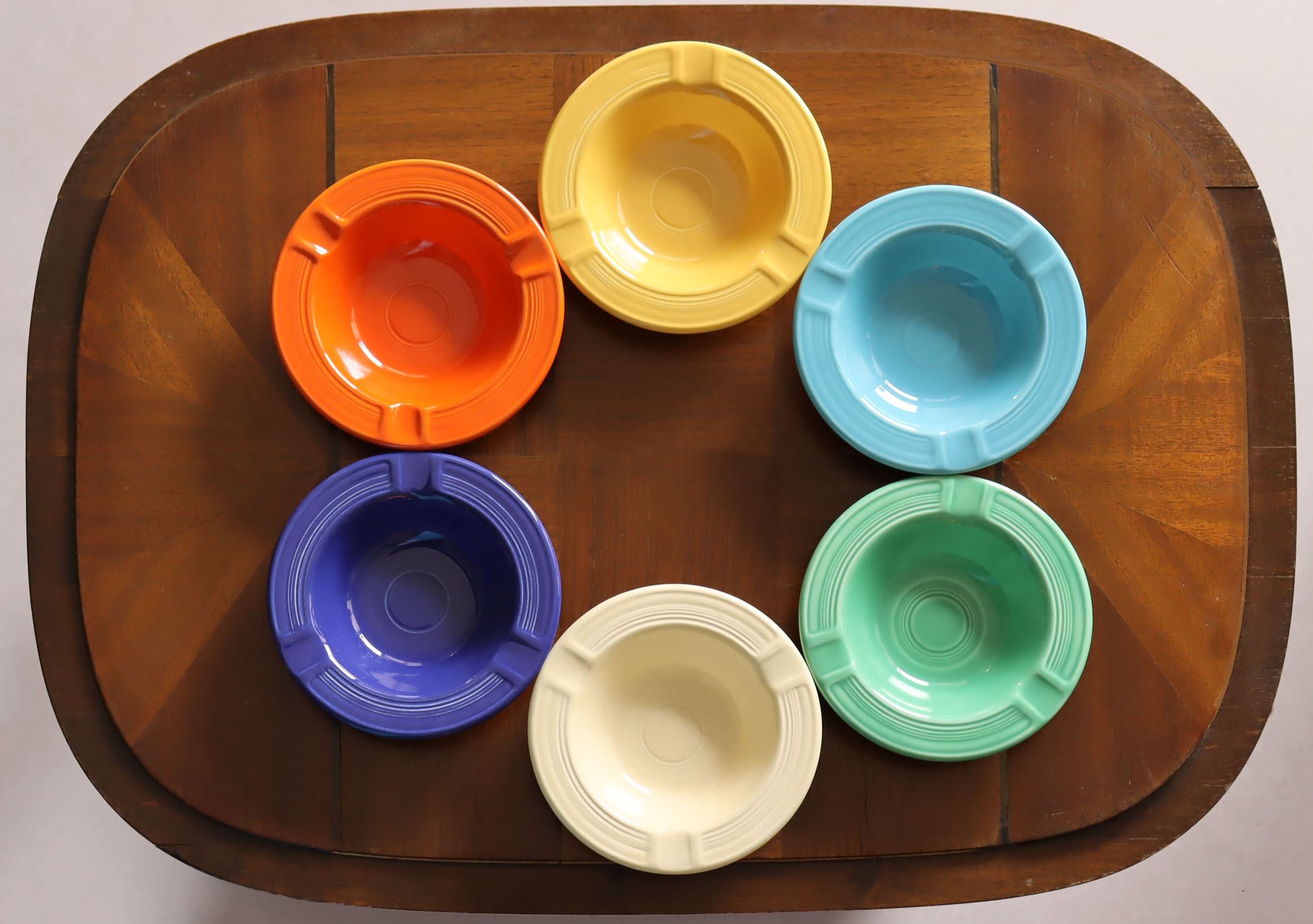
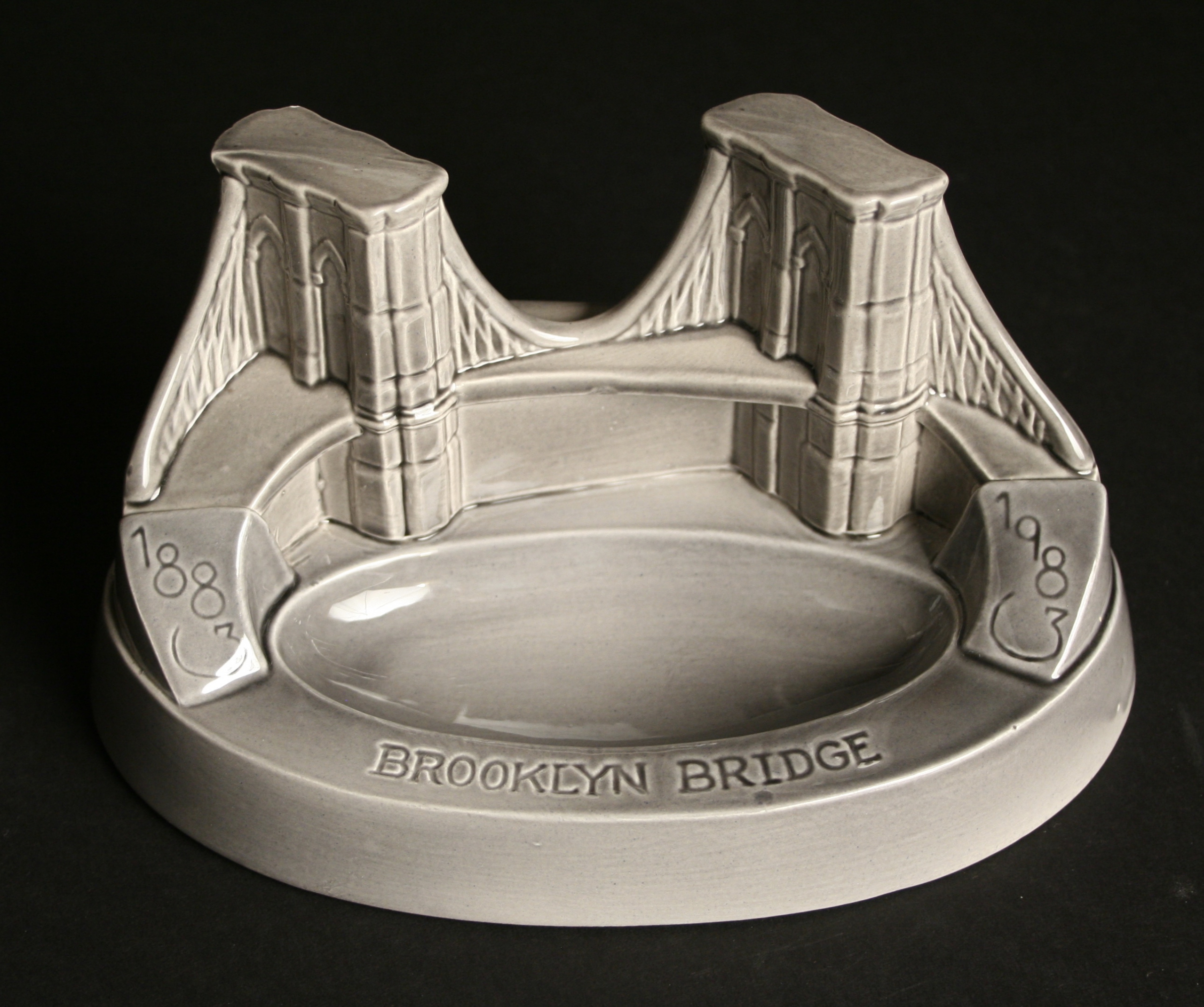
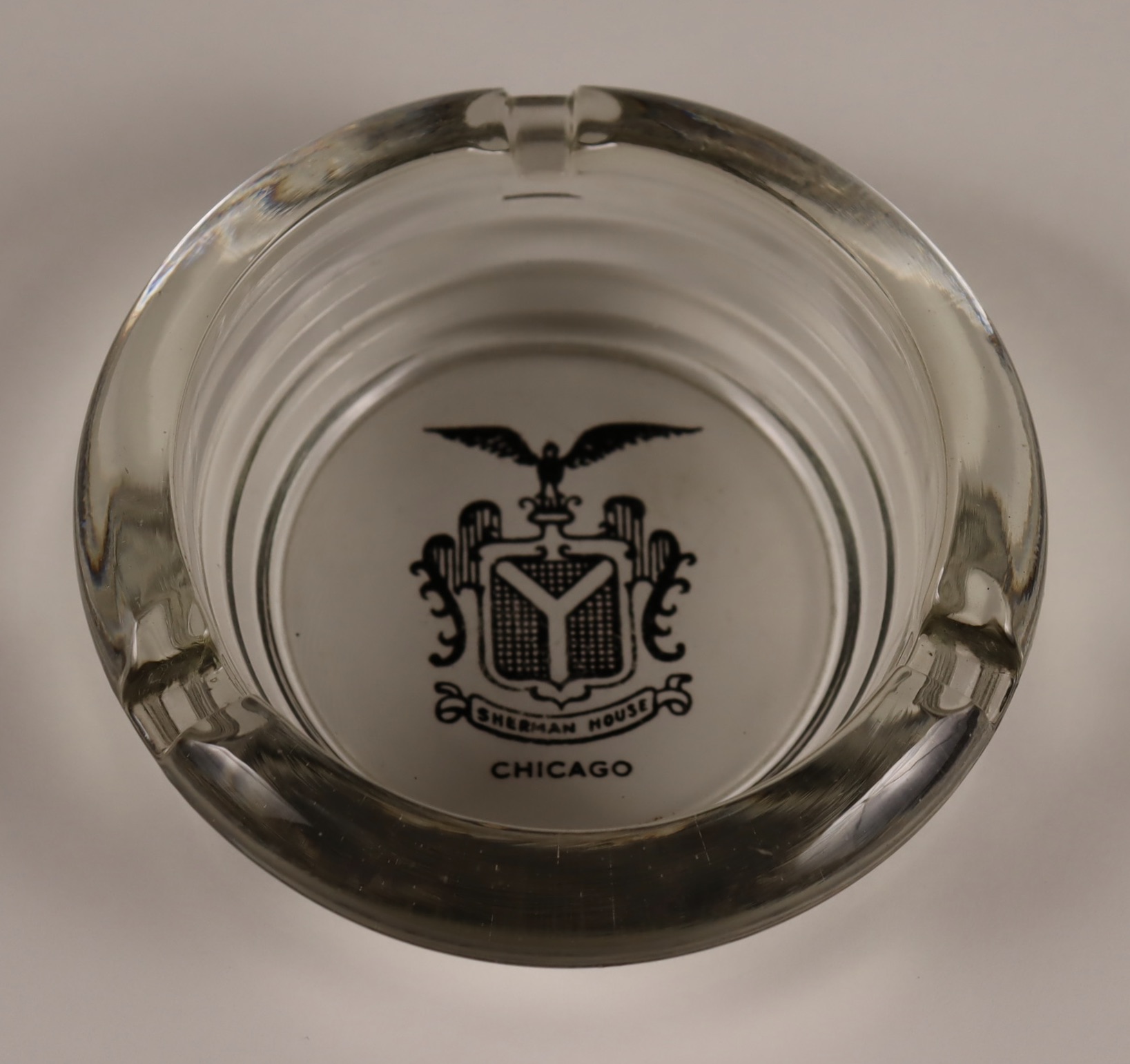
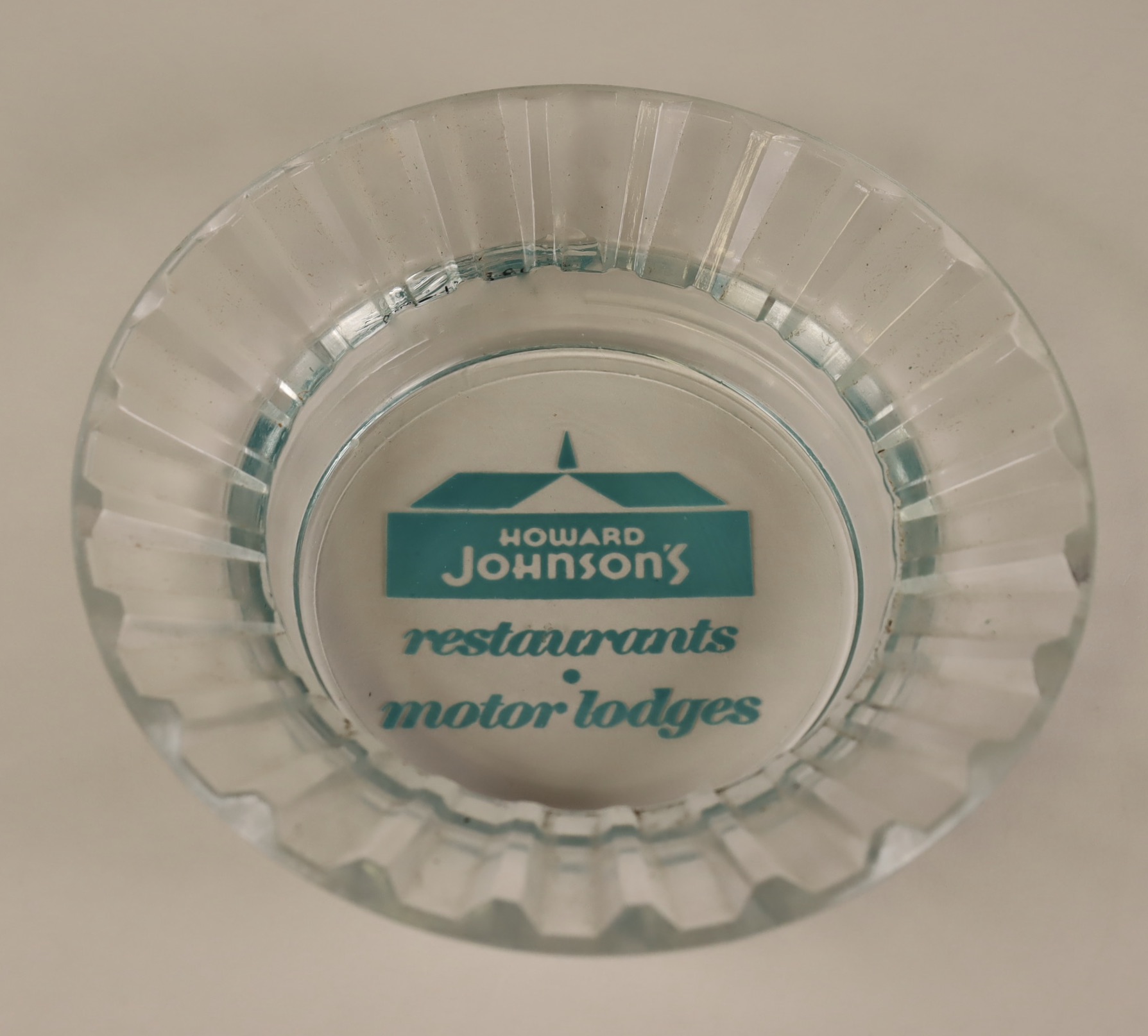
Beginning in the 1930s, important manufacturers such as Homer Laughlin China had popular dinnerware lines including Fiesta, that featured ashtrays in their original colors of old ivory, red, cobalt, green and yellow and soon after, turquoise. These earliest Fiesta ashtrays, shown in this exhibition, have seven concentric rings as their backstamps, which dates them between 1936-38 before the “Fiesta” backstamp became the norm. Frederick Hurten Rhead designed this line and these ashtrays. He also designed the Homer Laughlin Harlequin line exclusively for F.W. Woolworth stores in late 1936, which included cup and saucer sets with built in ashtrays in the saucers. A well-worn yellow example is included in this exhibition. On display in this Ashtray exhibition, one will discover ashtrays crafted by many well-known manufacturers who created fine personal and household accessories such as Hall China, Goebel/Hummel, Wedgwood, Vernon Kilns, Frankoma, Steuben, Copeland Spode, Pewabic Pottery, Arabia, Rosenthal, Branchell, Pfaltzgraff, Fostoria, TEPCO, Vernon Kilns, along with advertising ashtrays from hotels (Hotel Sherman, Chicago and Howard Johnsons), manufacturers, restaurants (e.g. McDonald’s aluminum disposable ashtrays), souvenir ashtrays from Paris depicting the Eiffel Tower, and commemorative ashtrays celebrating various presidencies such as President and Mrs. John F. Kennedy; commissioned ashtrays such as that of the Brooklyn Bridge commissioned on its hundredth anniversary and designed by Daniel Mehlman. One of the few contemporary designers of note, Mehlman designed a stunningly beautiful cigar “bowl” (“how gouche to refer to smoking or ashtrays in a design!” thought Corning, Inc.) in 1996, a form that never went into production. And now the Steuben Factory at Corning is permanently closed. The rare prototype is included in Ashtray, on loan from its designer. Recently he issued a small production of the same design, in white ceramic (also included in the exhibition).
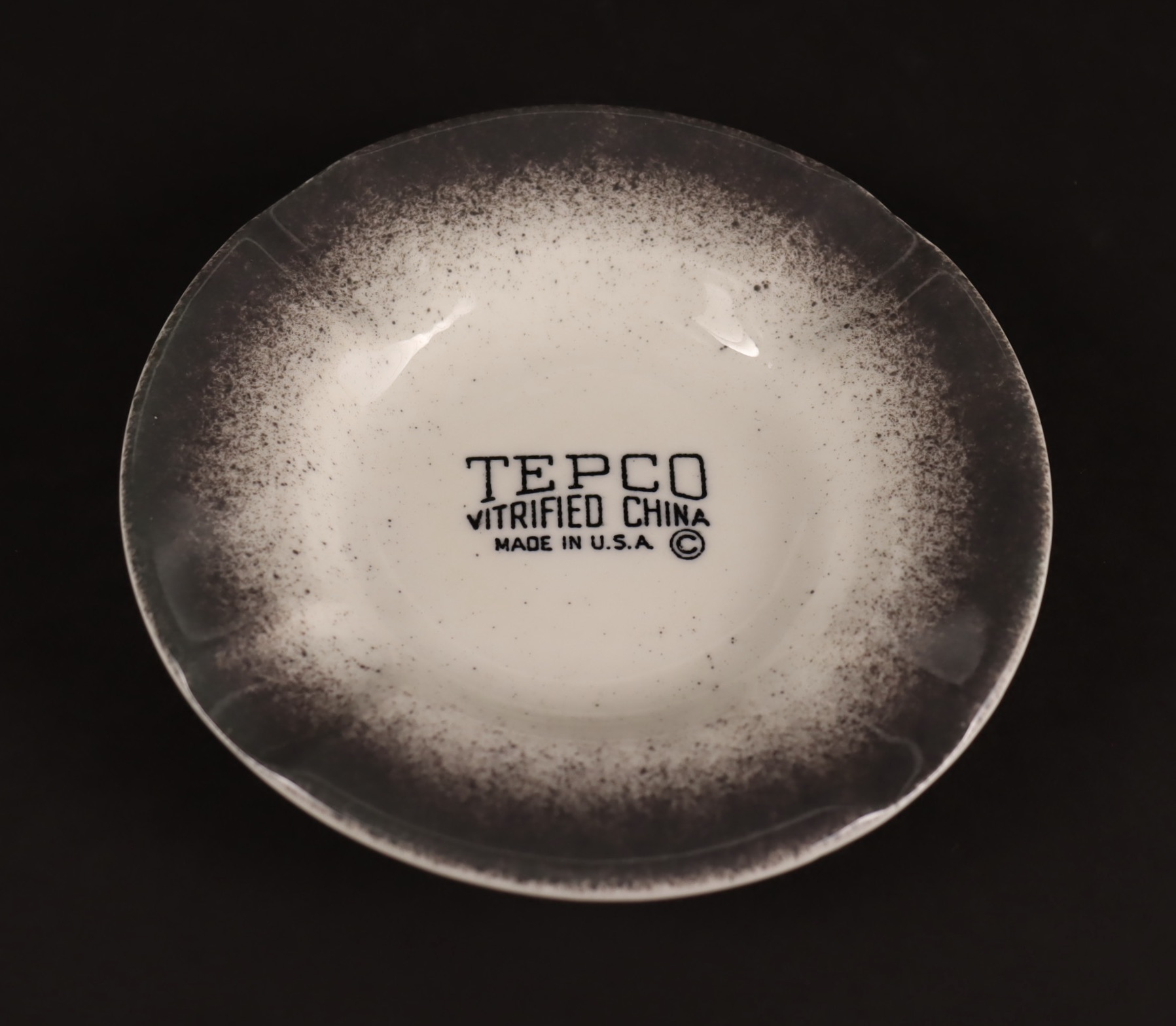 TEPCO restaurantware china advertising ashtray “TEPCO vitrified china” restaurant china, decal, glazed Diam: 5.5” IMoDD 2017.83 Gift of Nancy and Steve Selvin 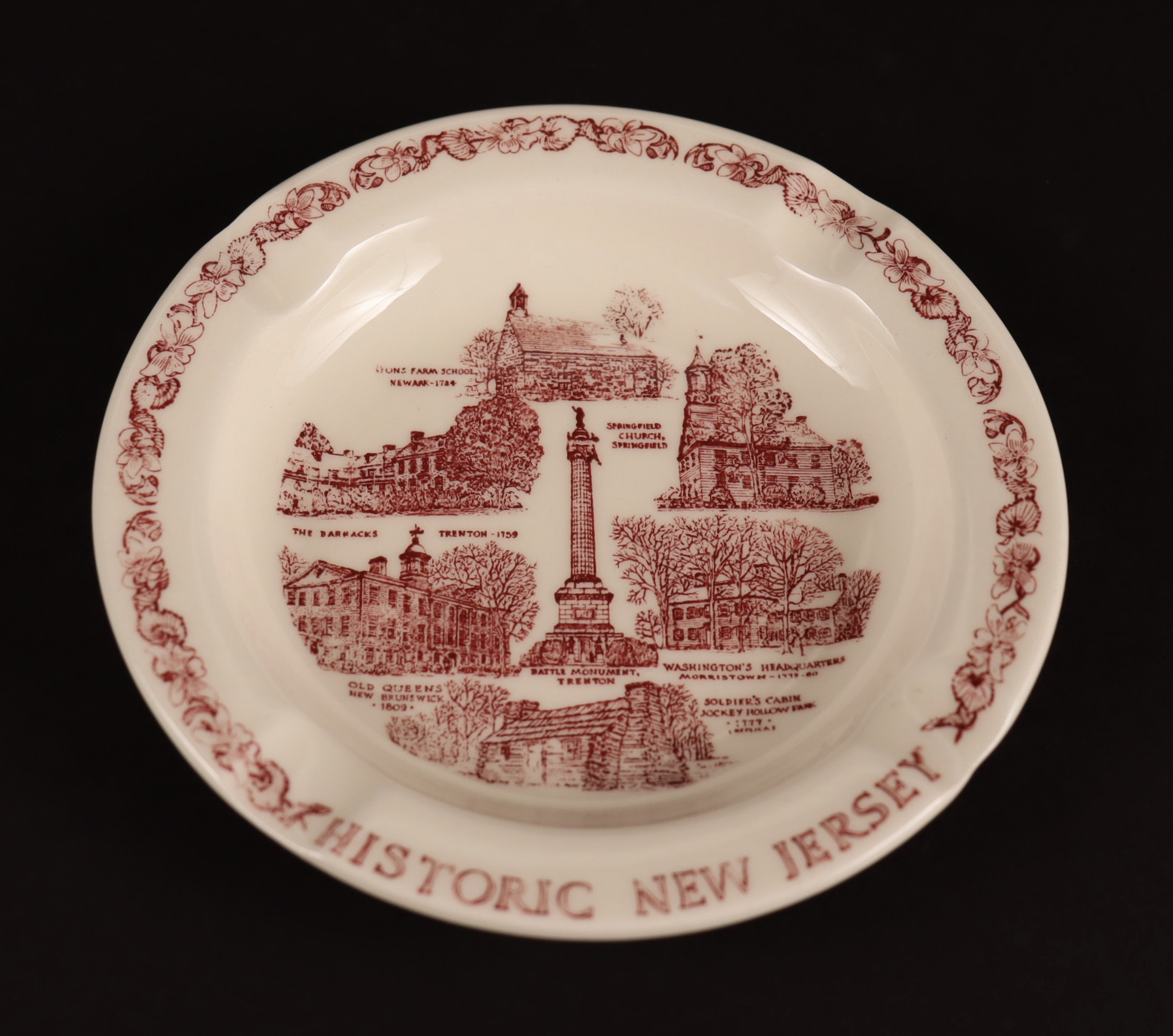 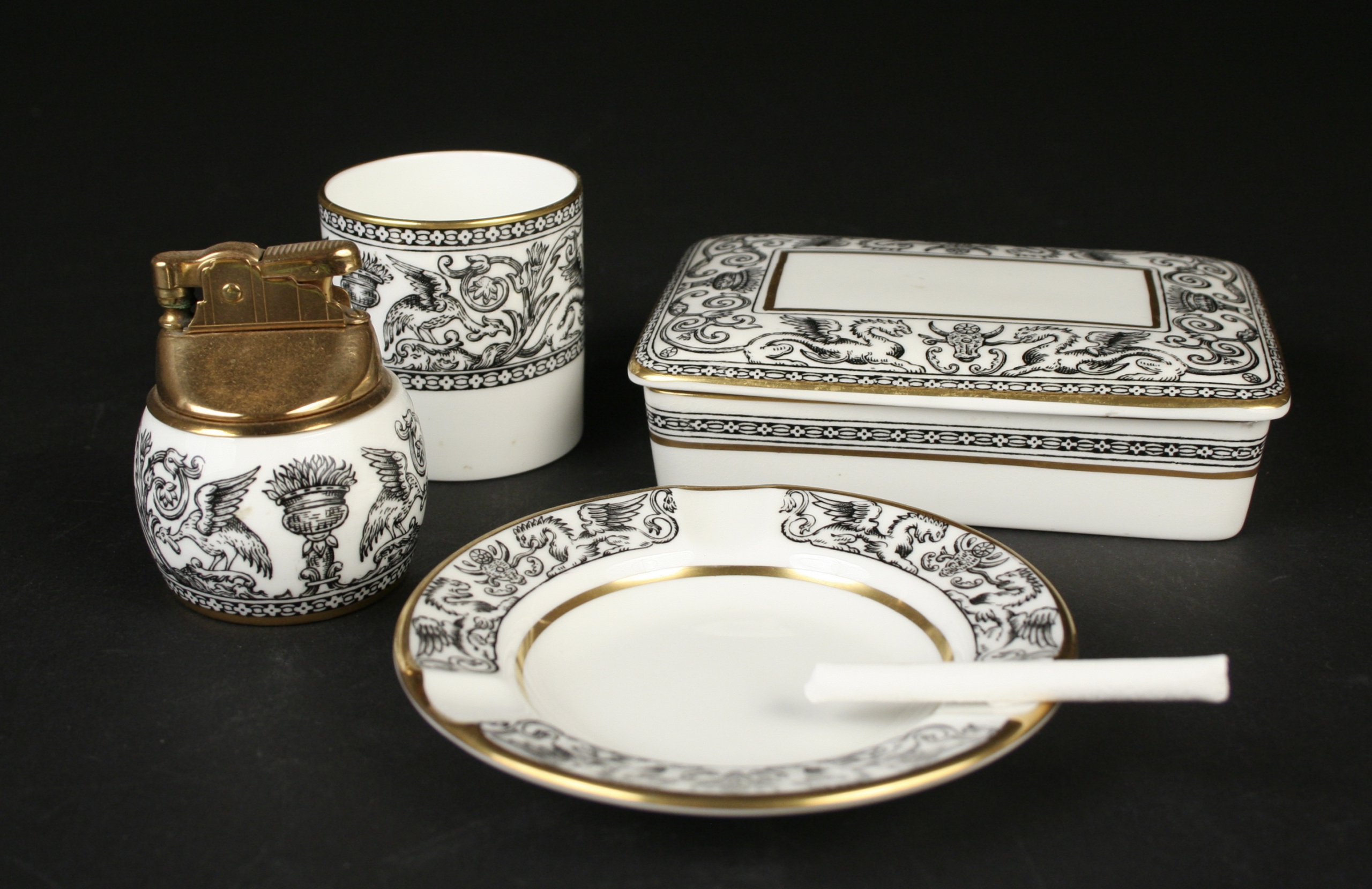
|
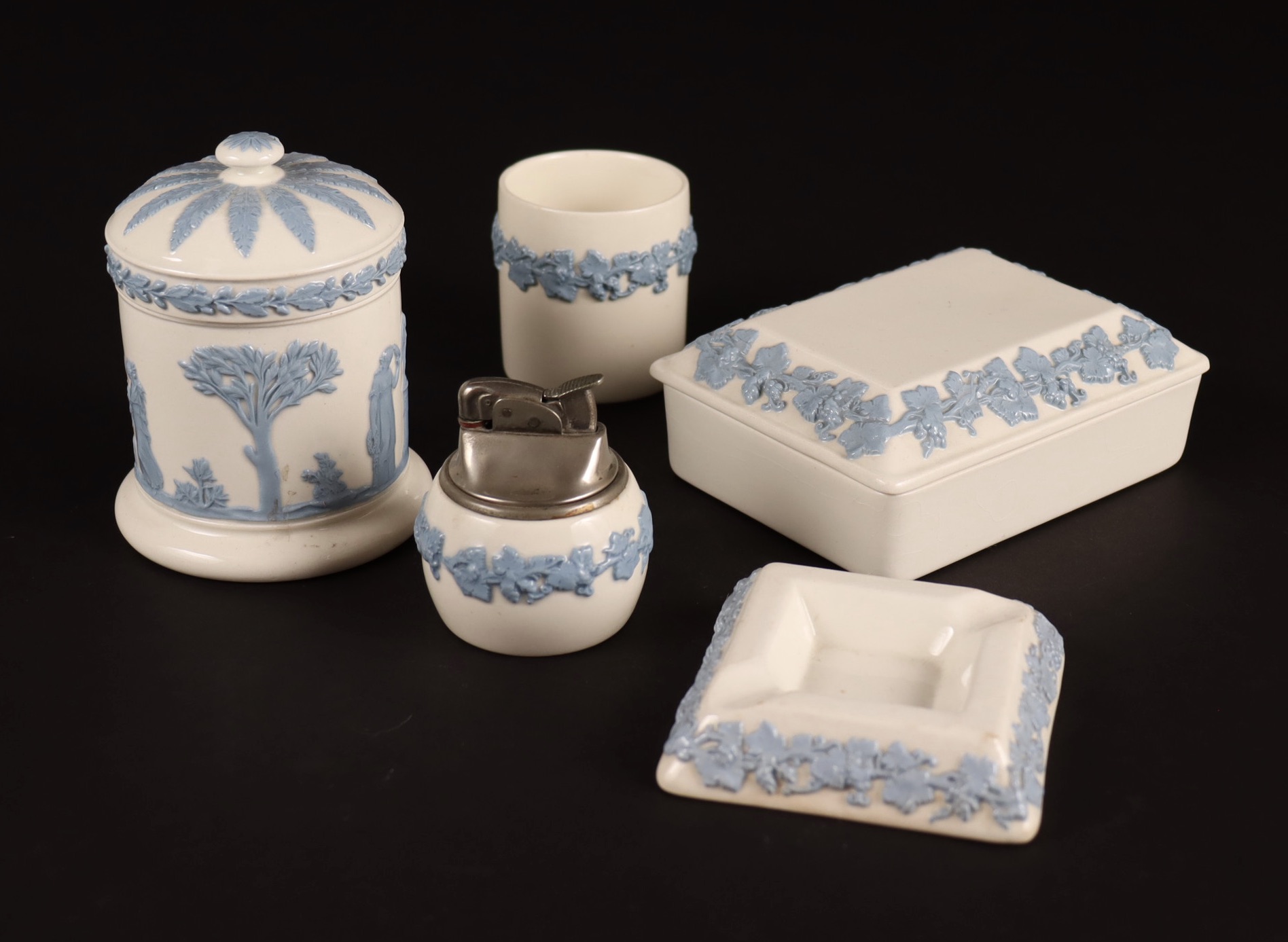
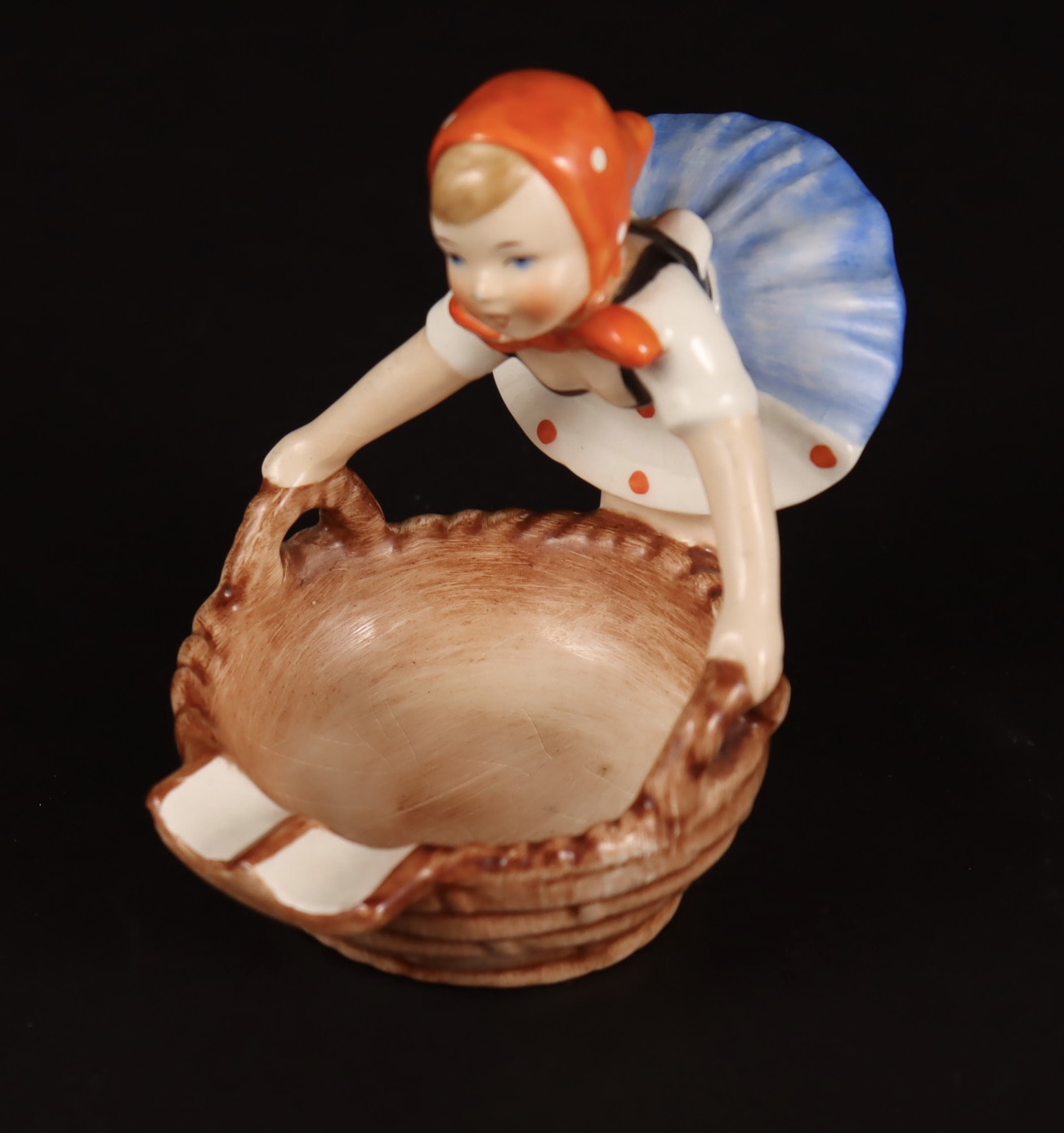
And in the arena of ceramic ashtrays, if one is a collector of Hummel figures, there are endless ceramic ashtrays with children, birds, and charming vignettes atop. Chosen for this exhibition, is a female child with a laundry basket that serves as the ashtray.
Of course, tobacco companies and their brands had their own advertising ashtrays. On our Mid-Century upright piano as I was growing up, was a sort of sweet clear glass duck ashtray. Of course, my dad would smoke when he was playing the piano. It wasn’t until I was researching the ashtray to donate it to IMoDD for this exhibition, that I learned that this precious heirloom glass duck ashtray was a Pall Mall brand cigarette advertising gimmick, designed by Duncan and Miller in the 1940s. Why a crystal duck, no one seems to know. And it came in all hues of solid glass.
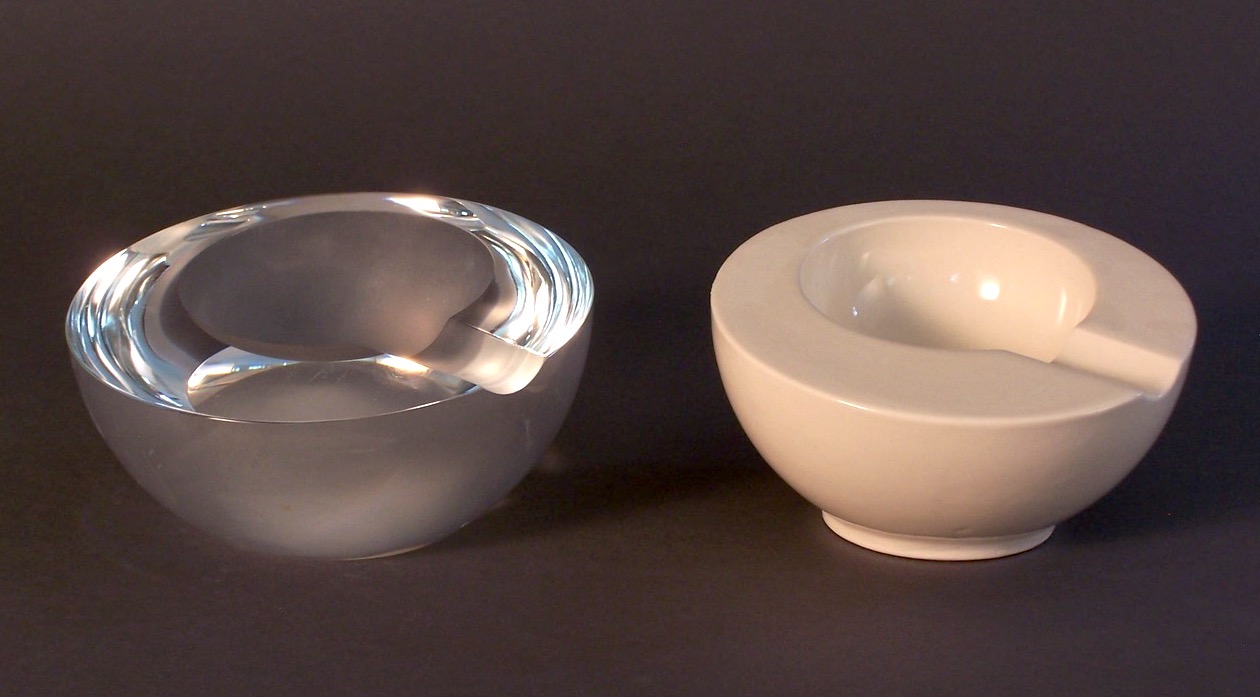
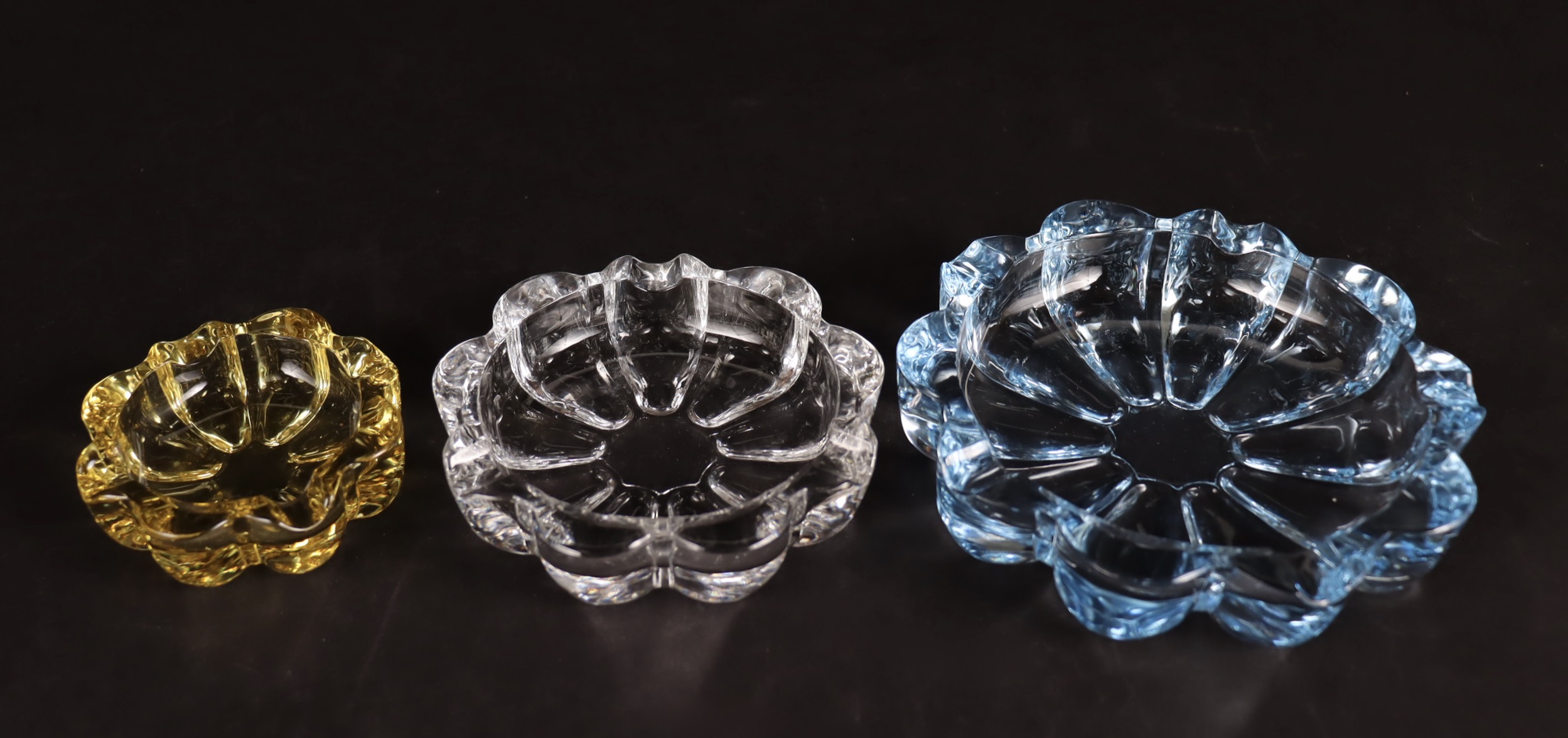
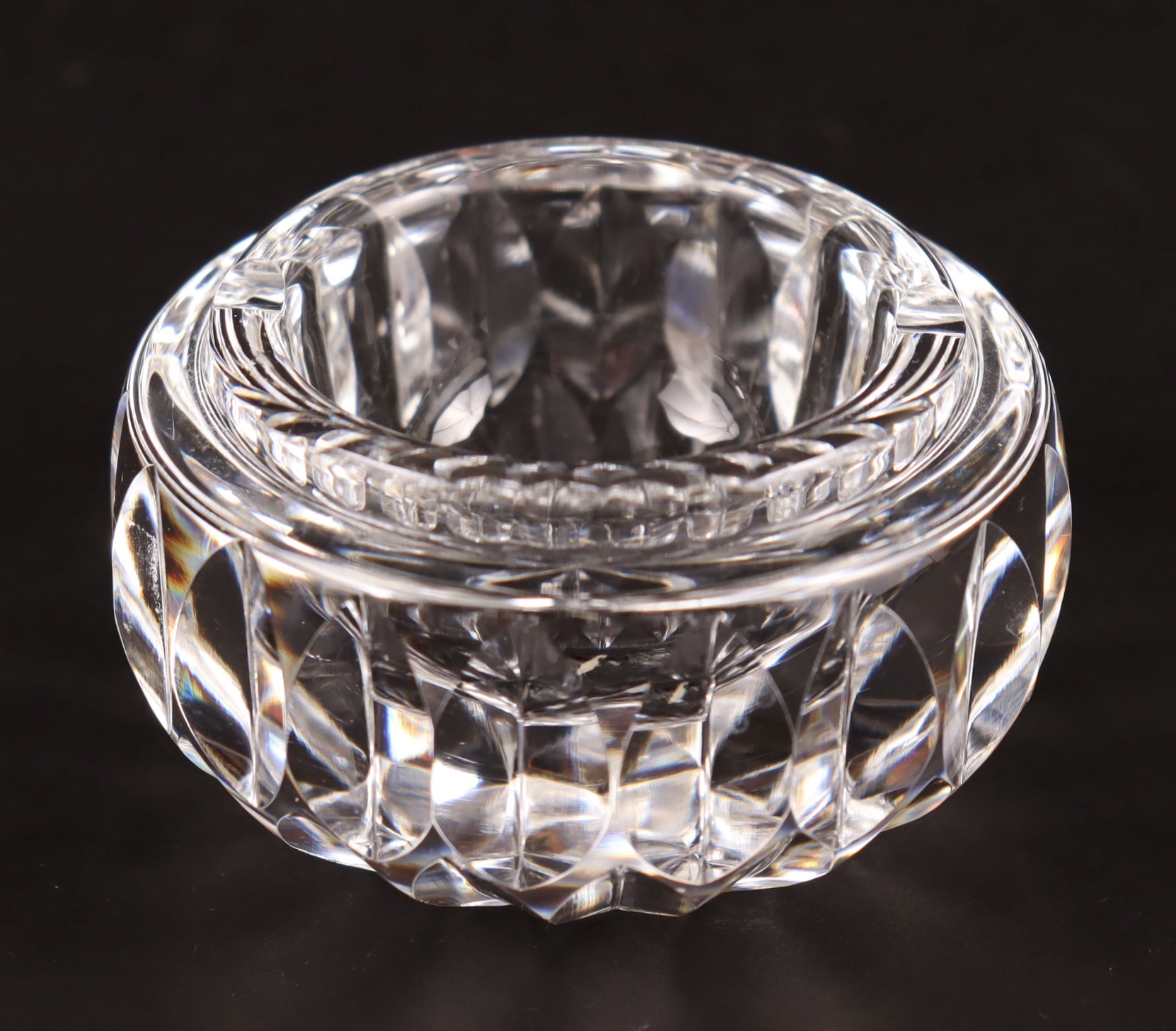
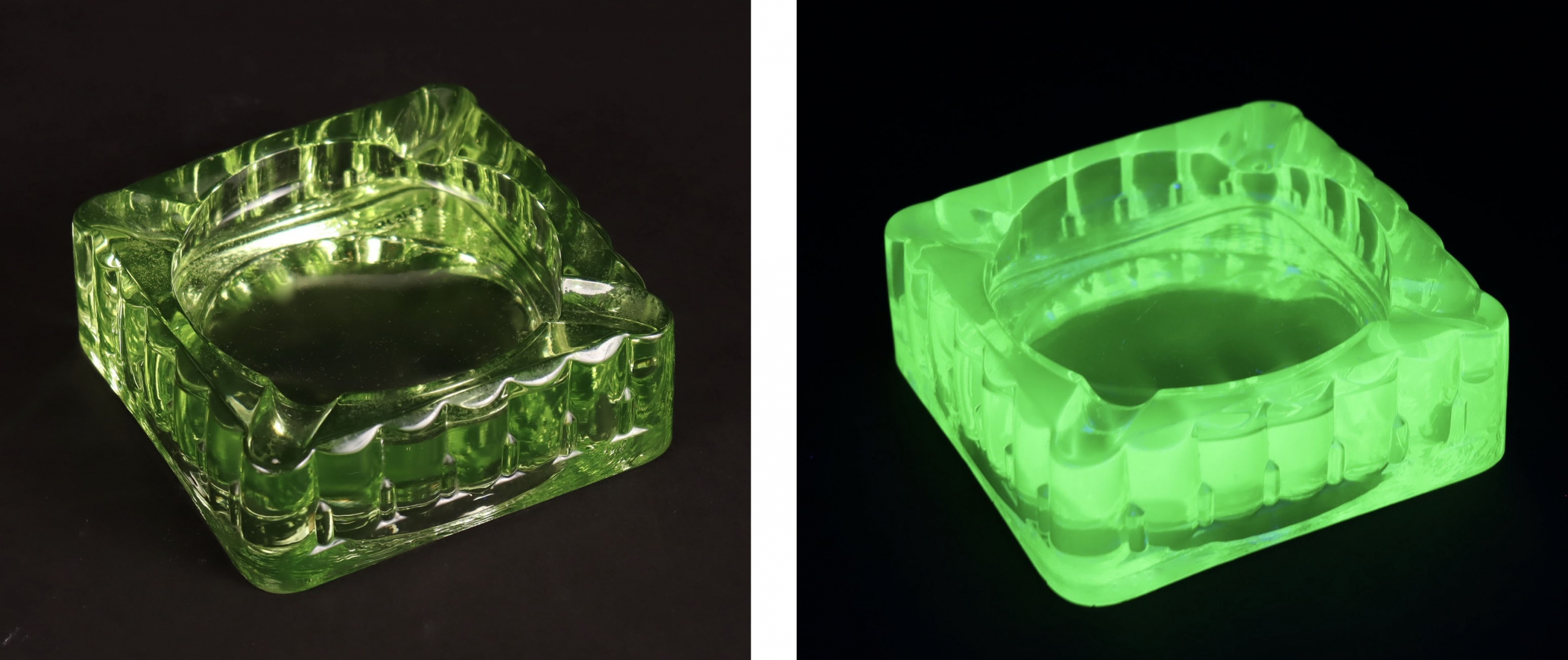
Glass ashtrays, beautiful to behold and impervious to heat comprise a separate popular genre of ashtrays. There are those made of uranium glass (or Vaseline glass) that are radioactive and glow an eerie green under fluorescent light. These are frequently not marked with a manufacturer’s stamp. Others were proudly produced by major brands: Steuben Glass in Corning, New York; Fostoria Glass in Fostoria, Ohio, Anchor Hocking, in Lancaster, Ohio, and Hazel Atlas in Wheeling, West Virginia. And then there are the more “exotic” glass ashtrays from Ireland (Waterford) and Italy (Murano).
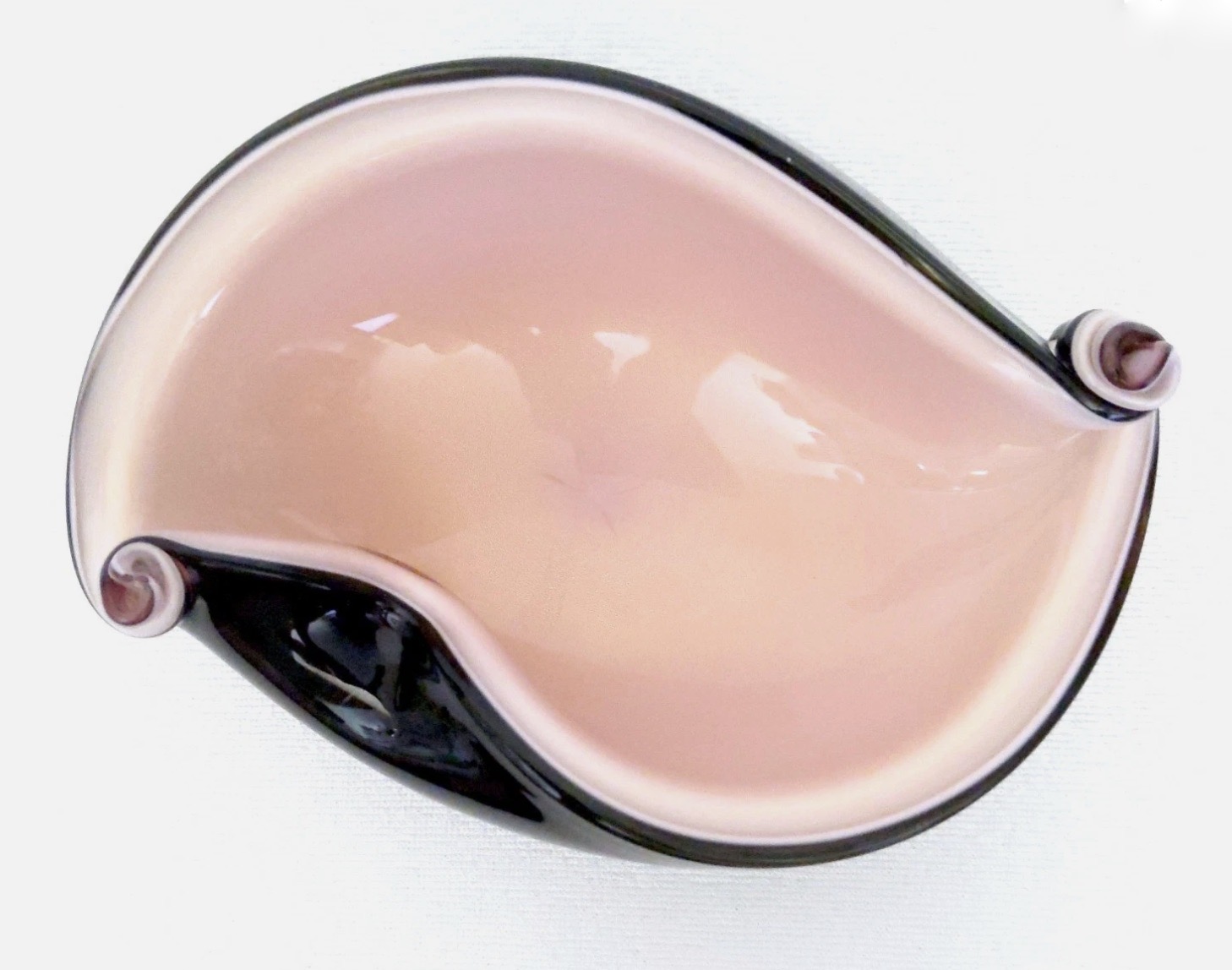
The pink and black Murano glass ashtray in the shape of a conch shell, was created in the mid-20thcentury by the Italian artist Alfredo Barbini. Barbini (1912 – 2007) was from Venice, Italy, and was one of Murano’s leading figures of the twentieth century. He was defended from prominent families in the Murano glassmaking industry for generations. After World War II, he worked as master glassblower and designer with Archimede Seguso, Napoleone Martinuzzi, Vetreria Vistosi, and Gino Cenedese. He established his own glass firm, Vetreria Alfredo Barbini in 1950. His work was exhibited at the Venice Biennales from 1950 to 1961. 
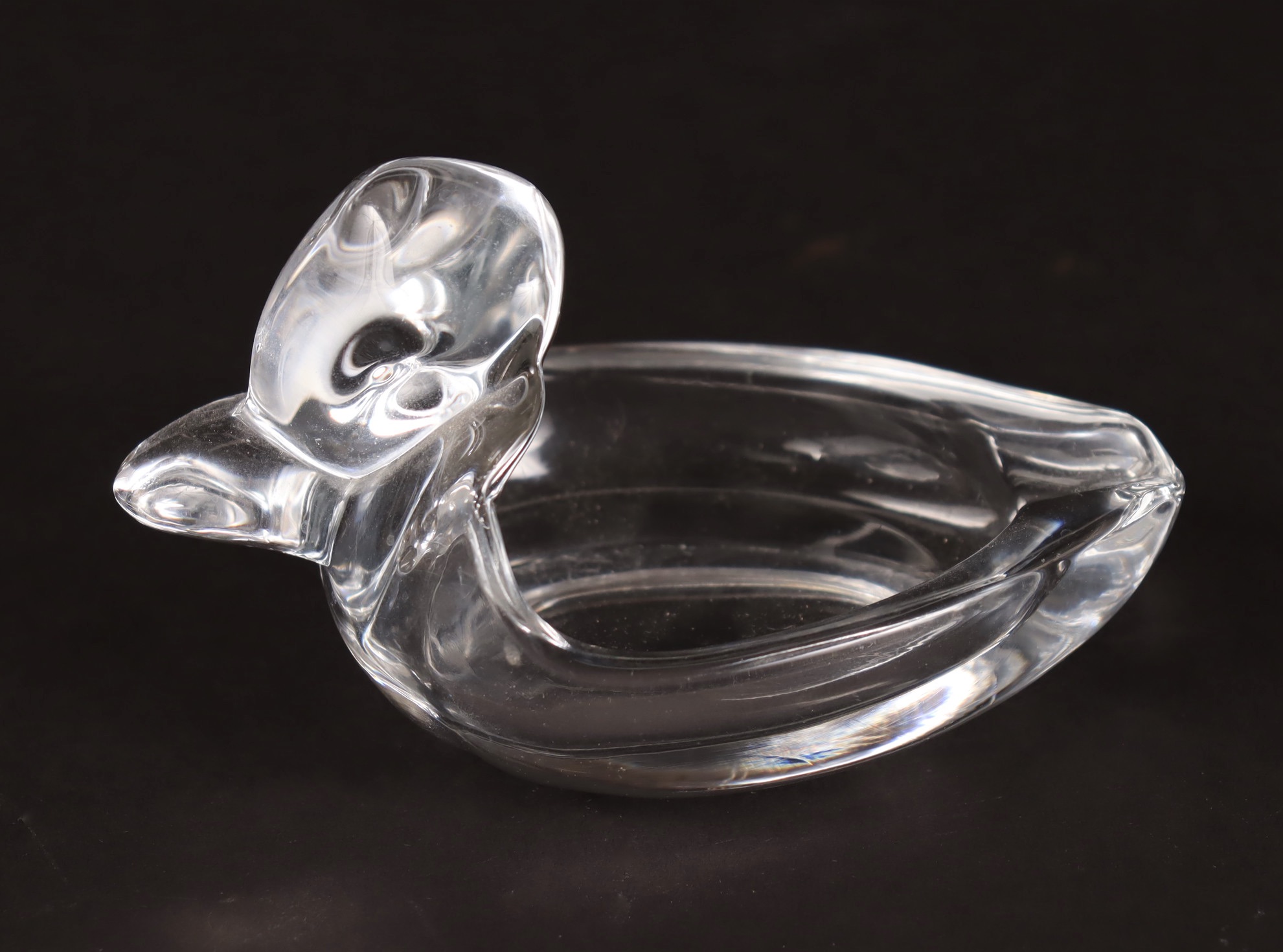 Duncan & Miller Pall Mall advertising clear glass duck ashtray, 1940s, glass, H: 2.75” L: 5” W: 3”, IMoDD 2025.141 Gift of Margaret Carney and Bill Walker 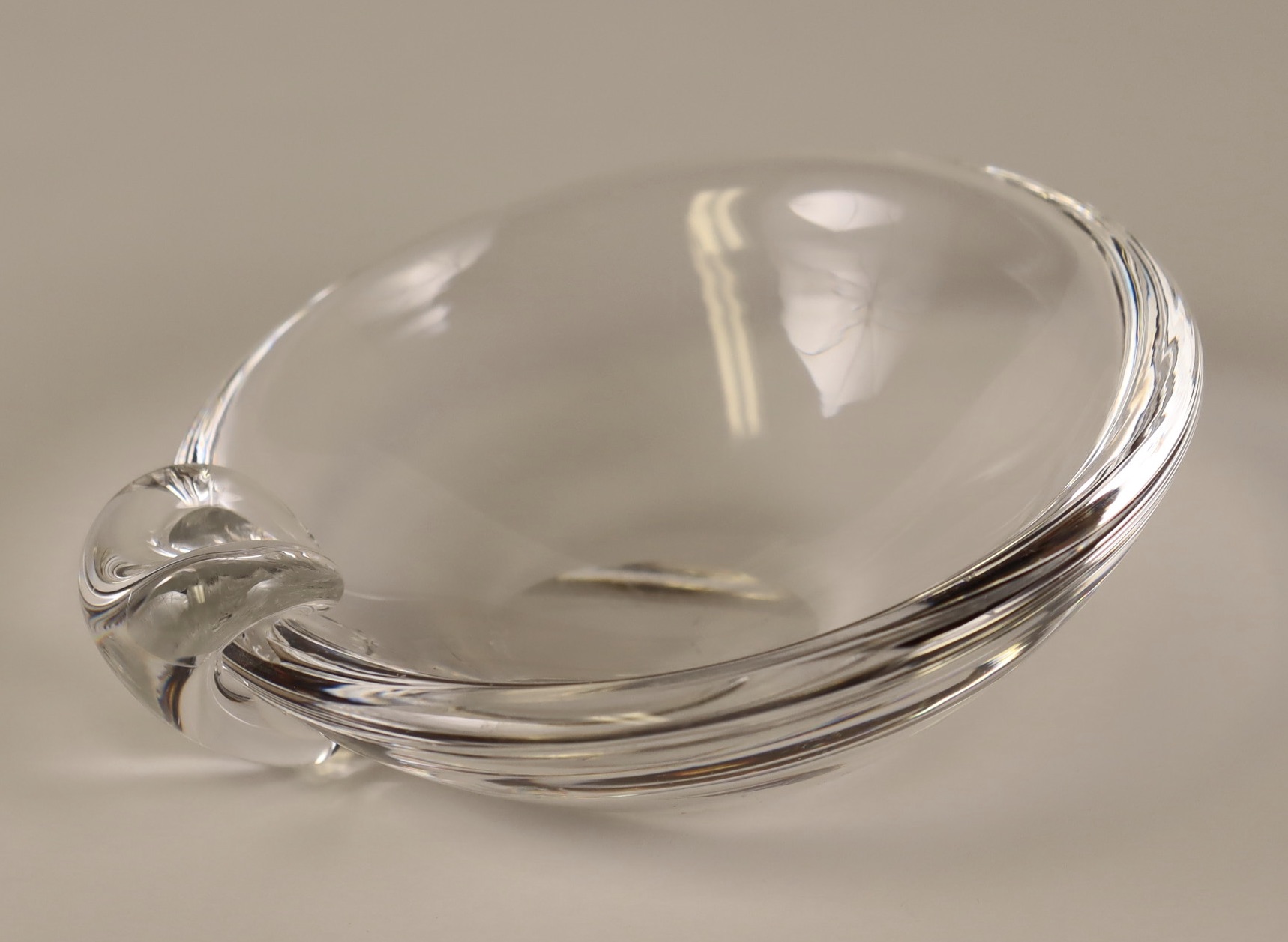 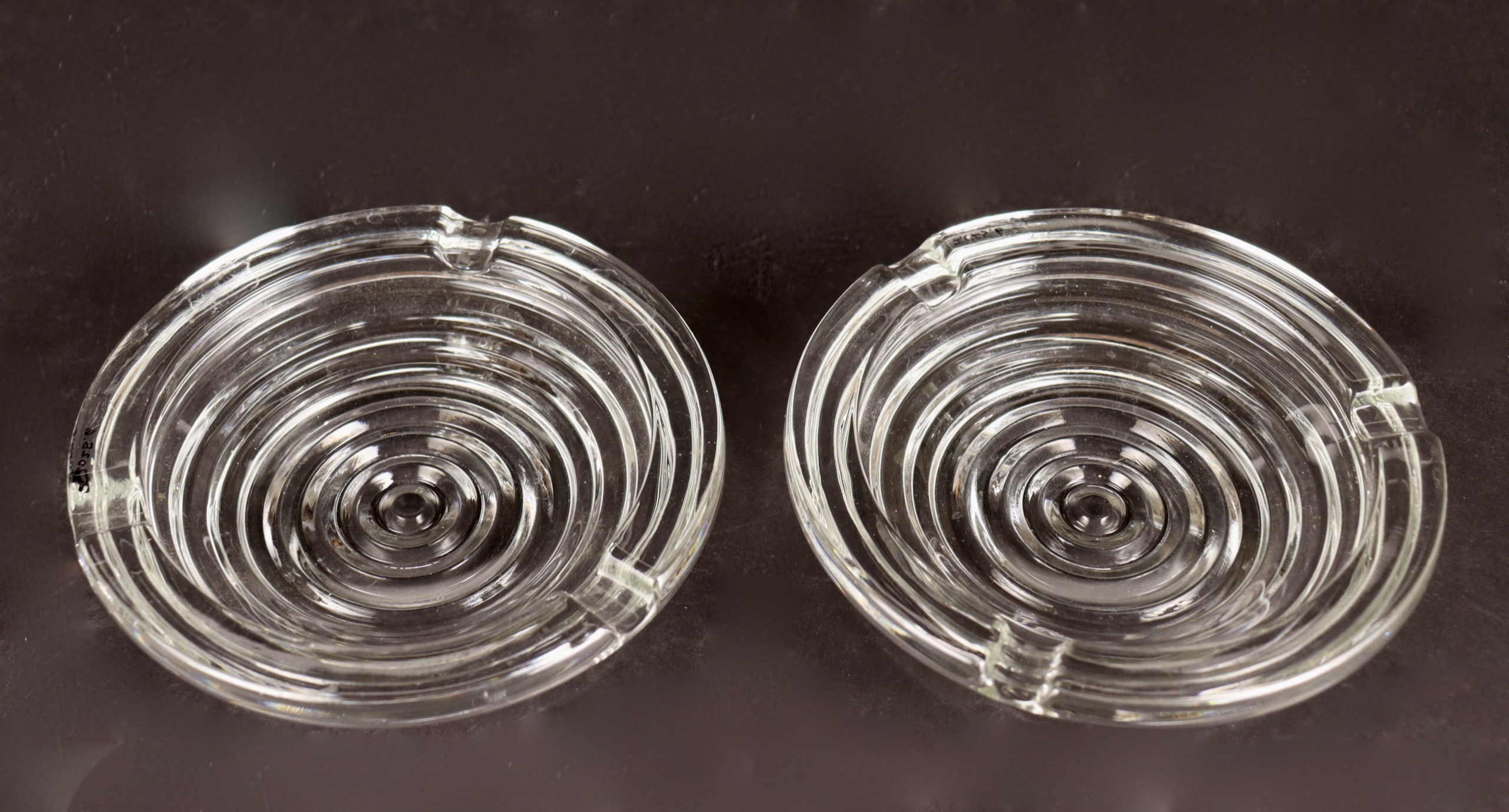
|
|
Ceramic and glass ashtrays with branded logos are the hallmark of marketing for hotels, restaurants, and businesses of all sorts. Examples included in this exhibition are promoting the Sherman House in Chicago, Howard Johnson motels and restaurants, and, of course, the Waldorf-Astoria in New York City.
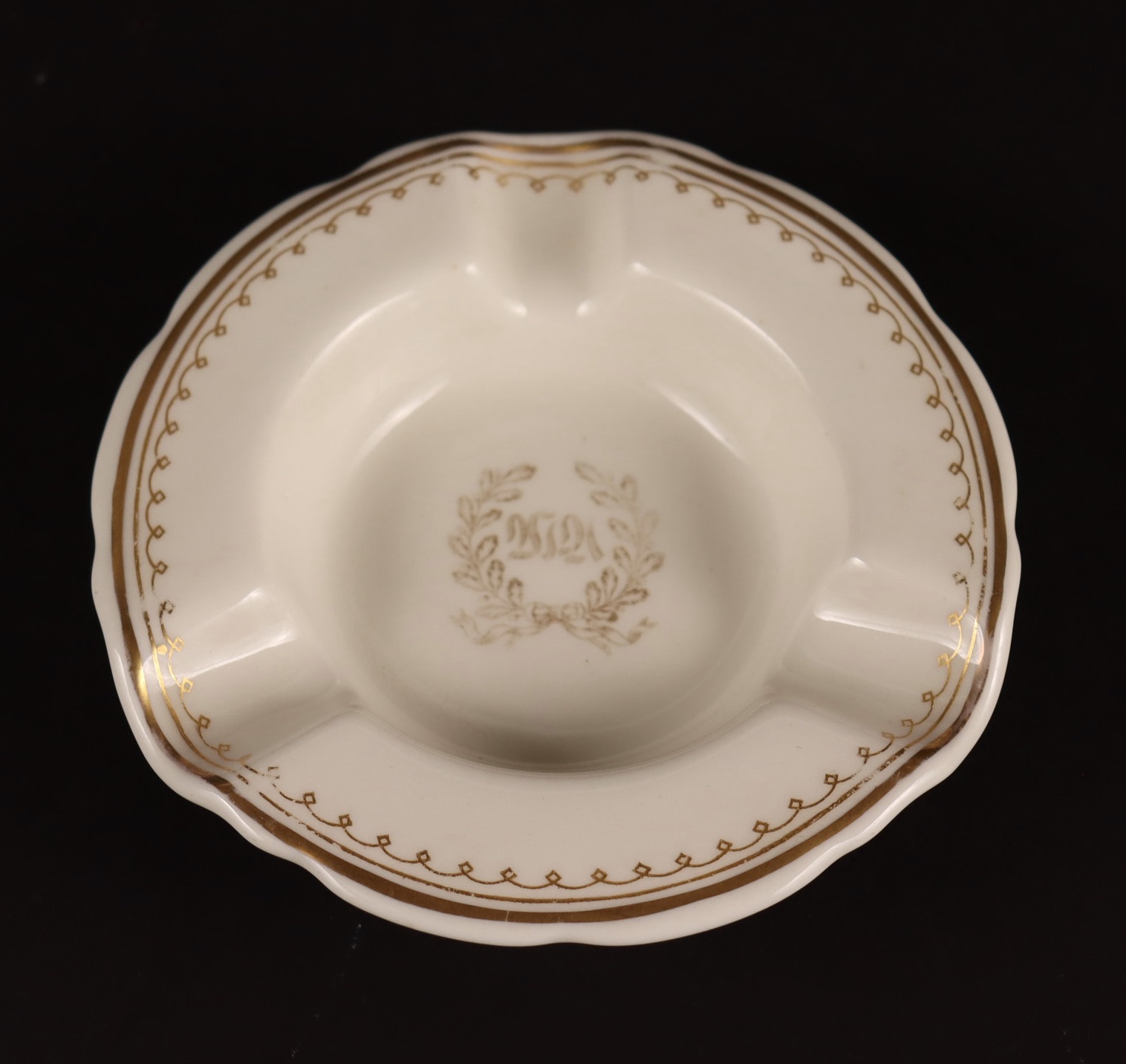
If everyone has an ashtray story, then every ashtray must have a story, too. Top of the list involves ashtrays and amnesty. In its August 13 & 20, 2012 print editions, The New Yorker magazine published a brief piece about an amnesty program being offered by New York’s famed Waldorf-Astoria. The Waldorf’s marketing director claimed to be trying to recover, without questions asked, Waldorf-branded items that had “disappeared” between 1893, when the Waldorf opened, and 1960. Ashtrays are among the items listed which included flatware, plates, bowls, creamers, etched Scotch tumblers, ice buckets and tongs, coffee pots, and coffee cups that are marked with the Waldorf’s crest. These were counted among the purloined treasures amounting to more than eighty million dollars worth annually from all hotels just a decade ago. The complete provenance of a Waldorf-Astoria top-marked ashtray included in Ashtray (a recent addition to the IMoDD permanent collection) remains unknown, but Scammell’s was the manufacturer of this Lamberton Ivory China ware with its scalloped rim that they began manufacturing around 1931. It is known that by the time this amnesty program was initiated that the Waldorf was SELLING these same kind of Waldorf-branded articles. Of course some believe these ashtrays were top-marked and the hotels wished them to be stolen because it was cheap marketing.
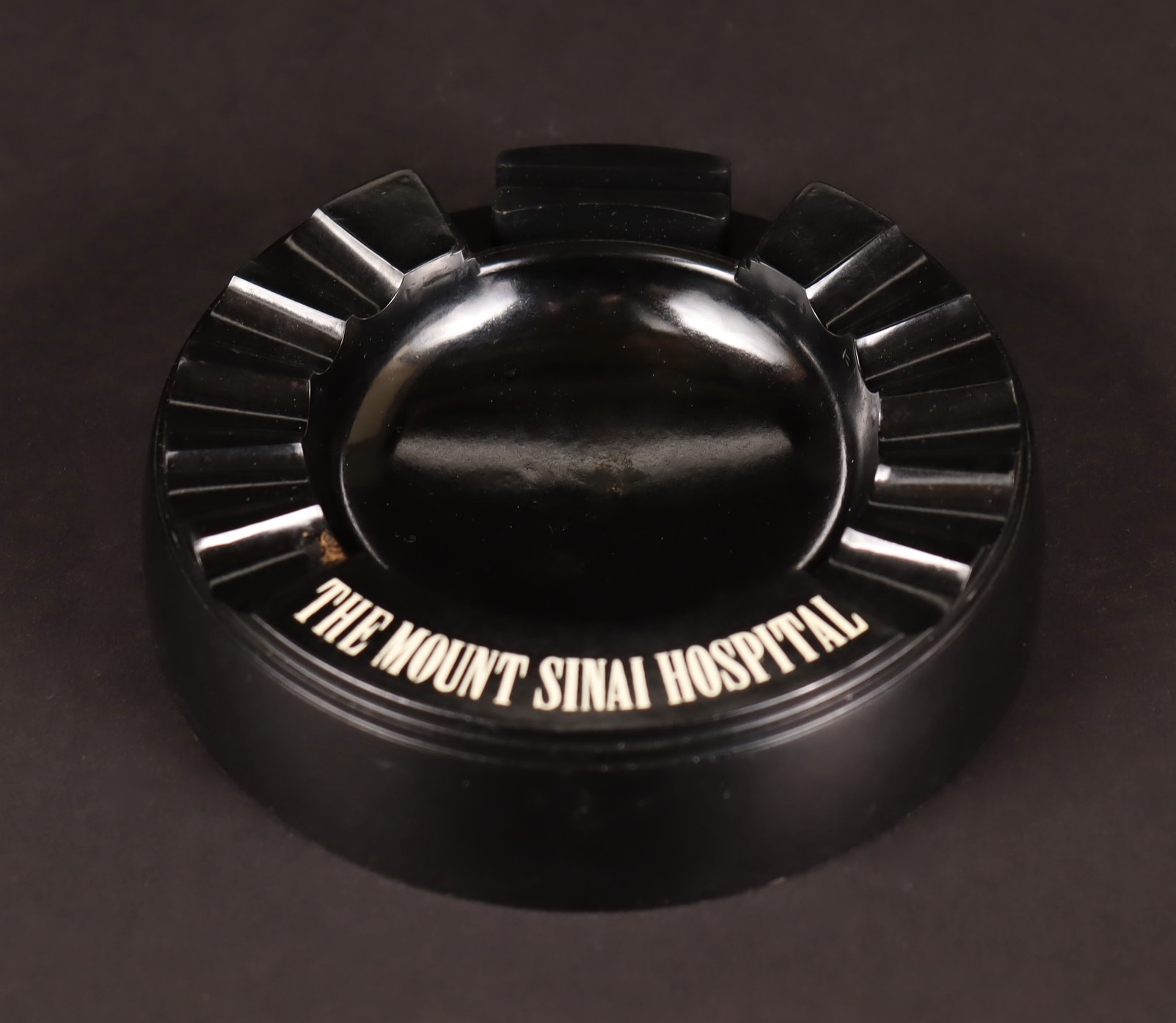
In hindsight, somewhat ironically, hospitals also had their own top-marked ashtrays. The lone example in this exhibition is a black plastic version, with a place for the matches, from the 1950s and proudly advertising “Mount Sinai Hospital,” manufactured by Hunter Manufacturing in New York City. Alan Blum, M.D., and the Center for the Study of Tobacco and Society, curated an online exhibition from 2020, “Eight Hospital Ashtrays: An illustrated history of hospitals and smoking” (http://csts.ua.edu/ashrays/)
Dr. Blum established the Center for the Study of Tobacco and Society at the University of Alabama in 1998, and began producing exhibitions, presentations, and papers in 1999. Before that he curated his first tobacco-themed exhibitions in 1988 at the Texas Medical Center Library in Houston (“’When More Doctors Smoked Camels’: A Century of Health Claims in Cigarette Advertising”) and gave his first major presentation (“A Light Refresher Cough on Cigarette Advertising”) in June 1977. (information from Dr. Blum received via email dated 1/20/26)
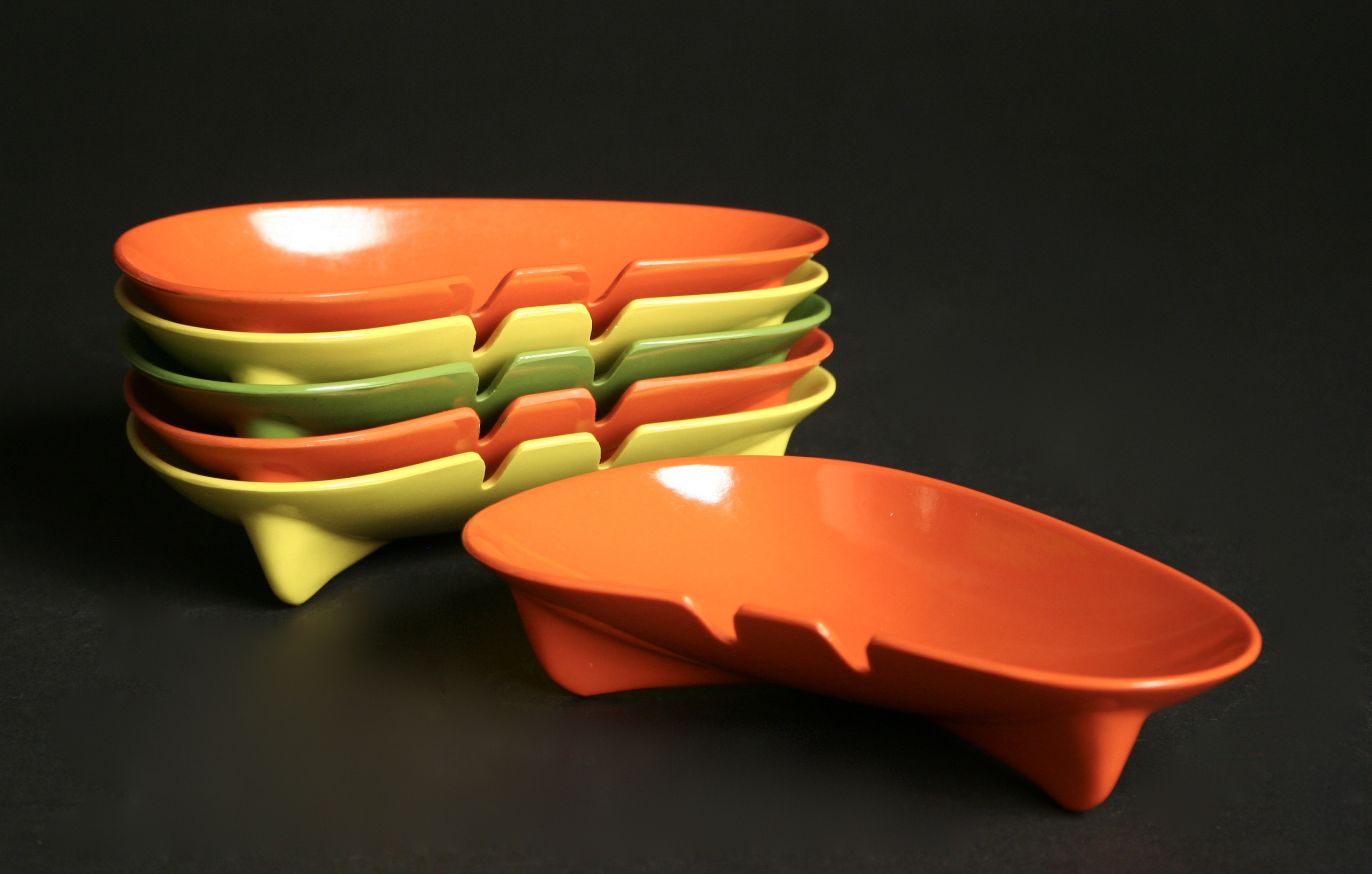
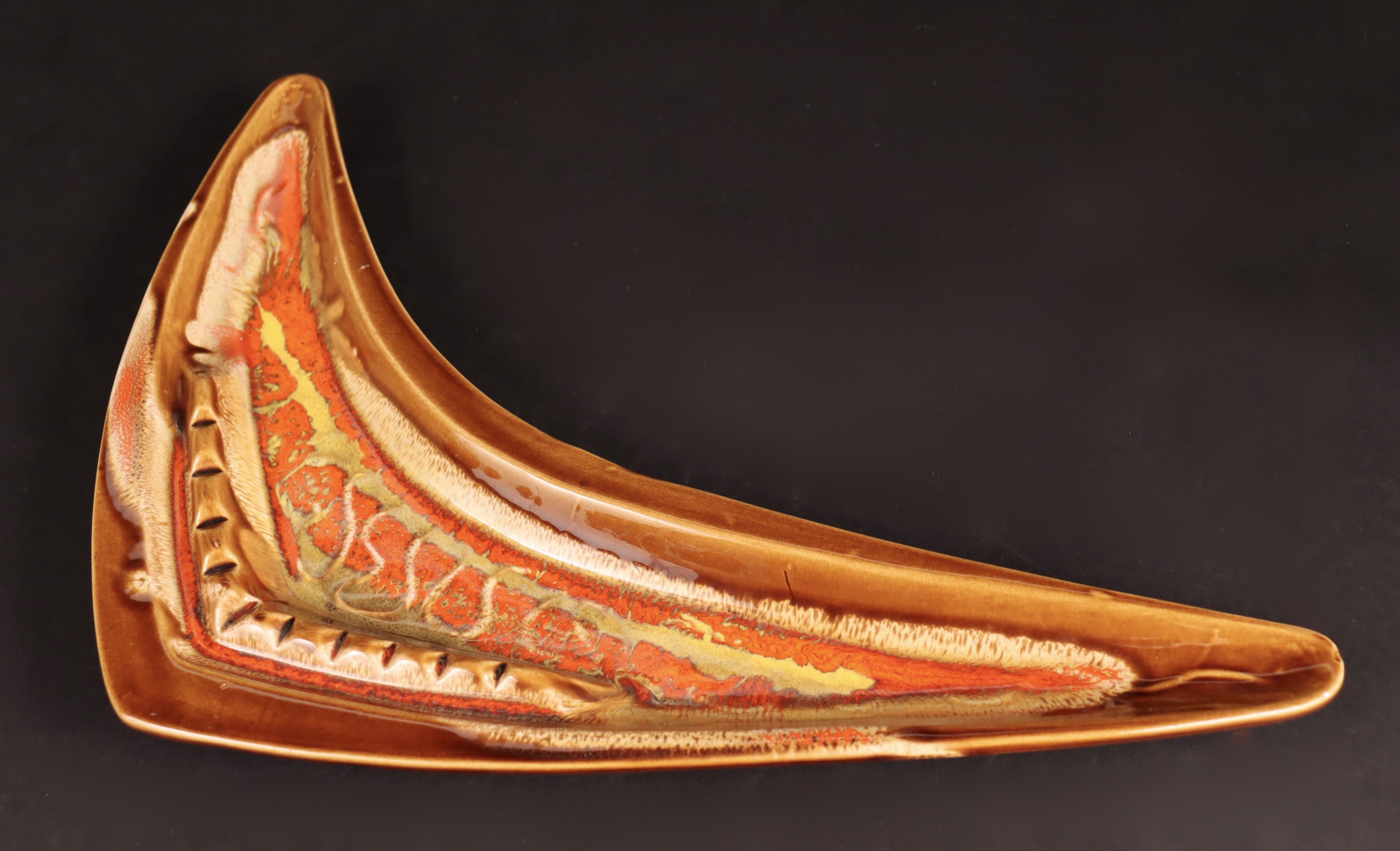
During the Mid Century, ashtrays became popular in “atomic” or boomerang-shapes. Kaye LaMoyne designed plastic stacking ashtrays in oranges, yellows, and lime green for Branchell in St. Louis. The boomerang form was taken to the extreme by numerous companies such as Marcia of California who created memorable oversized earthenware examples in bright shiny glazes such as orange, gold and earthy tones that were popular at the time.
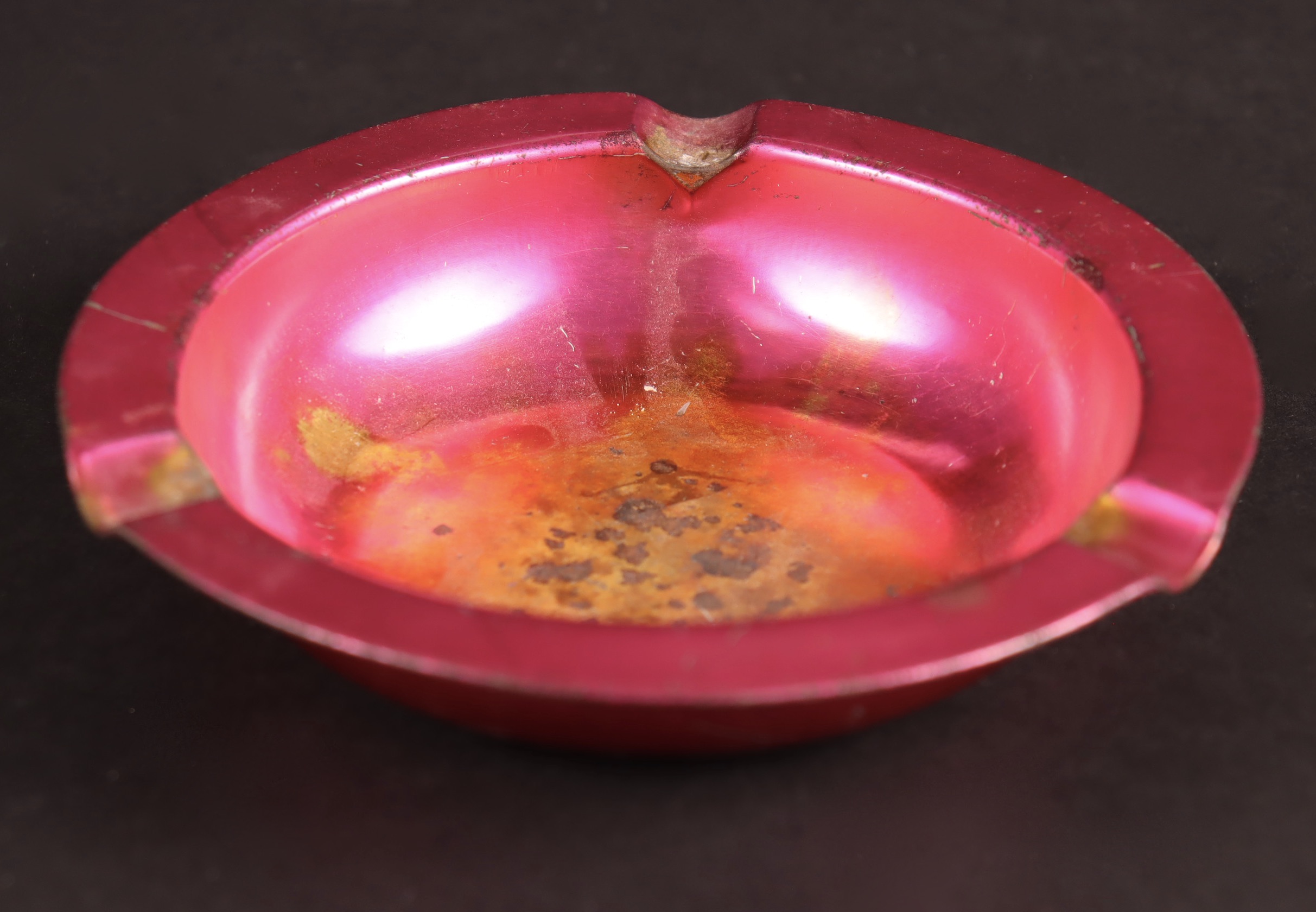
If you remember the anodized aluminum pitchers and tumblers from the mid-20th century which were used to mix and serve refreshing Koolaid drinks in the summertime, then you’ll recognize one very well-used hot pink ashtray on exhibit. Anodized apparently does not mean impervious to hot ash judging by the scars on the interior.
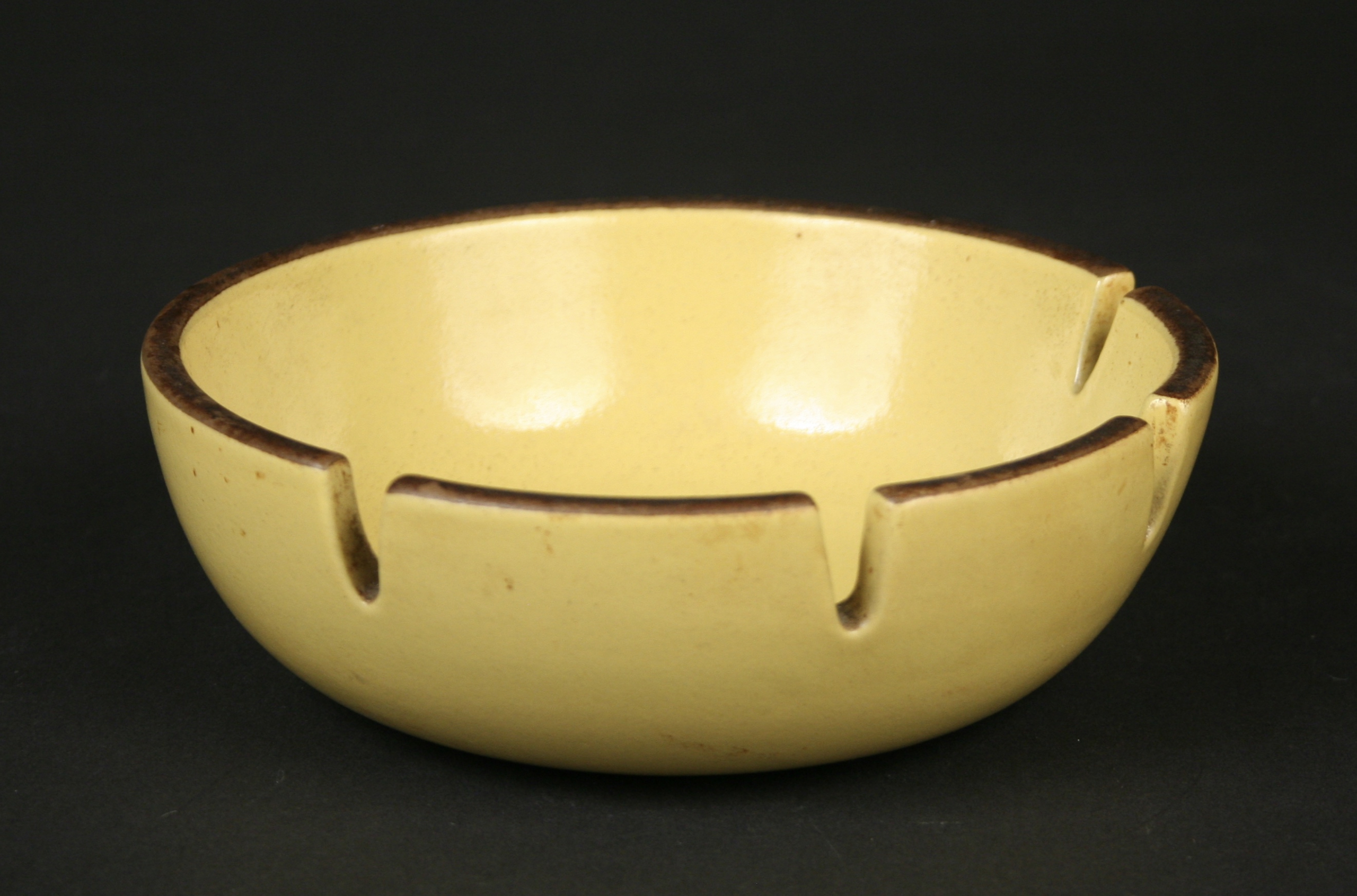
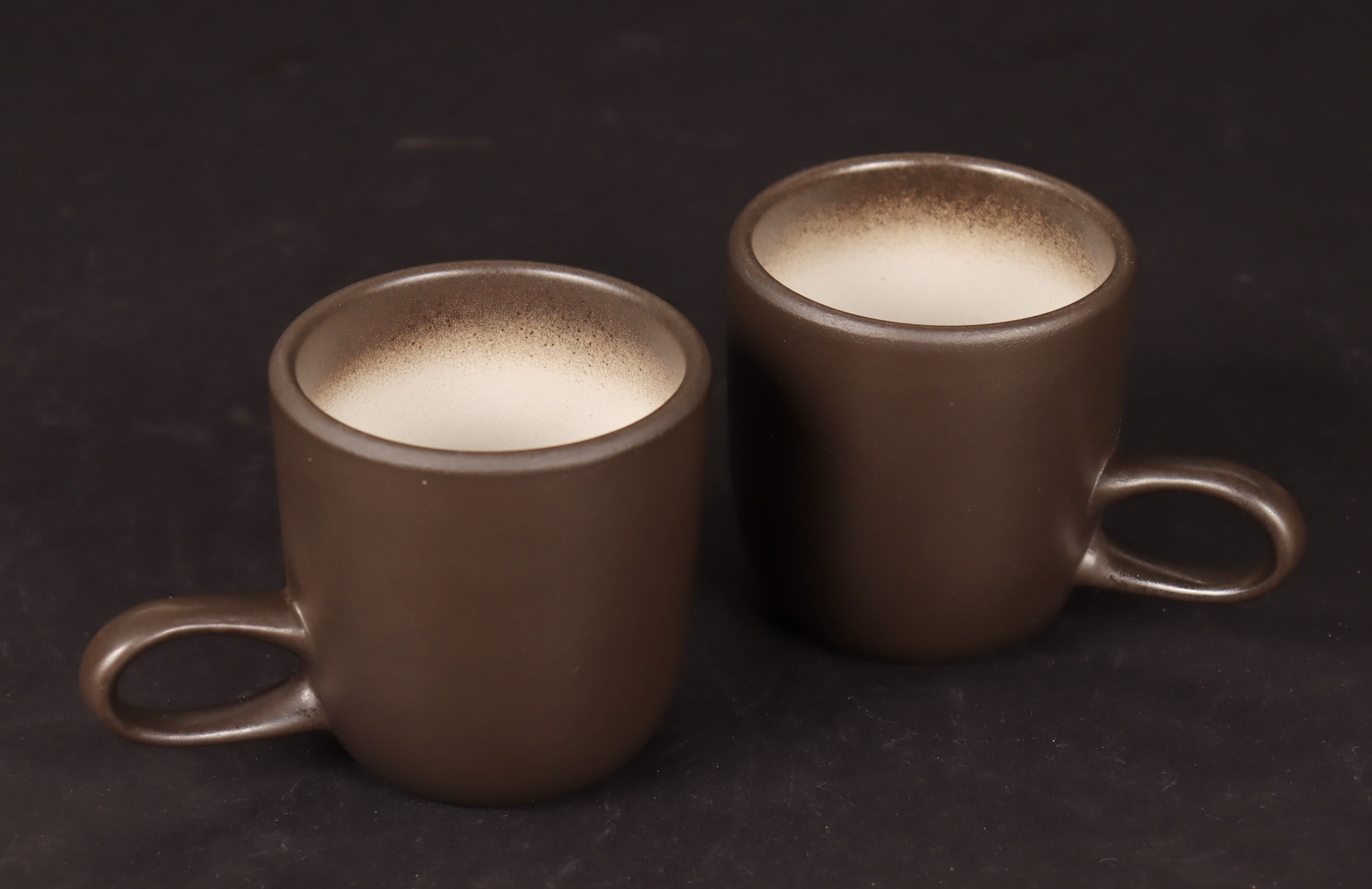
A favorite design for smokers is the coffee cup designed and manufactured by Heath Pottery in Sausalito, California in the 1960s. It has a low set cup handle which allowed the coffee consumer/smoker to hold and drink from the cup while a lit cigarette is held in the same hand. They have discontinued this useful item, but it can occasionally be found on eBay and other auction sites. Myself and others may just be imagining that this cup/mug was designed with a smoker in mind. In an interview with the New York Times in October 2007, Edith Heath, then 90 years old, demonstrated that the low cup handle was to prevent dust from accumulating inside when it was placed on a hook for storage. Heath ashtrays from the 1960s are a simple but wonderful design; classic yet modern. A Heath example in a Citrus hue is shared in this exhibition. Ceramicist Casey O’Connor, a former employee of Heath Ceramics in Sausalito, California, has told the story that the “V” shaped cigarette grooves on the Heath ashtrays were appreciated like a “fireman’s dream,” because the “V” notch was a self-extinguishing feature. Apparently, it was thought to prevent fires when people fell asleep while smoking.
There was a time in the middle 50 years of the 20th century that people smoked everywhere, including restaurants, swimming pools, beaches, the beauty parlor, hospitals, hotels, movie theaters, during picnics, on public transportation such as buses, taxis, airlines, and trains. Ashtrays were created as parts of dining sets for use on airplanes, trains, and ships. Hospitals issued their own branded ashtrays. Role models were everywhere, and movie stars, sports heroes, musicians, and advertisers took advantage of these circumstances and encouraged endorsements.
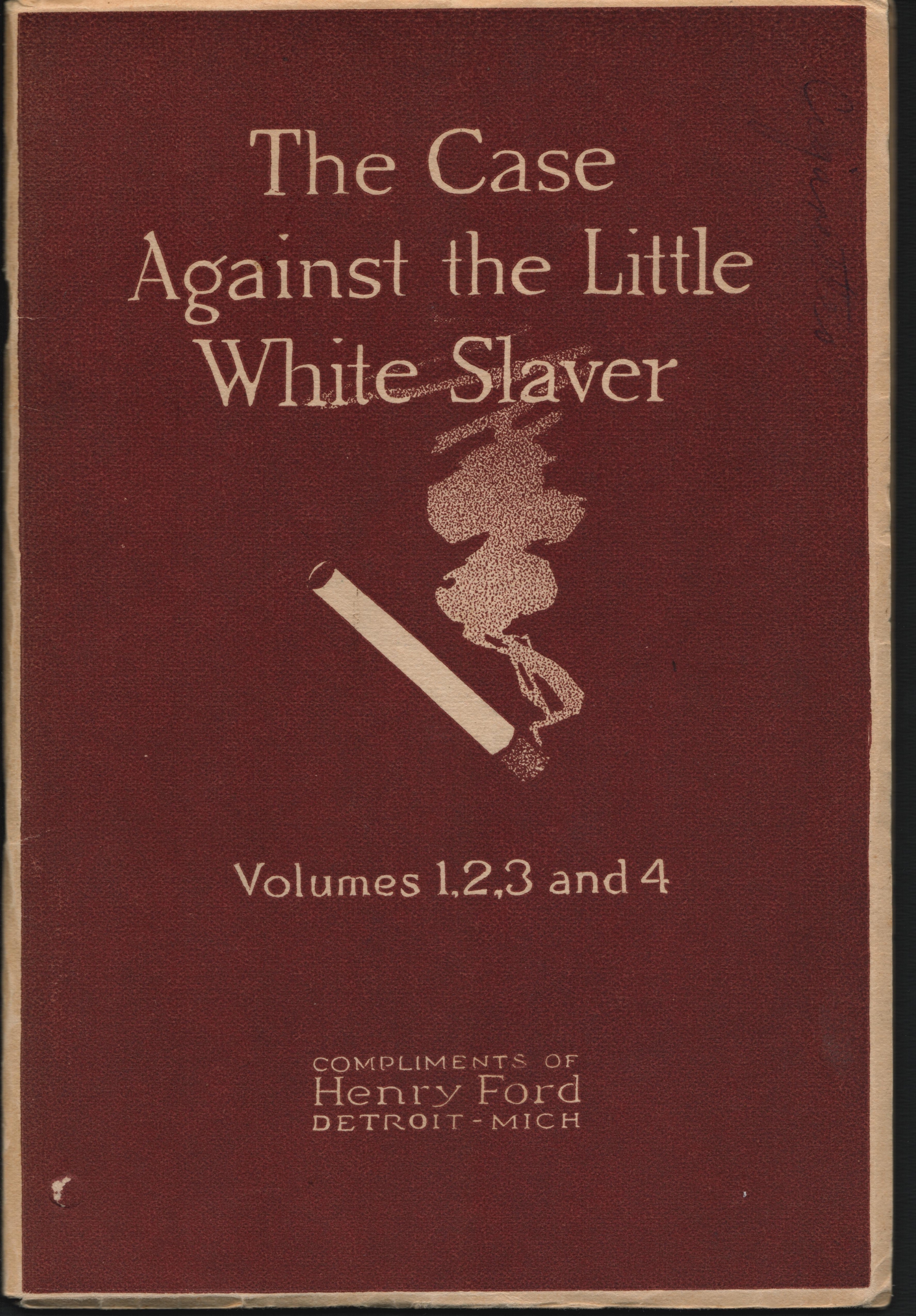
Some automobiles had ashtrays as early as 1914, and even automobile magnate Henry Ford, an avid anti-smoker, equipped his 1929 luxury Town Car with an ash “receptacle.” Ford wrote a treatise on anti-smoking that became the 1914 pamphlet The Case Against the Little White Slaver. He refused to hire smokers at his factories. An original copy of this pamphlet is included in this exhibition and was once owned by the exhibition curator’s father.
This is also the time when smokers threw their cigarette butts out the car windows before anti-littering campaigns were in full force. There were no seat belts for anyone, let alone an infant. It was a renegade time for car travel. A passenger was lucky if a smoking driver even cracked a wing window for a bit of air. And that would have only been in the summer because there was no air conditioning.
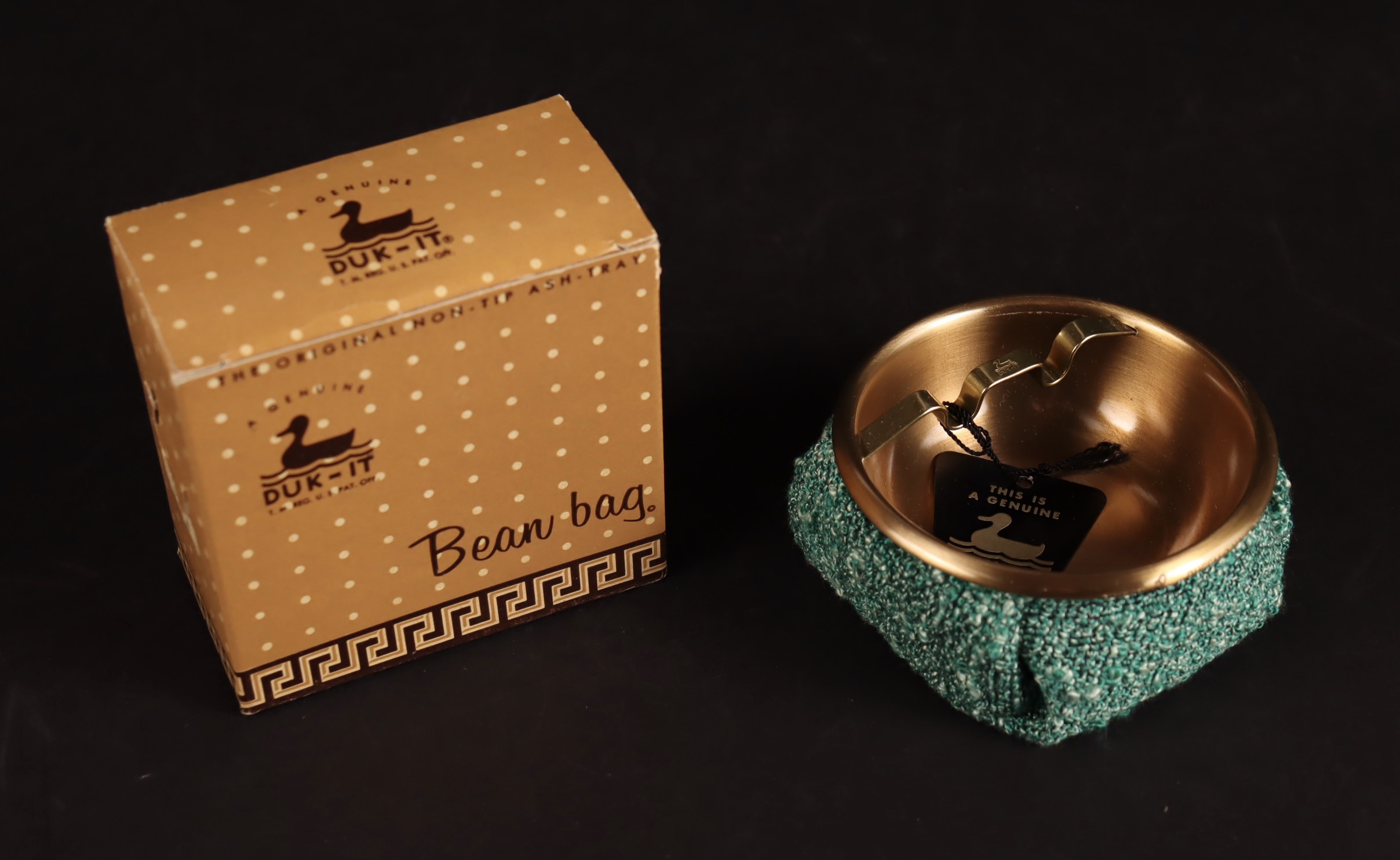
Just made for the car console or the overstuffed chair at home were bean bag ashtrays, popular for decades. Two examples are in the IMoDD collection, with one still in its original box from the 1950s. Duk-It Bean Bag ashtrays were manufactured in Buffalo, New York and were advertised as “the original non-tip ashtray.” Another bean bag ashtray in the IMoDD collection (IMoDD 2025.5) has the beans inside an earthy brown fabric as the base with a common glass ashtray with a ship image visible, and the maker unknown.
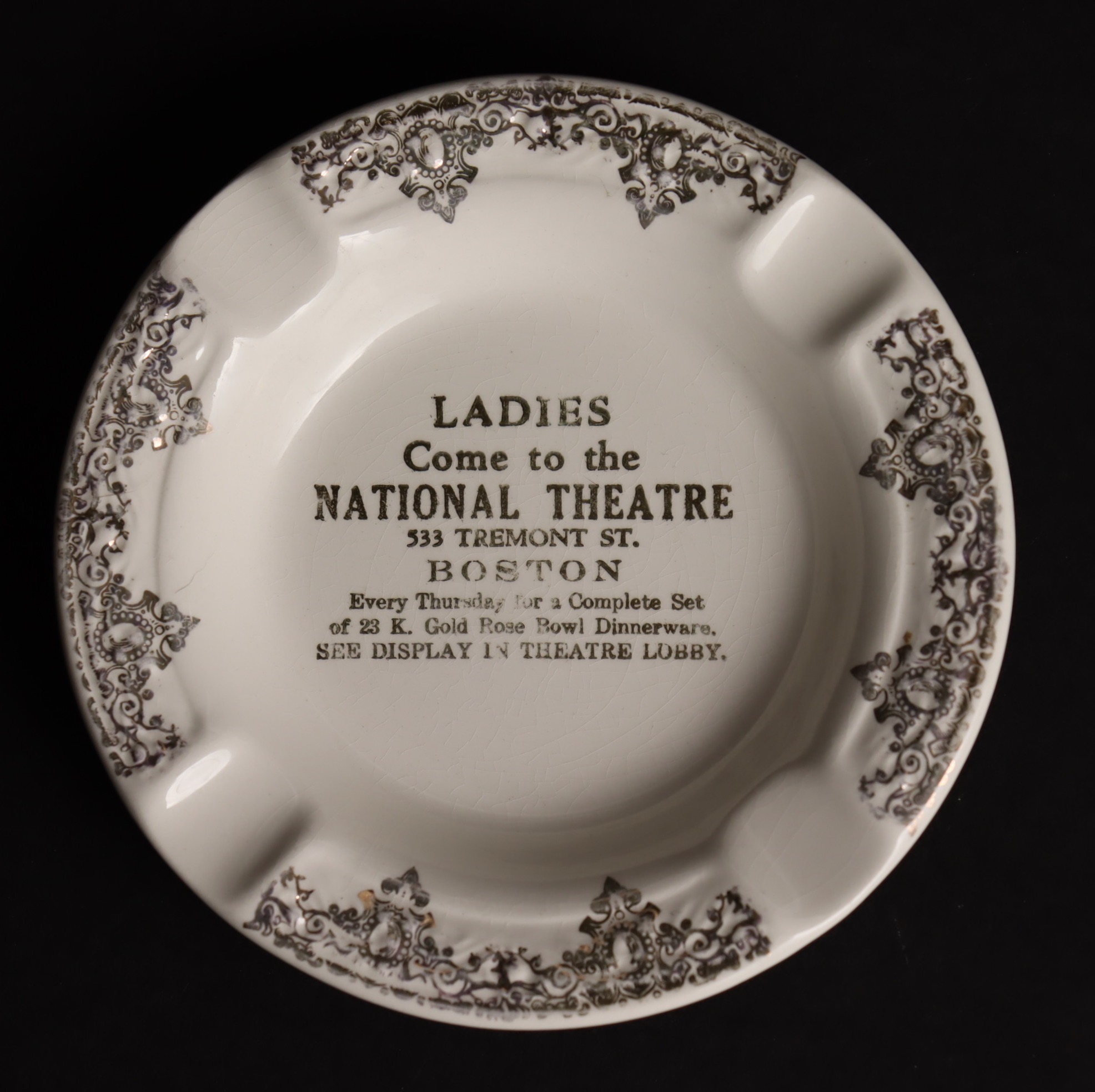
Dish night at the movies was a phenomenon from the 1930s Depression era when free give-a-ways enticed consumers to attend the movies weekly, and build sets of matching dishes (including the matching ashtray). An example from the IMoDD permanent collection was manufactured in the 1930s by Salem China, Salem, Ohio. In the New Yorker shape, it has a scalloped rim, and embossed design, and gold decoration declaring it an advertising piece for dish night at the movies specifically for the National Theatre of Boston. “LADIES Come to the NATIONAL THEATRE 533 Tremont St. BOSTON Every Thursday for a Complete Set of 23K. Gold Rose Bowl Dinnerware, SEE DISPLAY IN THEATRE LOBBY” as a decal in the center of the ashtray.
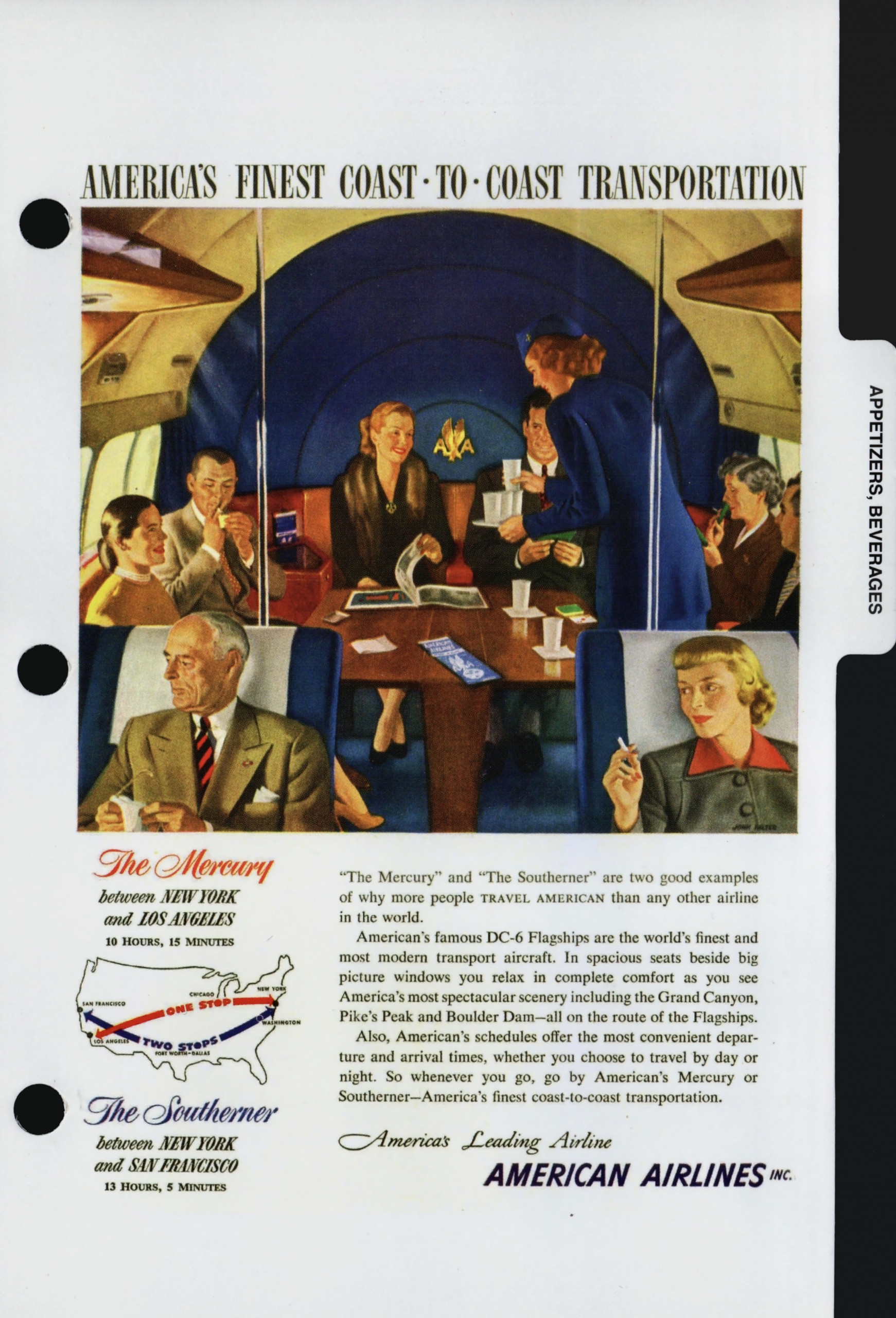
A few years ago, a former American Airlines flight attendant named Lorrie Scattergood donated an American Airlines cookbook titled “Winging It, Too” to IMoDD. The recipes were collected by flight attendants, but the illustrations of passengers smoking on the plane were what was most captivating. At one time there were smoking sections on the plane and the armrests had built-in ashtrays. Some airlines had plastic ashtrays that fastened on to the dining trays. There are stories about airlines handing out small travel packs of cigarettes to passengers, even children! In 1973 Federal rules required separate seating for smokers and non-smokers. People were gradually forbidden to smoke on U.S. airplanes, starting with a ban on short domestic flights in 1988, which extended to most domestic flights in 1990, and finally to all domestic and international flights in 2000. This was the culmination of decades of health concerns and lobbying by flight attendants and health groups.
The Chesapeake and Ohio Railroads, who also handled car ferries and such, had Chessie the cat as their marketing image. The image of sleeping Chessie, along with Chessie’s Old Man, Peake, were on calendars, dishes, and even ashtrays and matchbooks. Included in Ashtray are examples of the items that Syracuse China, Syracuse, New York, manufactured in 1963 (ashtray), cup (1969) and saucer (1970), and dinner plate (1956) restaurant china, featuring Chessie.
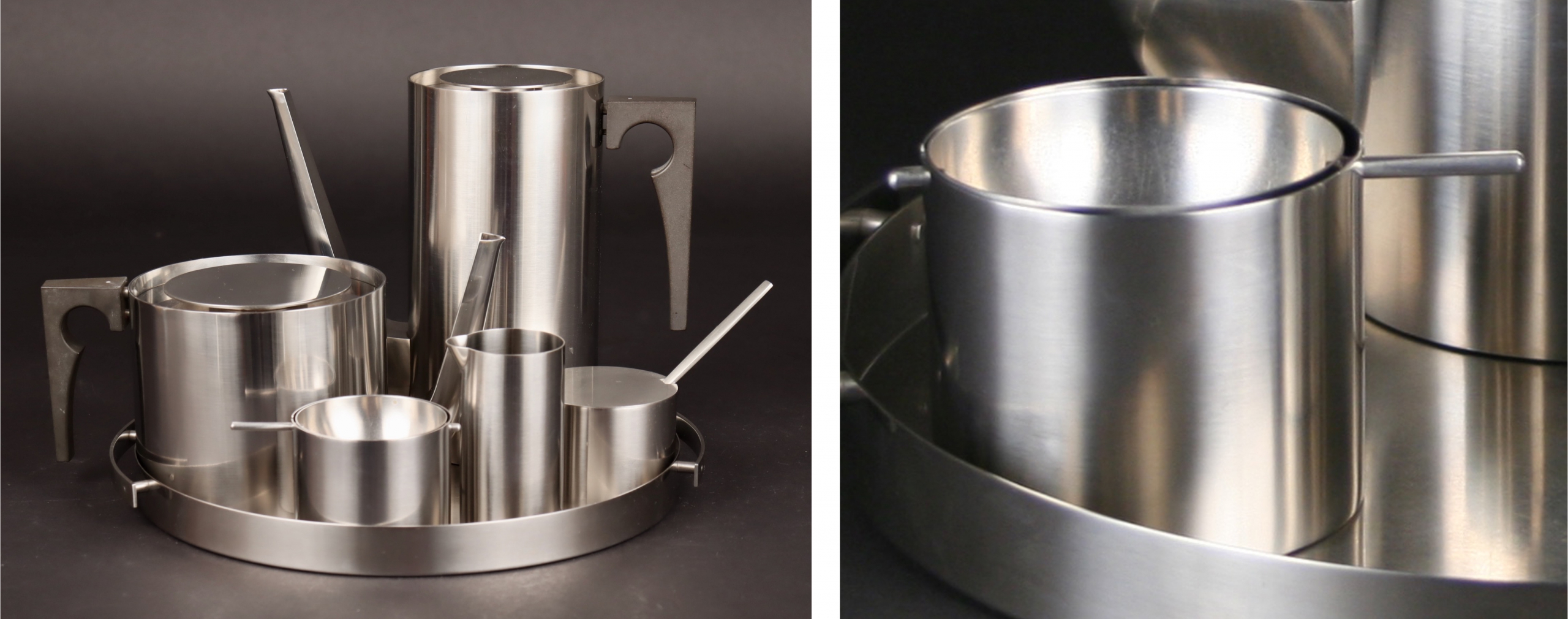
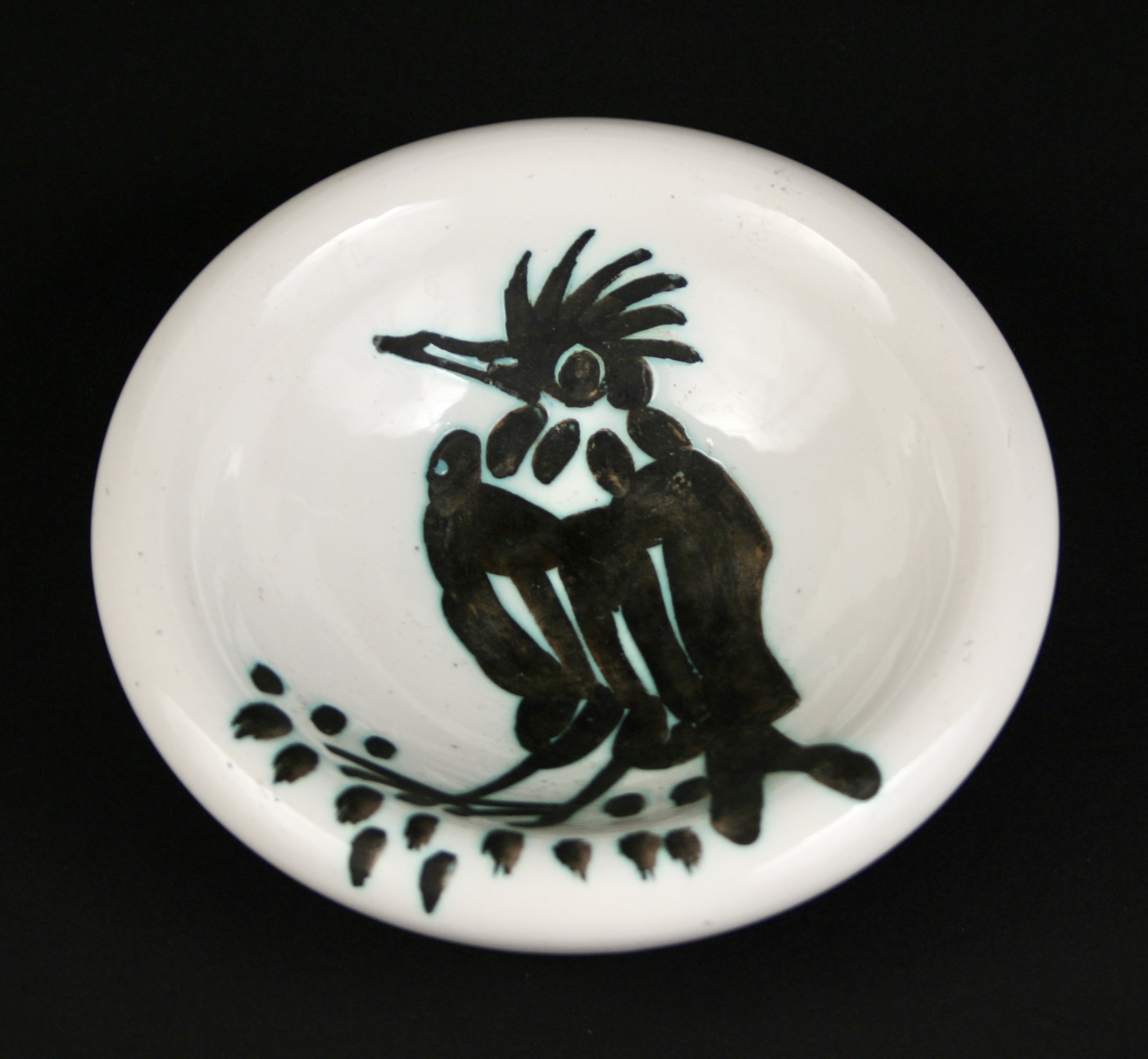
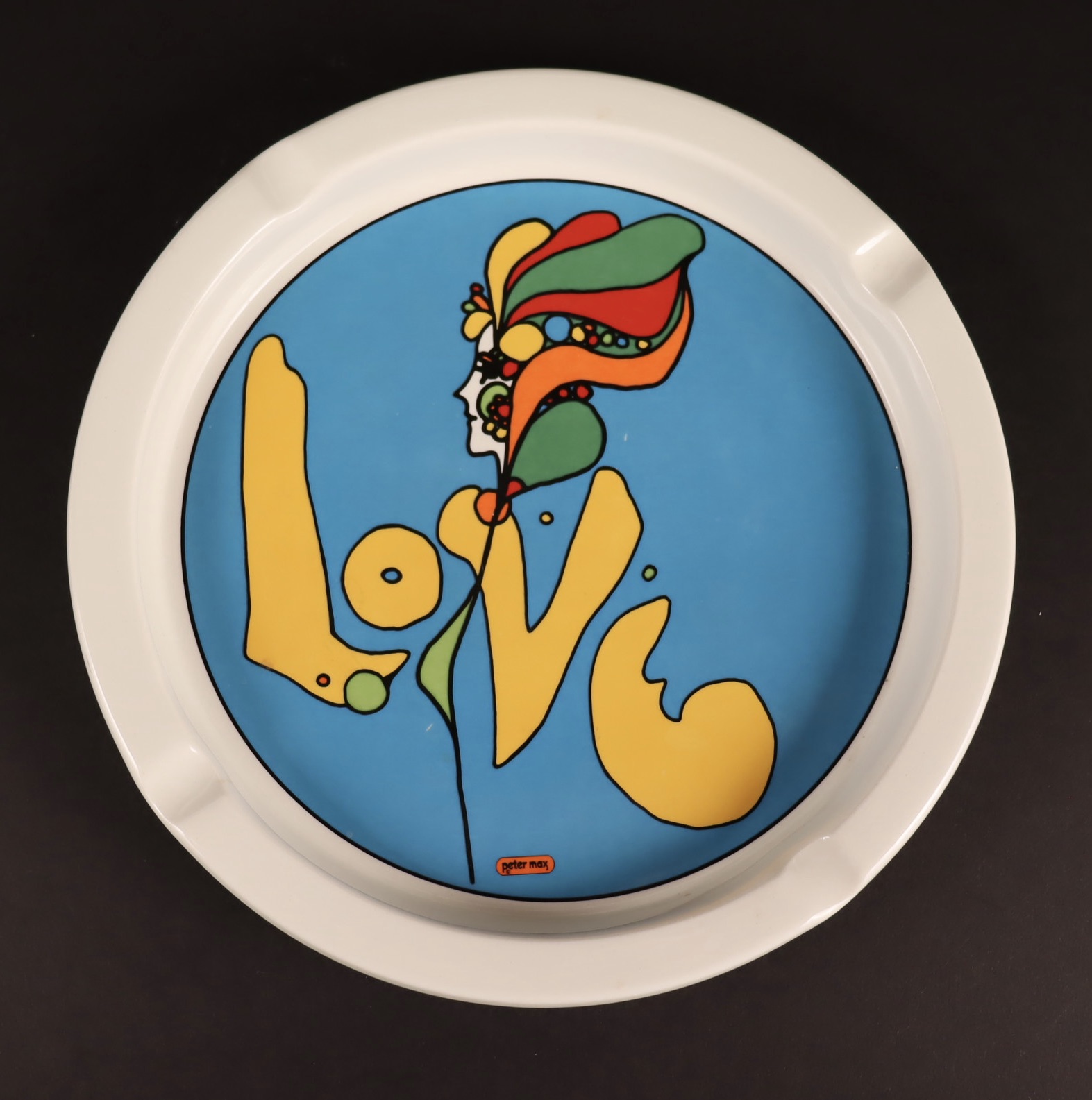
Many essays have been written about the ubiquitous ashtray created by featured artists including Isamu Noguchi (see “The Sculptor and the Ashtray” that was shown at the Noguchi Museum in Long Island in 2020) and the ensuing Introspective article, “How Noguchi Elevated Ashtrays to Objets d’Art.” Danish designer Arne Jacobsen designed an iconic stainless-steel ashtray (1964-67) which is part of the Cylinda line he designed for Stelton. An example is included in IMoDD’s Dining Grails exhibition concurrently on view with Ashtray. The list of notable designers who took on the challenge of the ashtray reads like a who’s who of memorable artists and designers including Alexander Calder, Picasso, Peter Max, Piero Fornasetti, Philippe Starck, Carlo Scarpa and Achille Castiglioni. Ashtray examples by Picasso and Peter Max are included in this exhibition. The Peter Max “Love” ashtray was manufactured by Syracuse China. Picasso’s ashtray, with a hand-painted bird motif dates from 1952 and is titled Oiseau à la Huppe.
Glidden Parker founded Glidden Pottery in Alfred, NY in 1940. He had previously been a special student at New York State College of Ceramics and was taught by amazing people such as Marion Fosdick, Katherine Nelson, and Don Schreckengost. He and his wife, Pat Parker, were experts in ceramic glazes and designs, but brought in others such as Fong Chow, Fred Press, and Sergio Dello Strologo as designers and glaze wizards. Glidden Pottery was not afraid of designing ashtrays. And occasionally Glidden pots that were not intended to be used as ashtrays gained national attention when they were used by celebrities. At least once, Lucille Ball stubbed out her cigarette on the “I Love Lucy” television show in the Glidden Pottery shirred egg server that she used as an ashtray. The back story is that Lucille Ball grew up in Jamestown, New York, about 100 miles west of Alfred and she knew about Glidden Pottery. She and her husband, Desi Arnaz, owned a set of Glidden Pottery dishes in the Feather pattern.
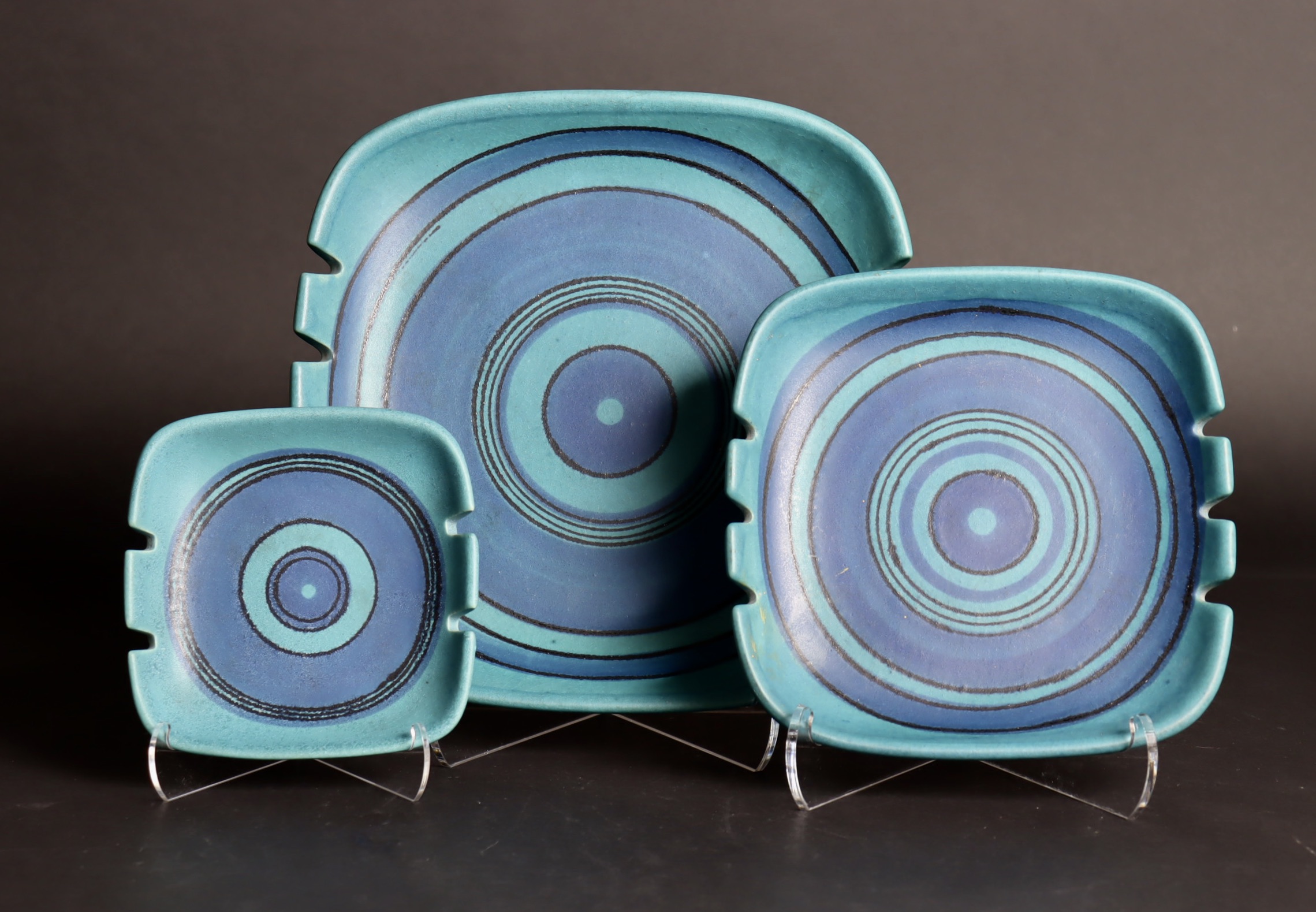
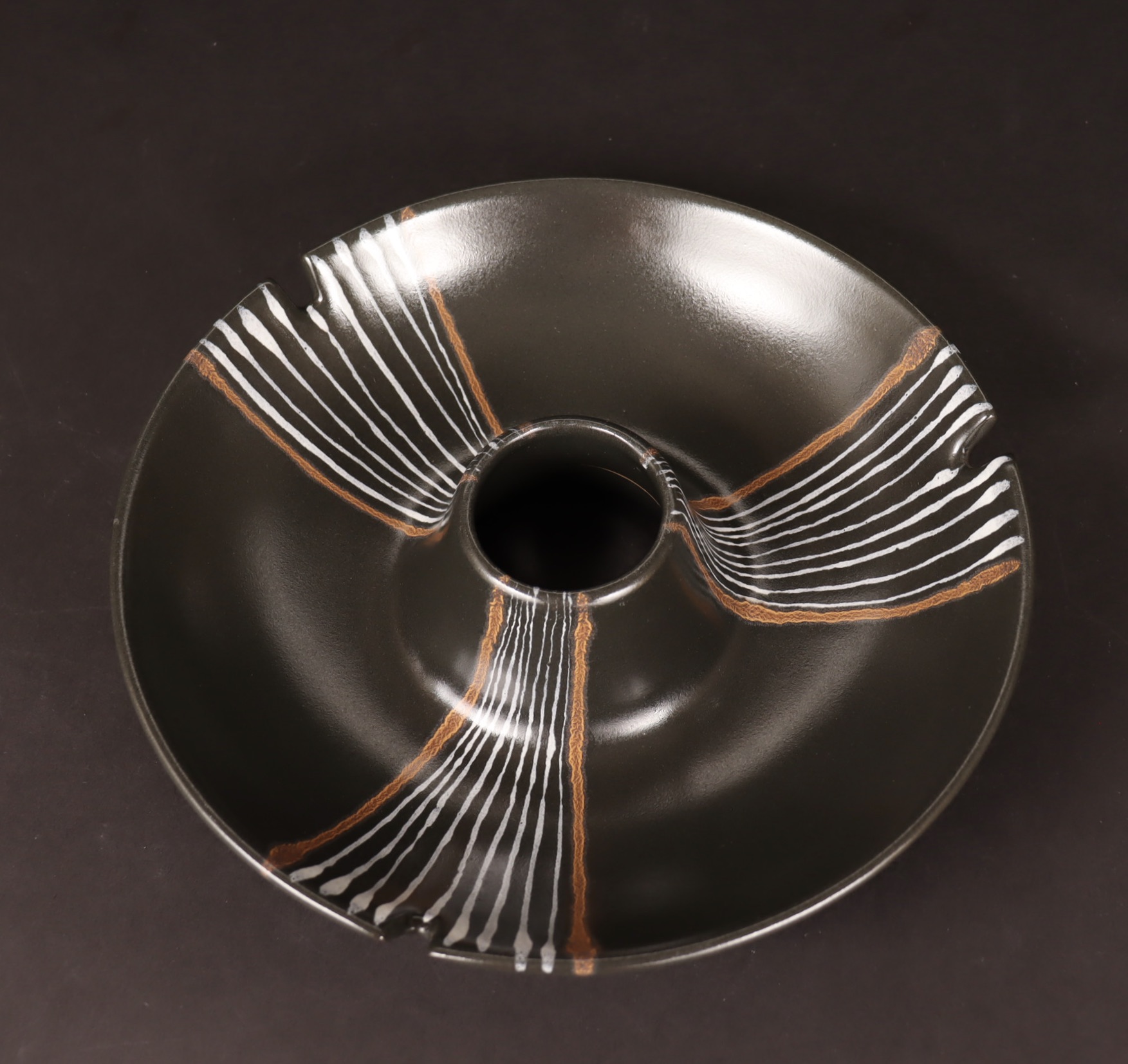
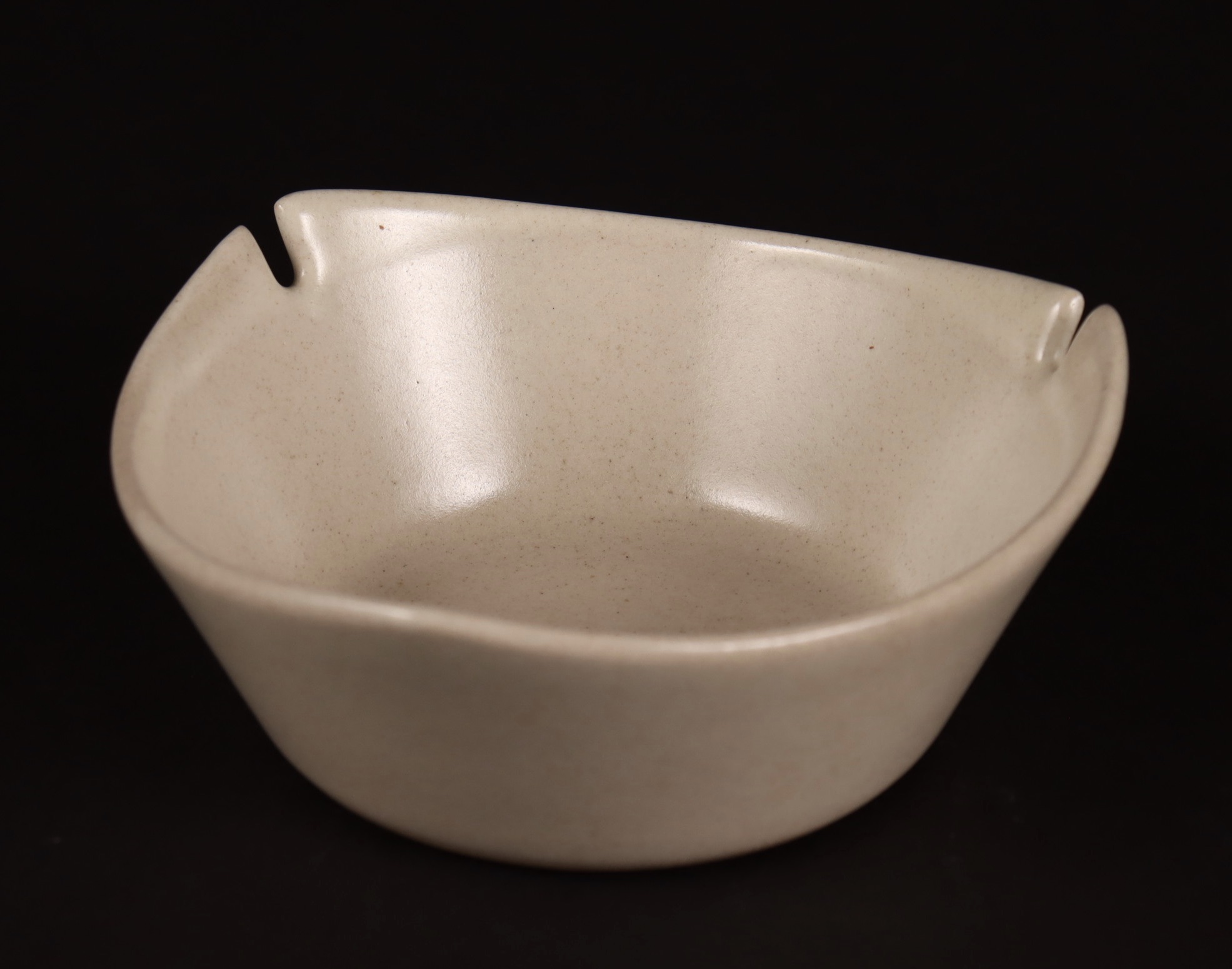
Quite a few ashtrays were designed for various lines of Glidden Pottery. In addition to the Chi-Chi Poodle line, with a small ashtray and matching lidded cigarette box produced ca. 1951-55 with the decorations hand-painted by June Chisolm, a decorator at Glidden Pottery, there were many shapes and sizes of ashtrays that accompanied the Gulf Stream Blue Artware that Fong Chow and Glidden Parker designed for Glidden Pottery.
|
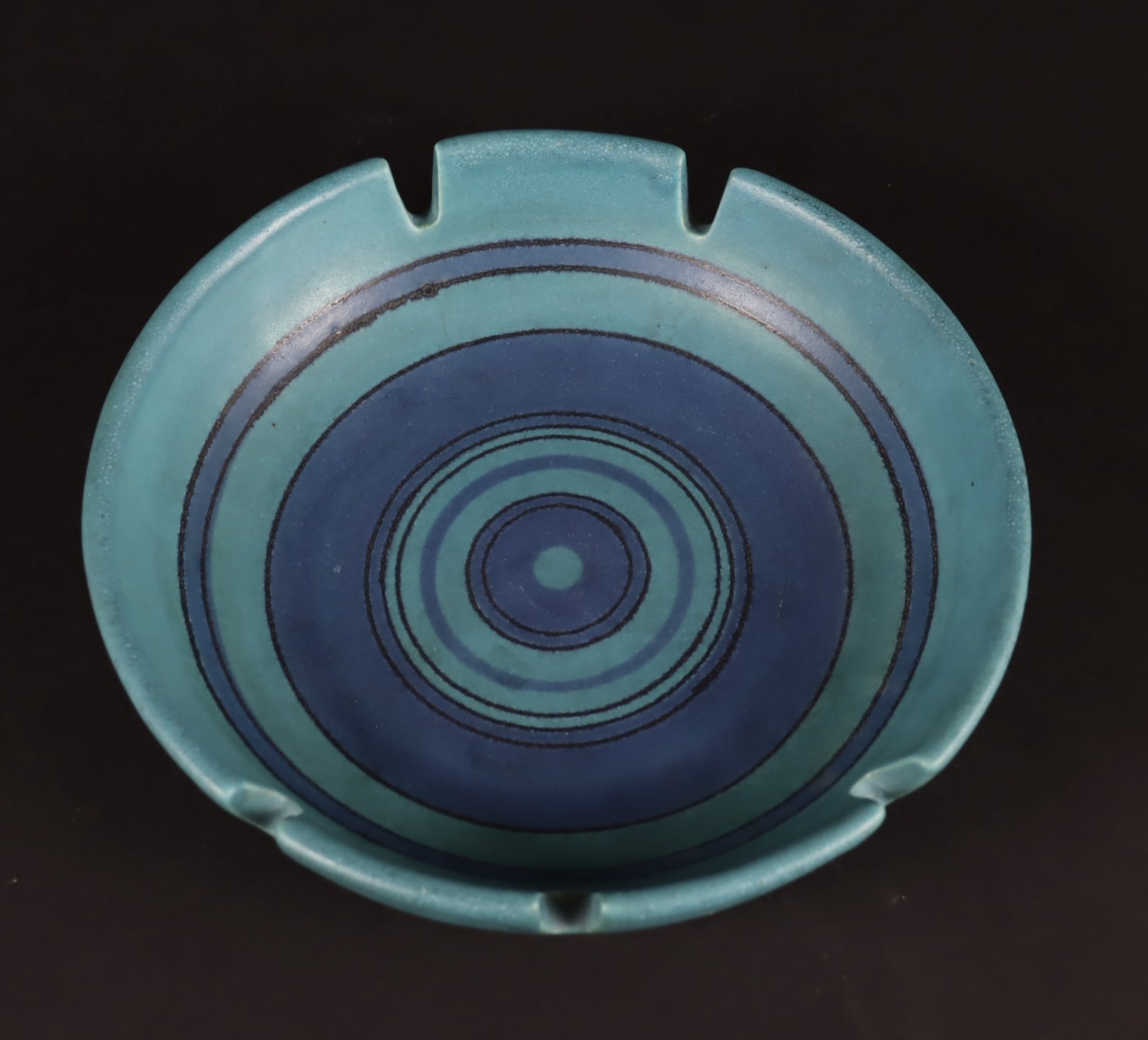
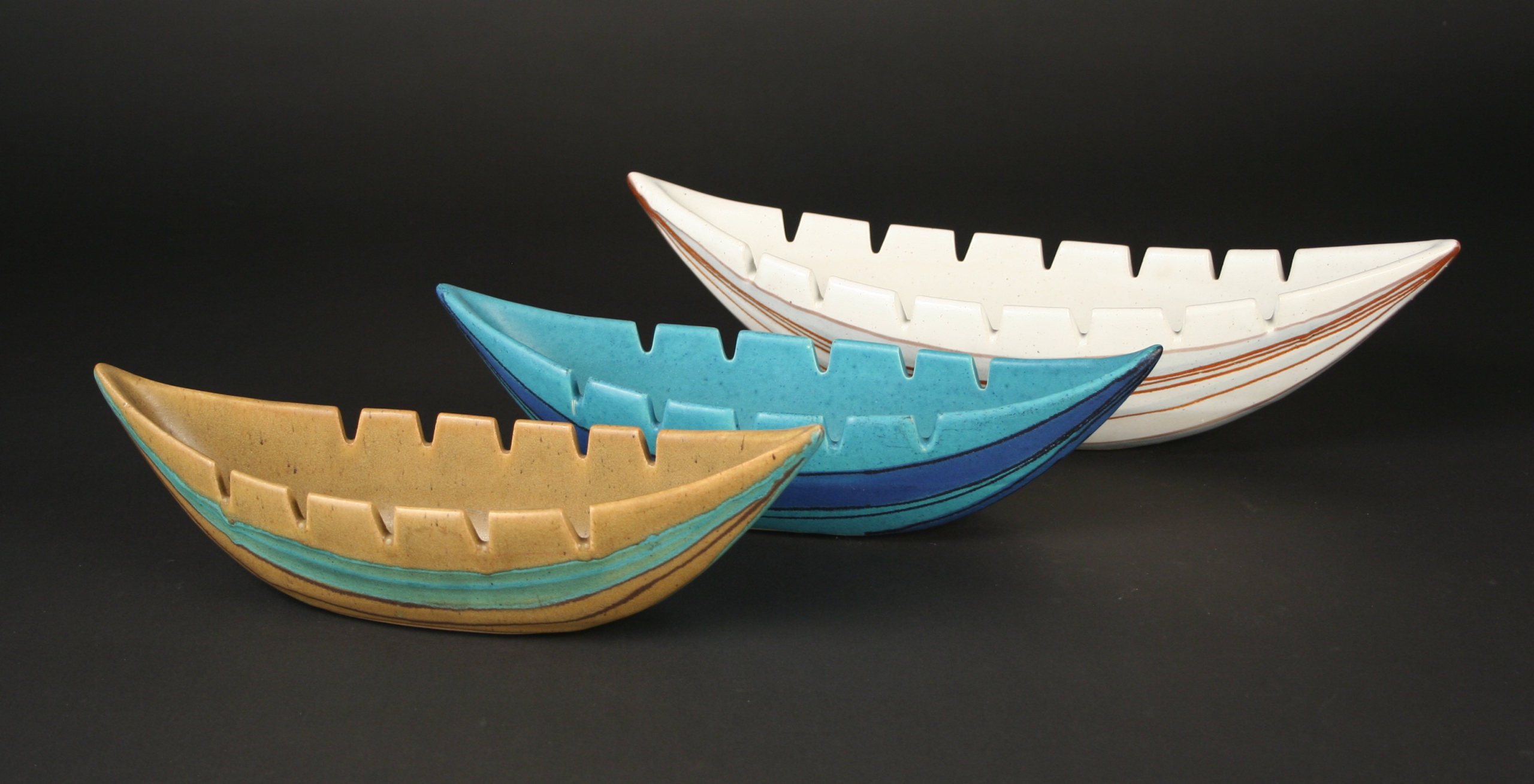
The Glidden Artware examples in the permanent collection of IMoDD include three rather monumental ashtray “boats” in graduated sizes, with notches for cigarettes that could alternatively be used on a buffet table with appetizers. The Artware patterns are referred to as Gulfstream Blue, Green Mesa, and Sandstone. All were designed by Glidden Parker in collaboration with Fong Chow, who not only received his BFA and MFA from Alfred, but also won Good Design awards from the Museum of Modern Art for some of his designs for Glidden Pottery. He later served as curator of Asian art at the Metropolitan Museum of Art, under director Thomas Hoving.
Glidden Pottery was frequently meant to be versatile. An ashtray form in the shape of a sombrero, that had a cigarette or match holder in the center could also serve hor’douvres with toothpicks in the center. The pattern is called Afrikans.
The various “lines” of Glidden Pottery generally had their own distinct ashtrays that matched, including the Fong Chow designed New Equations line, introduced in 1953, ashtray no. 737U with two cigarette notches. (IMoDD 2025.136)
The Novelty Ashtray
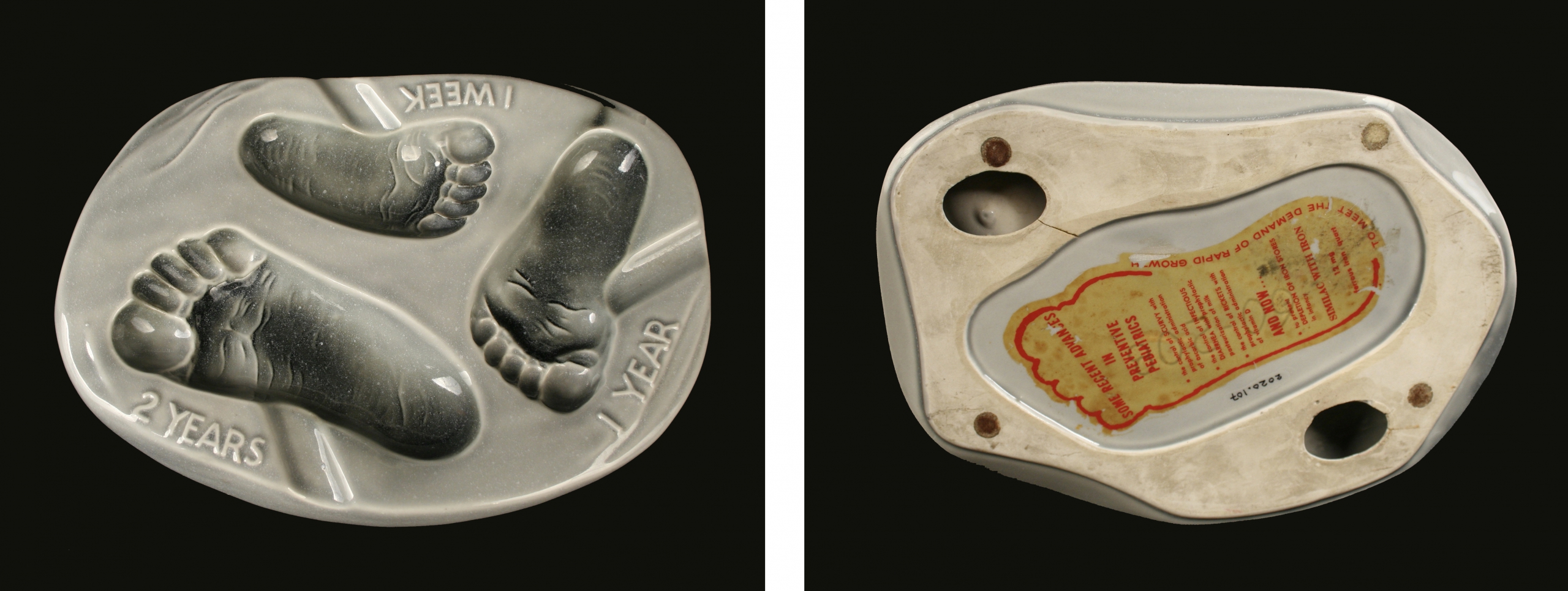
Beyond showcasing beautiful and beautifully designed ashtrays by artists and designers, the IMoDD exhibition provides a showcase for the strange and novel in terms of ashtrays. I dare the viewer to not cringe and be appalled by the “novelty” advertising ashtray designed in 1959 intended to announce the baby formula company Similac adding iron to its baby formula. The ashtray has the Similac advertising information inside an outline of a foot on the bottom of the ashtray. On the gray glazed molded ceramic ashtray top, there are three imprints of baby footprints, age one week, one year and two years, with the notches for the cigarettes inviting the smoking woman to rest or extinguish her cigarette in these baby footprints. It was intended to be placed in the pediatrician’s waiting room for the mother-to-be, or the new mother to use. The ashtray only comes in gray, not cheery pastel baby colors. The designer remains anonymous. The designer and moldmaker Daniel Mehlman brought this gem to my attention more than five years ago and donated an example.
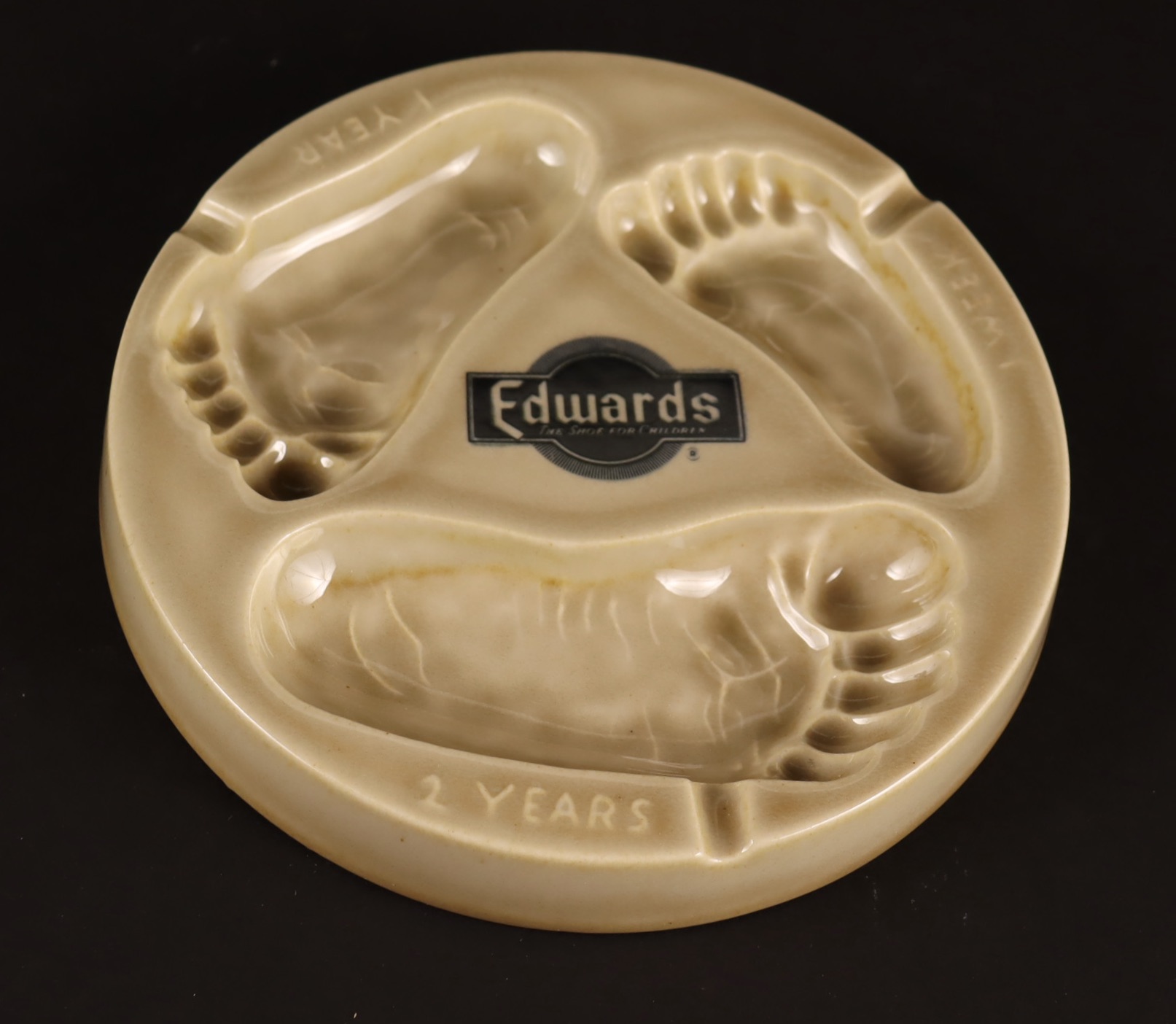
The baby footprint ashtray idea had a second advertising life apparently. When that novelty wore off, the molded baby feet imprints became part of a more modest advertising ashtray for the Edwards children’s shoe company. The “1 week, 1 year and 2 year” foot impressions were retained yet their placement reversed and the glaze on the round version is a more calming green celadon. A search of auction sites reveals boxes of sturdy 1950s shoes and shoe boxes with the (registered trademark) Edwards (“the shoe for children”) logo on the box exterior. Edwards was located in Philadelphia. The IMoDD example is a recent acquisition, 2025.154.
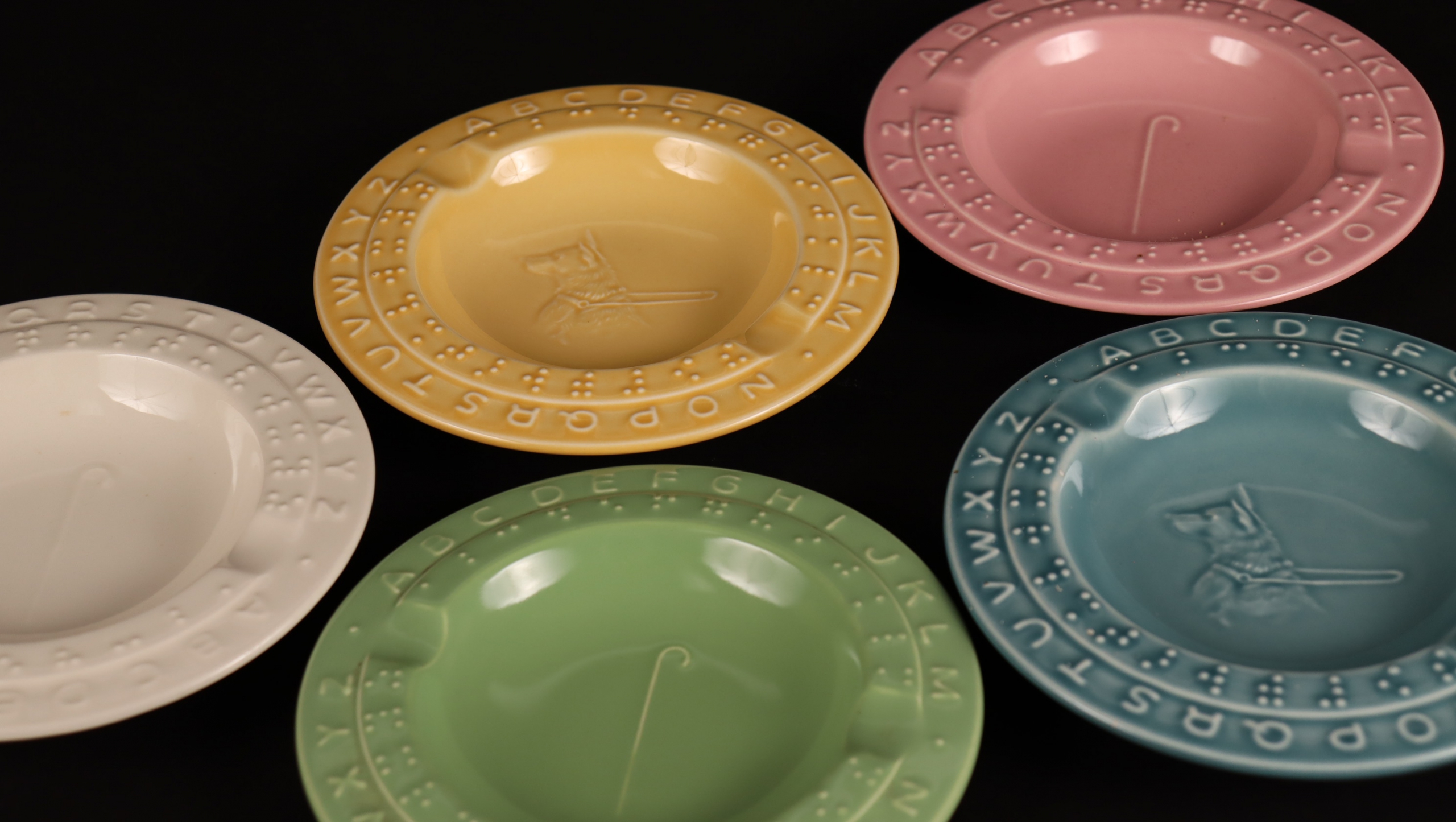
There are more. The novelty ashtrays, never attributed to a particular designer OR manufacturer, include one circular ashtray with the alphabet in ABC’s accompanied by Braille script, along the outer rim. The interior decoration is that of a seeing eye dog OR white cane in relief. These came in a myriad of pastels and darker hues. Why one would be learning the Braille alphabet by handling a (filthy) ashtray might be a logical question. However, collecting them in all their glazes is difficult to resist until one realizes the collecting is rather endless.
IMoDD does not collect or exhibit political ashtrays or those created for titillating purposes. This intention is not puritanical, but rather the fact that these ashtrays never show one iota of good design (or even good taste) as a feature and design is part of the name of this museum.
Women and the ubiquitous ashtray along with cigarette advertisements
There’s a natural connection between the topic of dining with ashtrays and women’s health. Afterall, traditionally it has been the woman that selected “their” china pattern before marriage, came up with the idea to have a dinner party, wrote the guest list, chose the menu, set the table, and decided where every guest would sit. She may have cleared the table and washed the dishes, too. Dining and domestic life are intertwined.
As much as IMoDD embraces, celebrates, and even collects the beautiful designs of ashtrays from what we now often refer to as the Art Deco (1920s-1930s) and Mid-Century Modern (1950s-1960s) eras, the health effects from smoking have been devastating for all humankind. Women have been targeted by the tobacco industry for at least a hundred years. They have been encouraged to smoke because it keeps you thin (“9 out of 10 doctors smoke Camels”), it cleanses your palette between each course of a meal (ad with Anne Rockefeller), and it is a symbol of equality of the sexes (“You’ve come a long way, baby”). Your lipstick, comb, and compact are paired with a matching cigarette case, lighter, and pocket ashtray. A marvelous website created by Cynthia Pomerleau, Ph.D. focused on women and nicotine addiction, around the topic of “Domesticating the Cigarette” along with a captivating and appalling virtual museum component, has been of great guidance in this journey of exploring the ashtray and the complicated relationship between women and smoking. https://www.domesticatingthecigarette.com
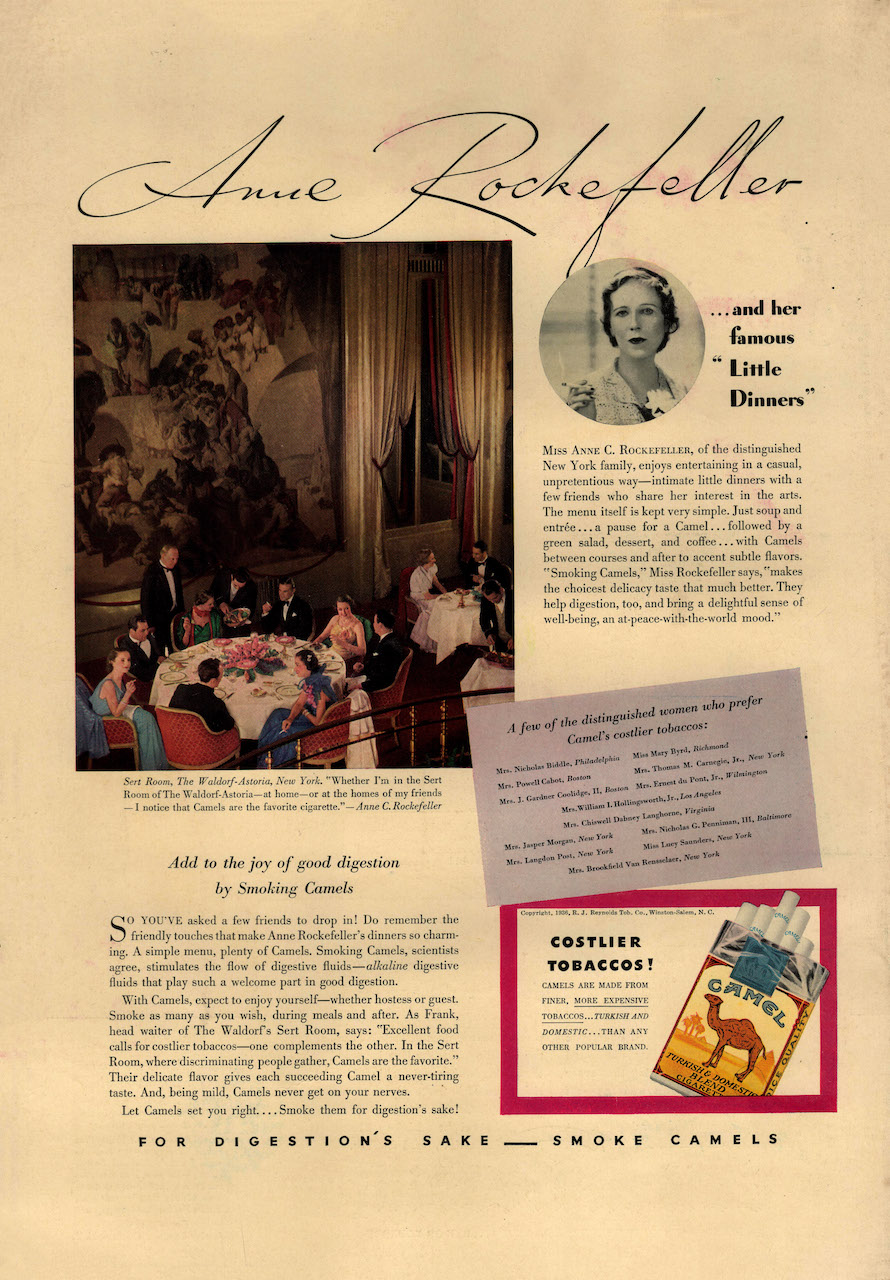 Anne Rockefeller may not be a household name today, but in 1936 she would have been considered a socialite and today might have been viewed as an “influencer.” An ad from that year, promoting Camels, noted that “for digestion’s sake – smoke camels.” Anne Rockefeller apparently had intimate dinners with a few of her friends who shared her interest in the arts. The advertisement states, “The menu itself is kept very simple. Just soup and entrée…a pause for a Camel…followed by a green salad, dessert, and coffee…with Camels between courses and after to accent the subtle flavors” (i.e., cleanse the palette). The ad goes even further when it states, “Smoke as many as you wish, during meals and after.” This original ad was purchased by IMoDD and has been reproduced from our archives for this exhibition.
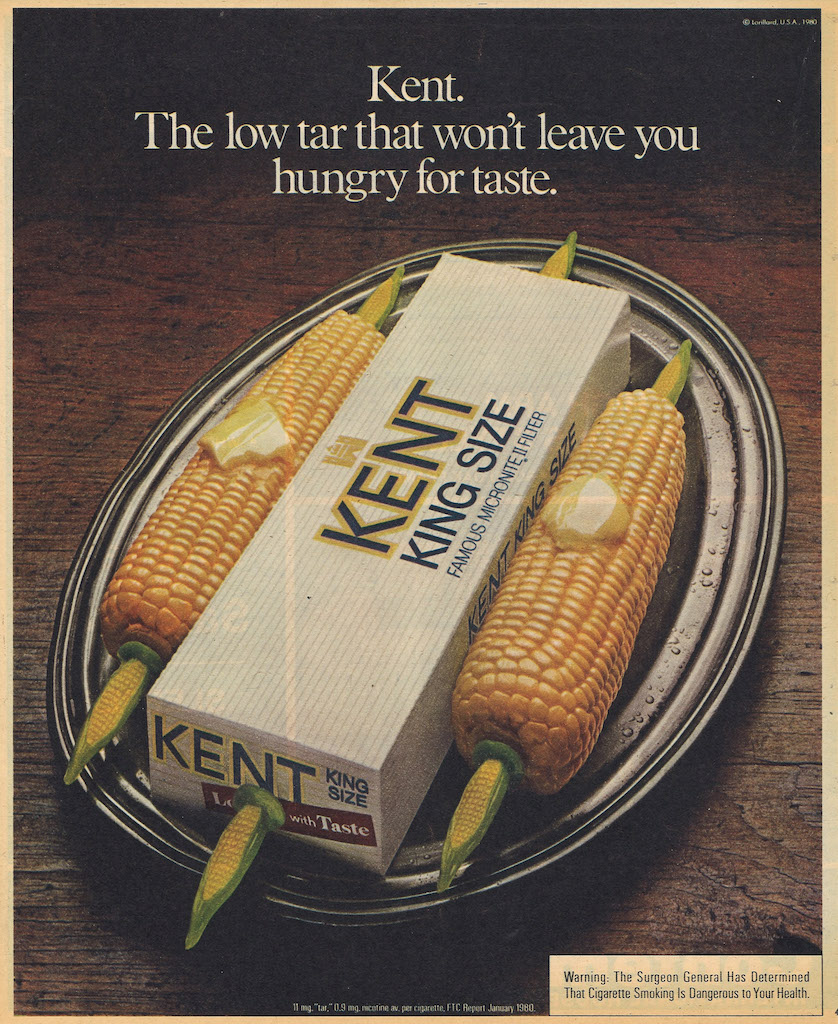
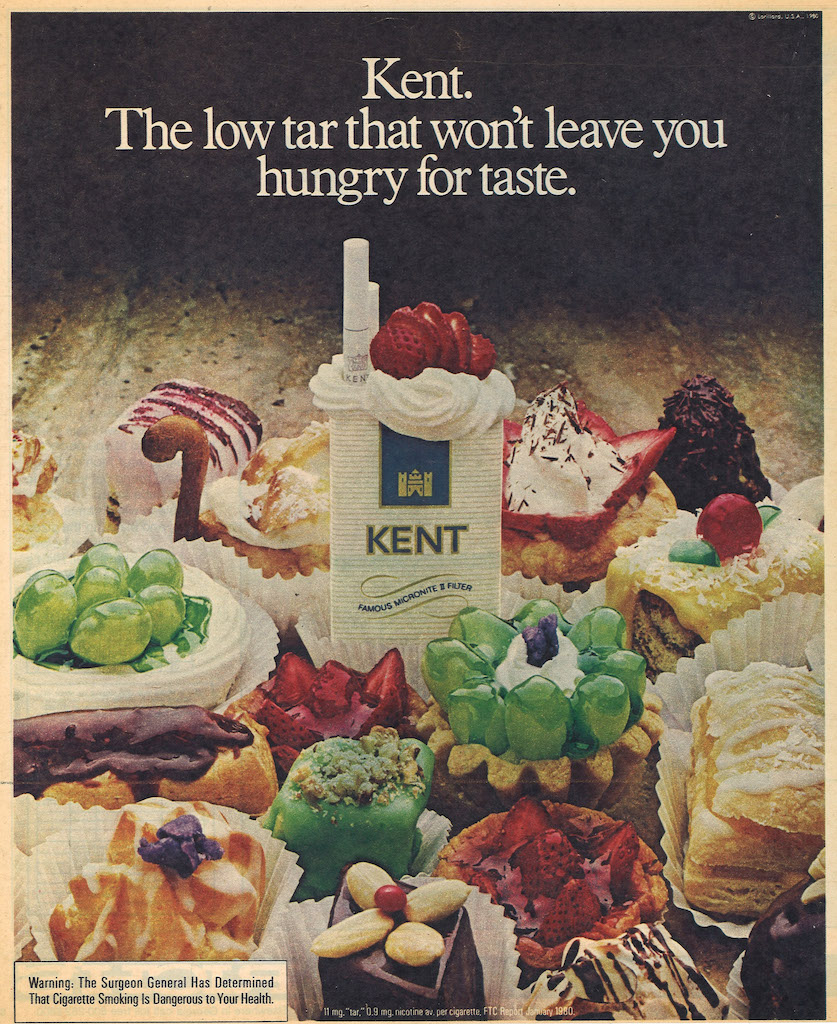
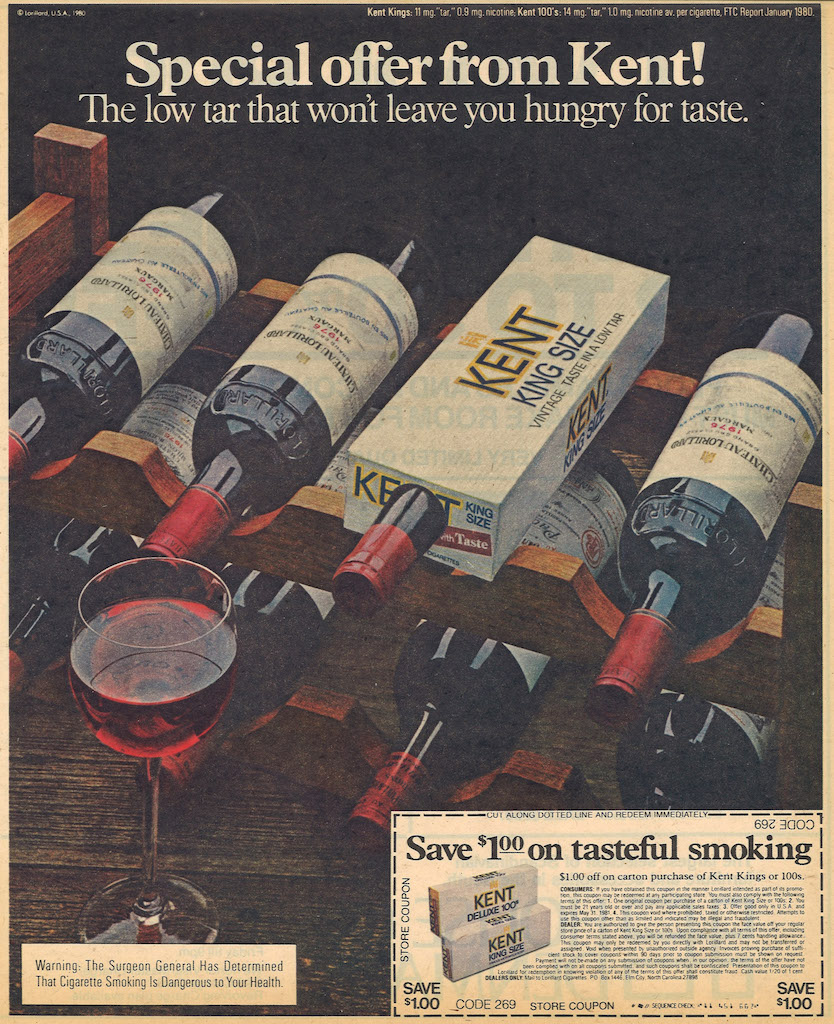
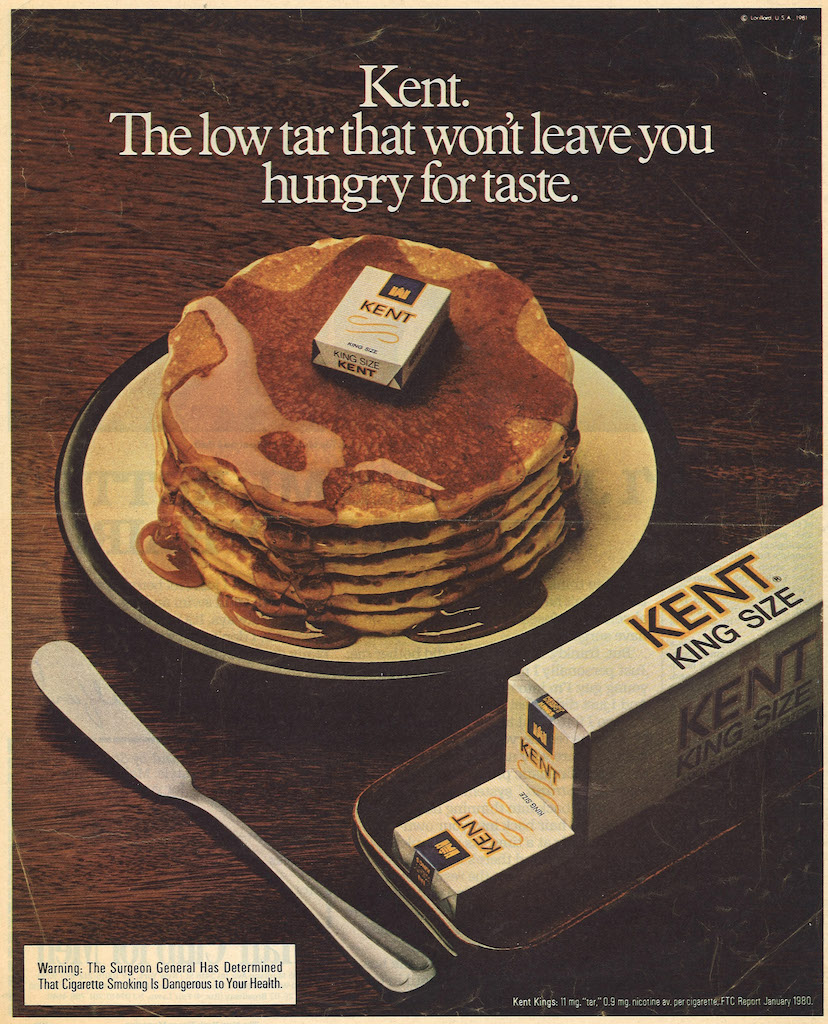
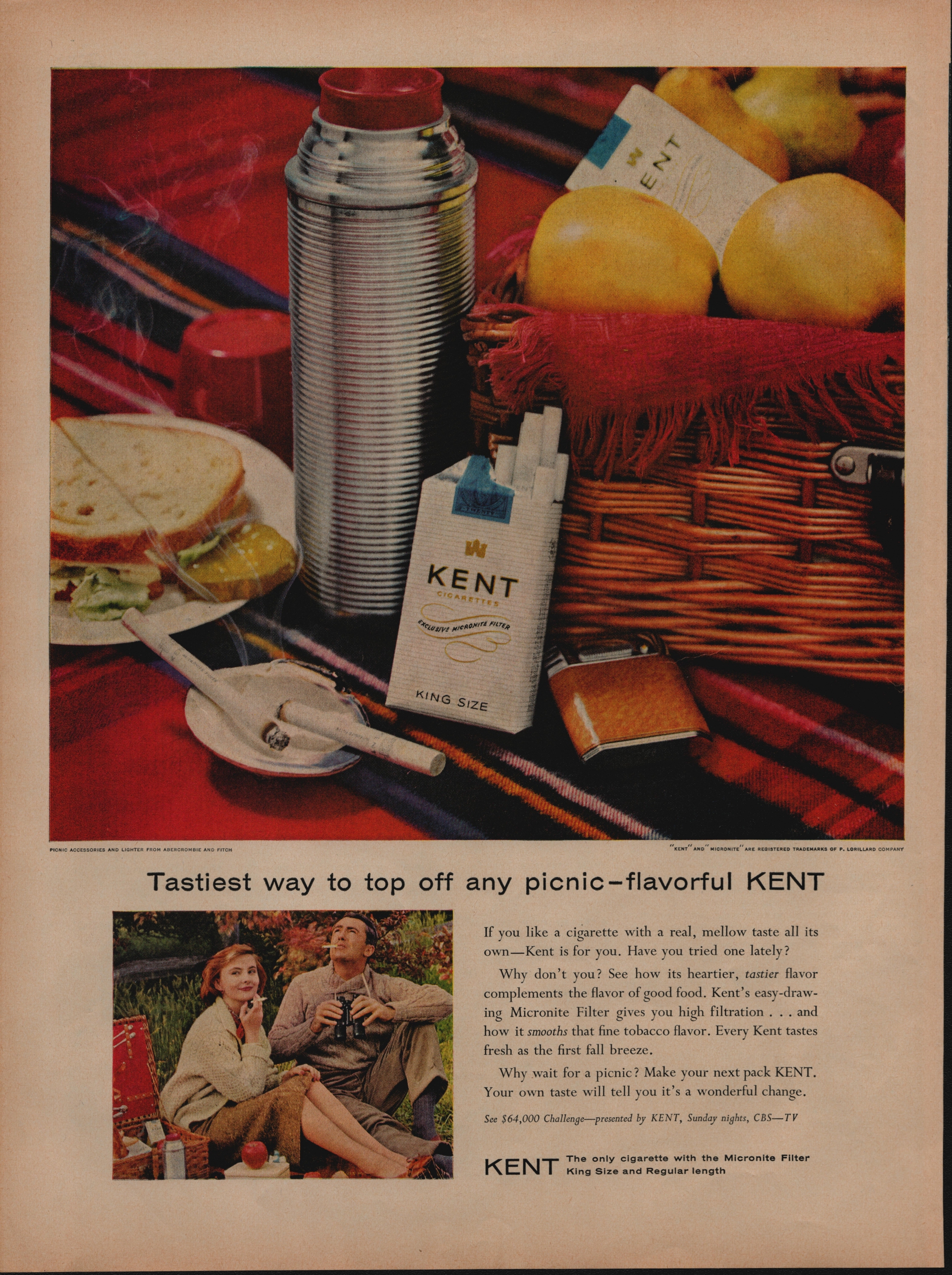
Alan Blum, MD, established the Center for the Study of Tobacco and Society in 1998 at the University of Alabama. His website contains the most informative, amusing, and depressing rabbit holes that anyone even just curious about smoking issues should visit – again and again. https://csts.ua.edu/women/home/ Dr. Blum loaned IMoDD four outstanding examples of tobacco advertising that are so over-the-top, you’ll wish the designs were your own. All four advertisements replace tantalizing visuals of food with cartons of Kent brand cigarettes, mixing the allure and good flavor and cravings for both. For example, two piping hot ears of corn with melting butter and with plastic corn skewers at each end rest on a silver platter, and in between the ears of corn is a carton of Kent King Size cigarettes, also with corn skewers at each end. The print ad reads “Kent. The low tar that won’t leave you hungry for taste.” Another advertisement replaces a fine bottle of wine on a wine rack with a carton of Kents. Still another features a stack of pancakes, the carton of Kents and a butter knife lay beside the pancakes where a pat of butter has been replaced by a “butter pat” sized pack of Kents and the carton is depicted analogous to the stick of butter, to be enjoyed one by one to enhance the flavor.
These four advertisements were loaned by Dr. Alan Blum, and were first included in the University of Alabama Center for the Study of Tobacco and Society exhibition “Bacon, Lettuce, and Tobacco: How we learned to light up for breakfast, lunch, and dinner…” https://csts.ua.edu/bacon-lettuce-tobacco/ September 6, 2024-ongoing.
Lucky Strike advertisements in popular journals in 1930 did their best to scare both men and women into thinking that “by refraining from over-indulgences,” one could “maintain the modern figure of fashion” (i.e., avoid unsightly double chins and weight gain). The ads recommended, “when tempted reach for a Lucky instead.” The ads feature a beautiful woman’s (or man’s) head with the silhouette or shadow (the future!) with flab and a double chin.
Stanford has a website devoted to Research on the impact of Tobacco Advertising (https://tobacco.stanford.edu/cigarettes/womens-cigarettes/) which provides background about the Virginia Slims cigarette brand’s advertising campaign slogan from 1968, “You’ve Come A Long Way, Baby.” Women were exclusively targeted, as they were again in the 1990s when they added the slogan “It’s a woman thing,” and again in the 2000s with “Find Your Voice.” While studies of these ad campaigns claim to be “subliminal,” the message of slimness in cigarettes and female bodies is anything but under the radar.
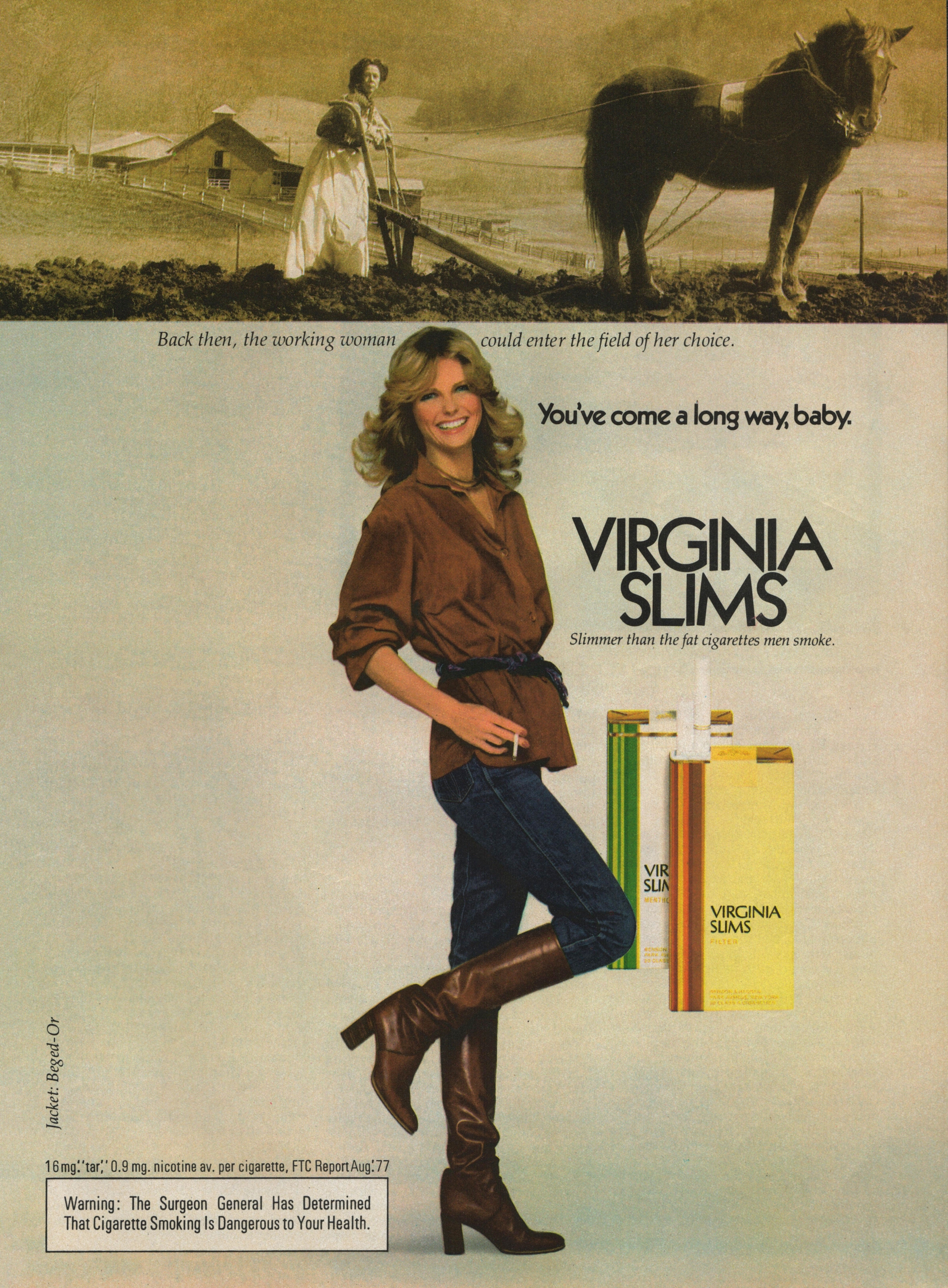
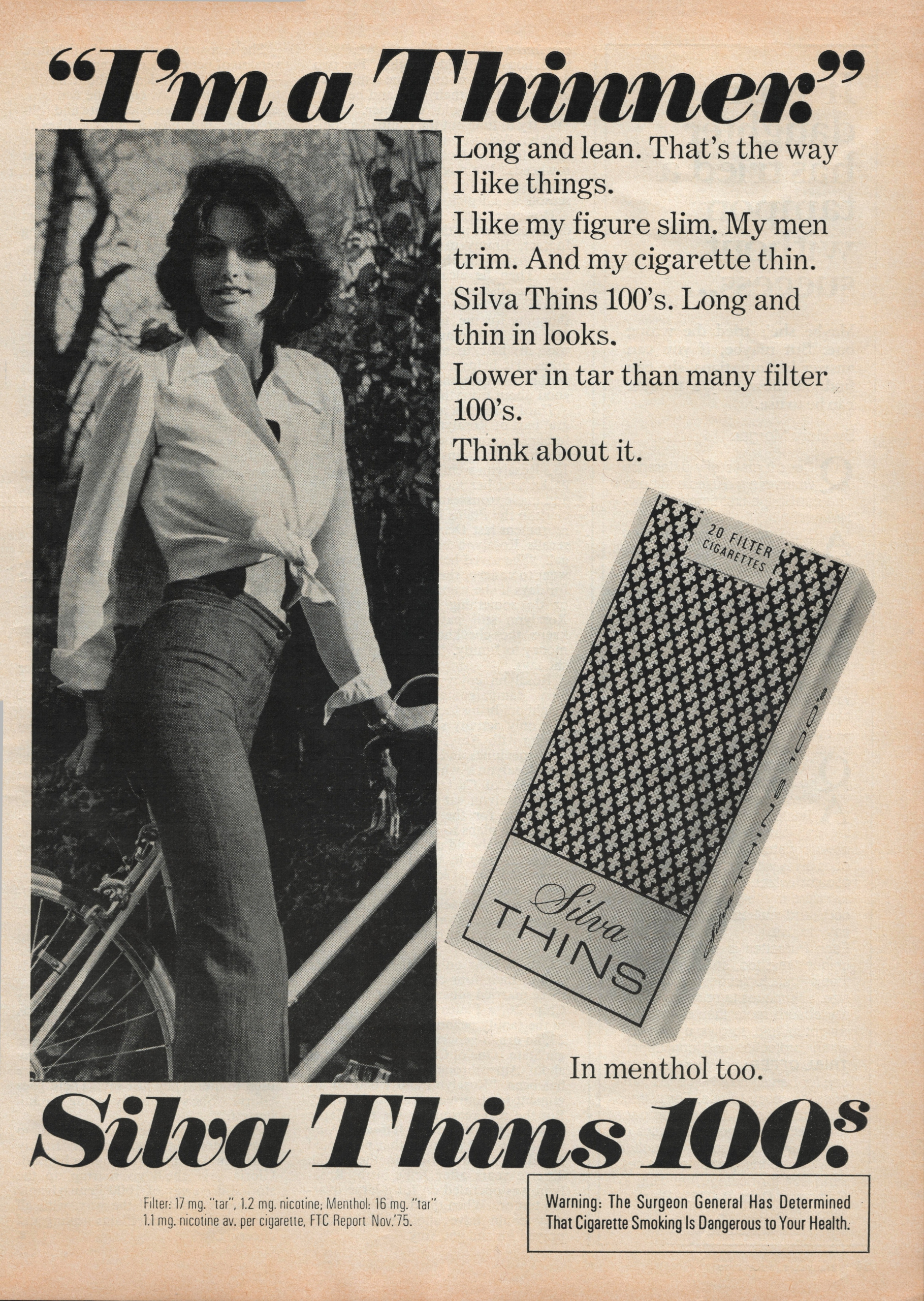 The header from a Virginia Slims ad from 1970 has a black and white horizontal photograph of a woman behind a horse driven plow with the facetious caption “Back then a working woman could enter the field of choice.” A contemporary woman, rocking a pair of black jeans with tall stylish boots, is pictured below with the now familiar slogan “You’ve come a long way, baby.” Similarly a 1976 advertisement for Silva Thins notes “I’m a Thinner. Long and lean, that’s how I like things. I like my figure slim. My men trim. And my cigarettes thin. Silva Thins 100’s.” The vintage ads are endless, but the message is always aimed at linking smoking and especially that smoking certain brands, will promote independence, happiness, good choices, good health, a convivial lifestyle, and contentment in relationships.
Popular culture promoted, and I’m sorry to say, still promotes smoking as a positive, liberating and human connector experience through movies, television, theatre, musical events, and advertisements. Just the single moment in the 1942 movie classic Now, Voyager, starring Bette Davis and Paul Henreid, when his character lights two cigarettes at one time and offers one to Bette Davis, is full of sexual tension and thus remains an iconic movie moment. Some people believe the smoking era is over, but some journalists report there is a resurgence in smoking, not only pot, but cigarettes, cigars and pipes. Ashtrays are making a comeback, and not just as change holders and trinket dishes.
If you are of a “certain age,” you can recall several early childhood “art” projects that involved clay. One is the ubiquitous handprint with a hanging device on the back, though usually winding up in a box in the attic full of childhood mementoes. The other is the perfect Father’s or Mother’s Day clay ashtray created in grade school or perhaps summer camp. The 1938 movie “Woman Against Woman,” uses the child’s gifted-to-Daddy Christmas ashtray as part of the movie plot. It was probably just interpreted as touching and manipulative at the time the movie was released.
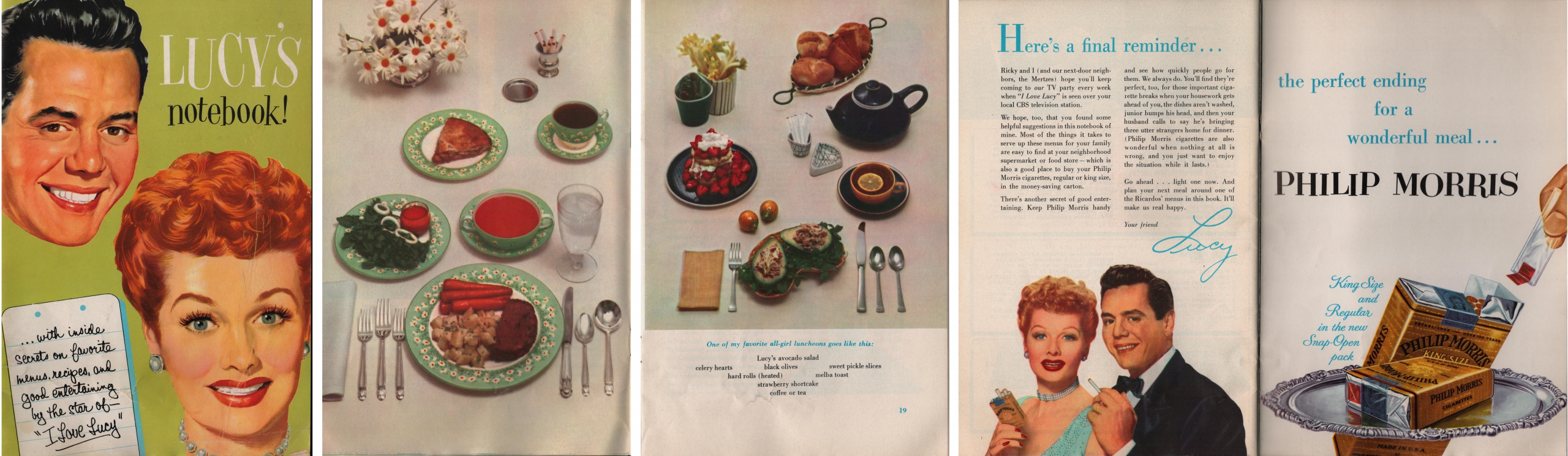
A more playful smoking scene can be seen in I Love Lucy episodes where Lucy is stubbing out her cigarette in a Glidden Pottery shirred egg server. Lucille Ball and Desi Arnaz both smoked and the Philip Morris tobacco company was a sponsor of the television show. Philip Morris released a stapled booklet titled “Lucy’s Notebook” in the early 1950s, which featured I Love Lucy’s star sharing favorite recipes between pages with images of her and Ricky smoking. The cigarettes are in their little cup at the table with a matching ashtray nearby. The booklet concludes with a quote, “Here’s a final reminder…the perfect ending for a wonderful meal…Philip Morris” (packs of which are displayed on a silver serving platter).
And that’s not all folks…when it comes to women and the “domestication of the cigarette”
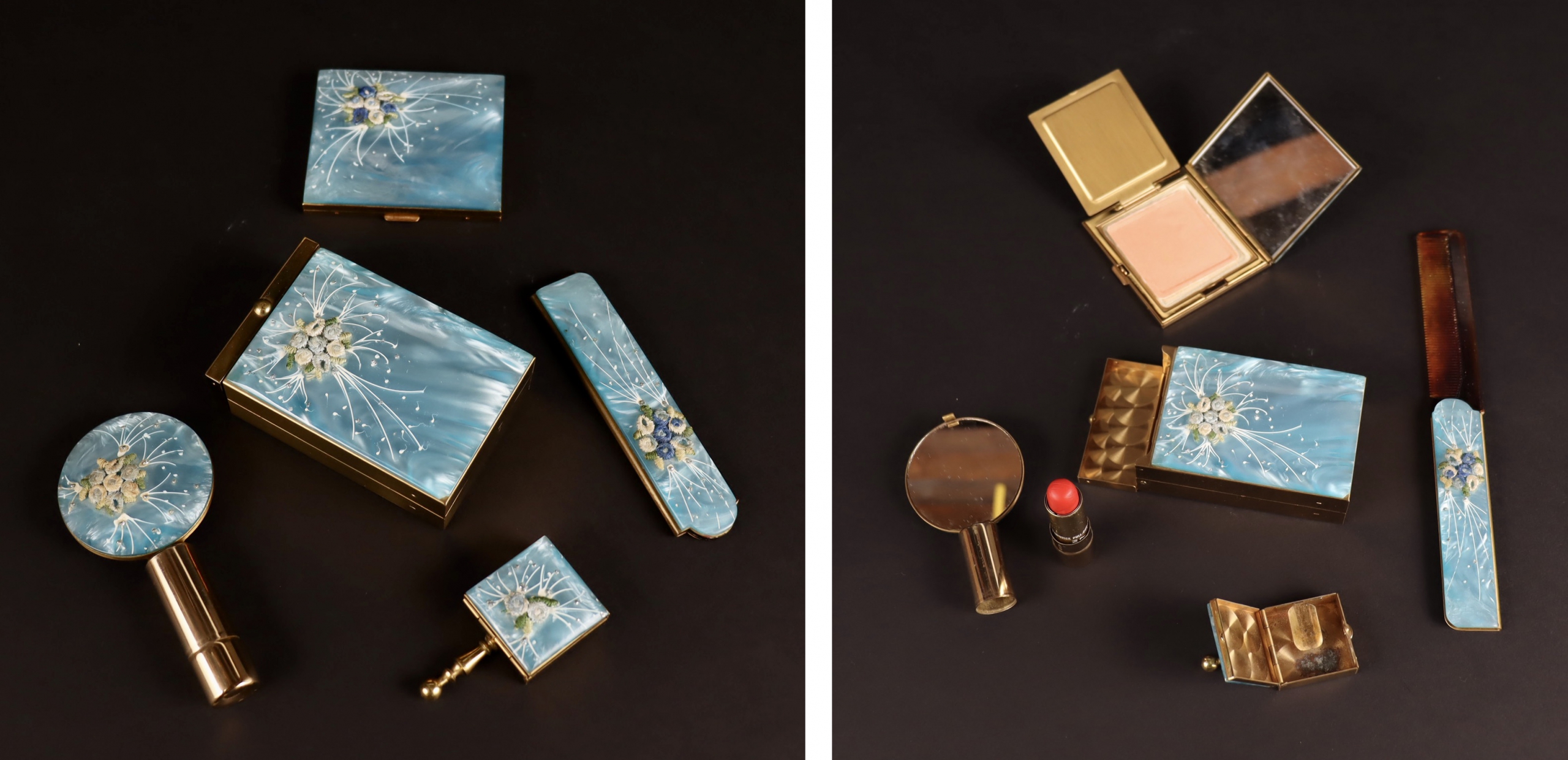
Ashtray includes more than ashtrays when it showcases the intention of the tobacco industry to attract women to smoking and keep them interested. Pocket ashtrays and jewelry comprise still another source of appeal to the female smoker. The exhibition includes a woman’s small purse vanity set created by Wiesner of Miami in the 1950s, with a matching decorative cigarette case, pocket ashtray, comb, compact, and lipstick with attached mirror all encased in pale blue mother-of-pearl with bits of floral embroidery embellishment. Very classy and alluring accessories for the female smoker (IMoDD 2025.85).
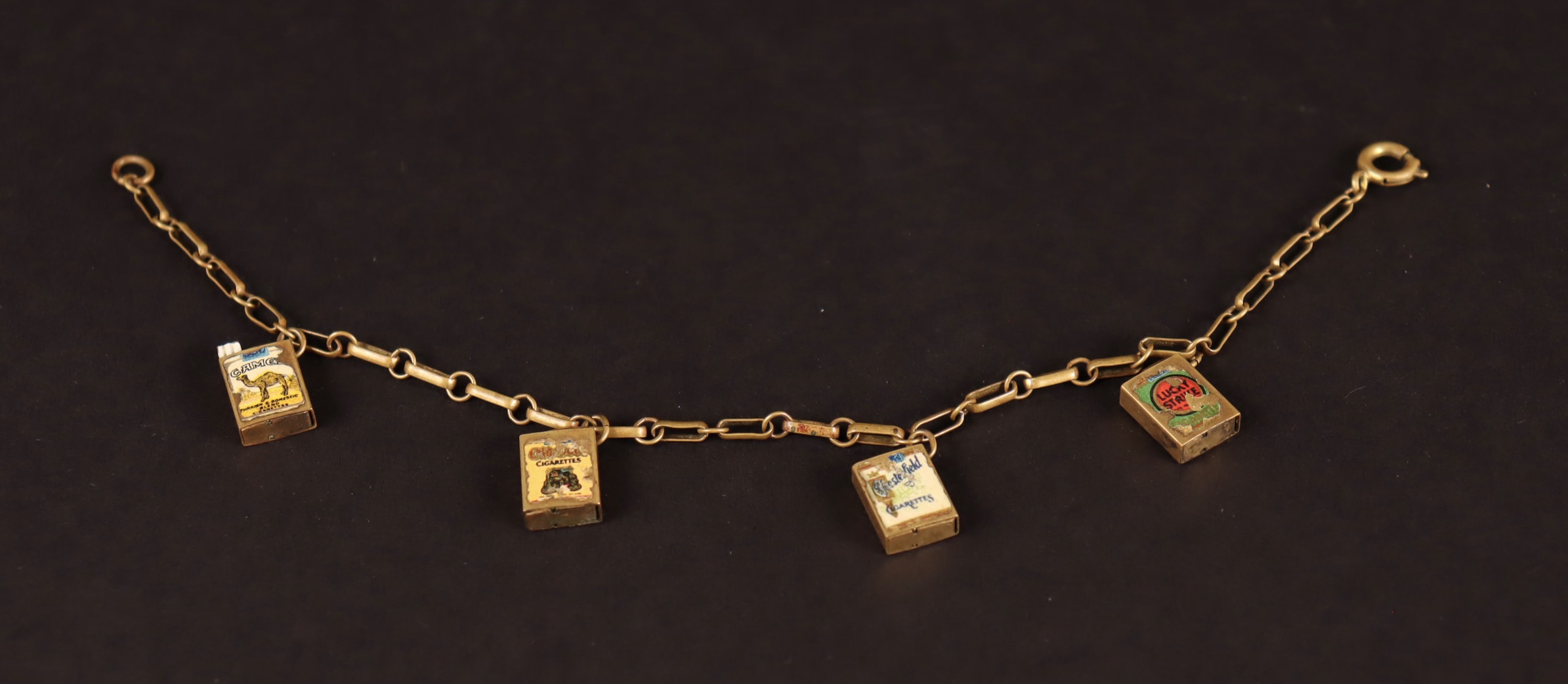
Jewelry was another alluring attraction for the female smoker. The exhibition shares the story of a 13-year-old girl from New Jersey who in around 1933 not only smoked and had a boyfriend attending Princeton but wore a tiny charm bracelet adorned with tiny packs of Lucky Strike, Camel, Chesterfield and Old Gold brand cigarettes. If you tap the end of the teeny tiny pack of Camel cigarettes, the little cigarettes still pop out. Not only does IMoDD have the story, but the charm bracelet was donated to the museum by Cynthia Sanford, daughter of the young smoker (IMoDD 2025.115).
Investigate any prominent brand of cigarettes and you’ll find a history filled with celebrity sightings and appalling stories. Lucky Strike has been a popular brand of cigarettes for more than a hundred years. And during that time, it has enjoyed celebrity endorsements by the likes of Amelia Earhart, who became the face of Lucky Strike in 1928 when she claimed to have smoked Lucky Strikes on her flight from Canada to England. And then in the 1920s, the brand was sold as a path to thinness for women, which caused the sales to increase by 300% during the first year of the ad campaign. In the 1930s Al Jolson endorsed the brand. His quote is so cringe worthy that this curator decided not to include it. This was followed by the kerfuffle over women’s apparent reluctance to buy Lucky Strikes because of their green and red packaging. But instead of changing the packaging at the time, marketing then targeted the fashion industry and endeavored to make green a fashionable color. This was followed by paying Hollywood actors and actresses large sums of money to endorse Lucky Strikes. These paid celebrities included Clark Gable, Joan Crawford, Myrna Loy, Robert Taylor, Gary Cooper, and Spencer Tracy. Bette Davis began endorsing the product in 1944, followed by Lucky Strike sponsoring the Jack Benny’s radio and television show.
Yet the strangest campaign was the one in 1942, when Lucky Strike’s dark green signature packaging was changed to white, with the campaign slogan “Lucky Strike Green has gone to war.” According to sources, Lucky Strike claimed the change was made because the copper used in the green coloring was needed for World War II. The story goes that the green color was derived from chromium. Designer Raymond Loewy was hired to improve the packaging, and he did that by changing the packaging from green to white which had a greater appeal for women. He also had the image on both sides of the packaging which gave the product more visibility.
 Lucky Strikes were one of the brands included in the C-rations provided to American troops during World War II. Thought to be a morale booster for soldiers, this practice was continued during the Korean and Vietnam Wars, ending in 1976. There is more to this story, but the packaging colors assist in corroborating the dating of the charm bracelet with the little packs of cigarettes dangling from the chain. The faded Lucky Strike pack has the dark green packaging from the 1930s.
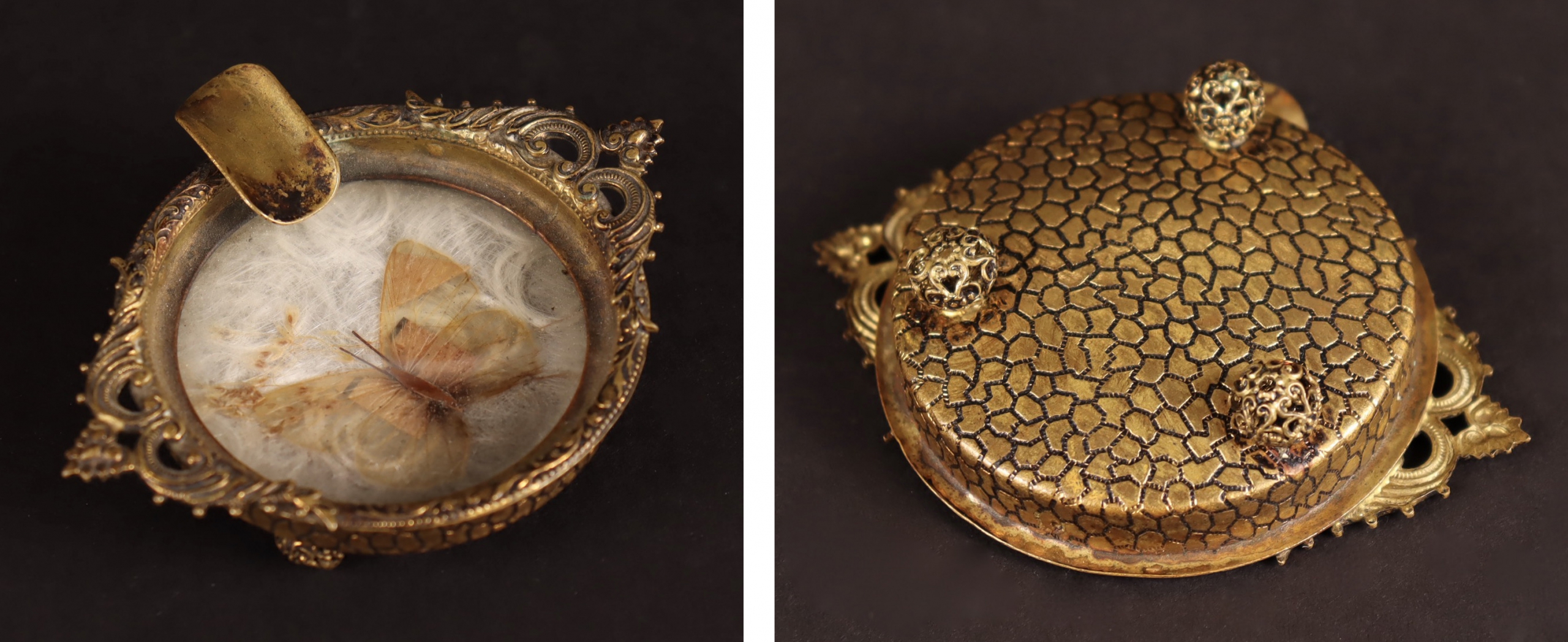
During the Victorian era there was a fascination with mourning rituals and sentimental keepsakes involving hair. Human hair was incorporated into art, jewelry, and memorials. A rarity in the IMoDD collection is a very small delicate metal filigree ashtray with tiny ball feet that was first believed to be from the Victorian era when acquired. It is sized to fit in the palm of a woman’s hand, with a glass center that appears to have captured the remains of a small butterfly along with fibers resembling human hair. However, it was most likely produced in Japan in the 1960s.
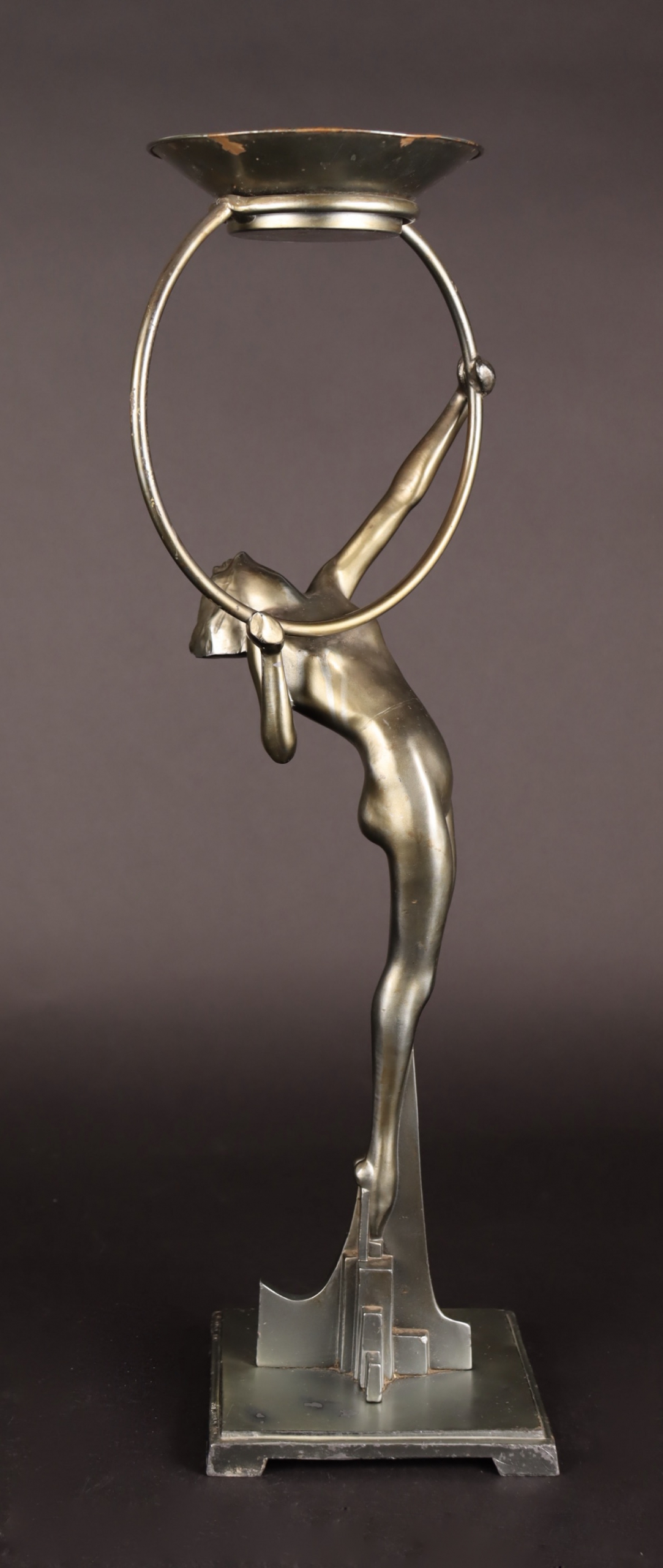
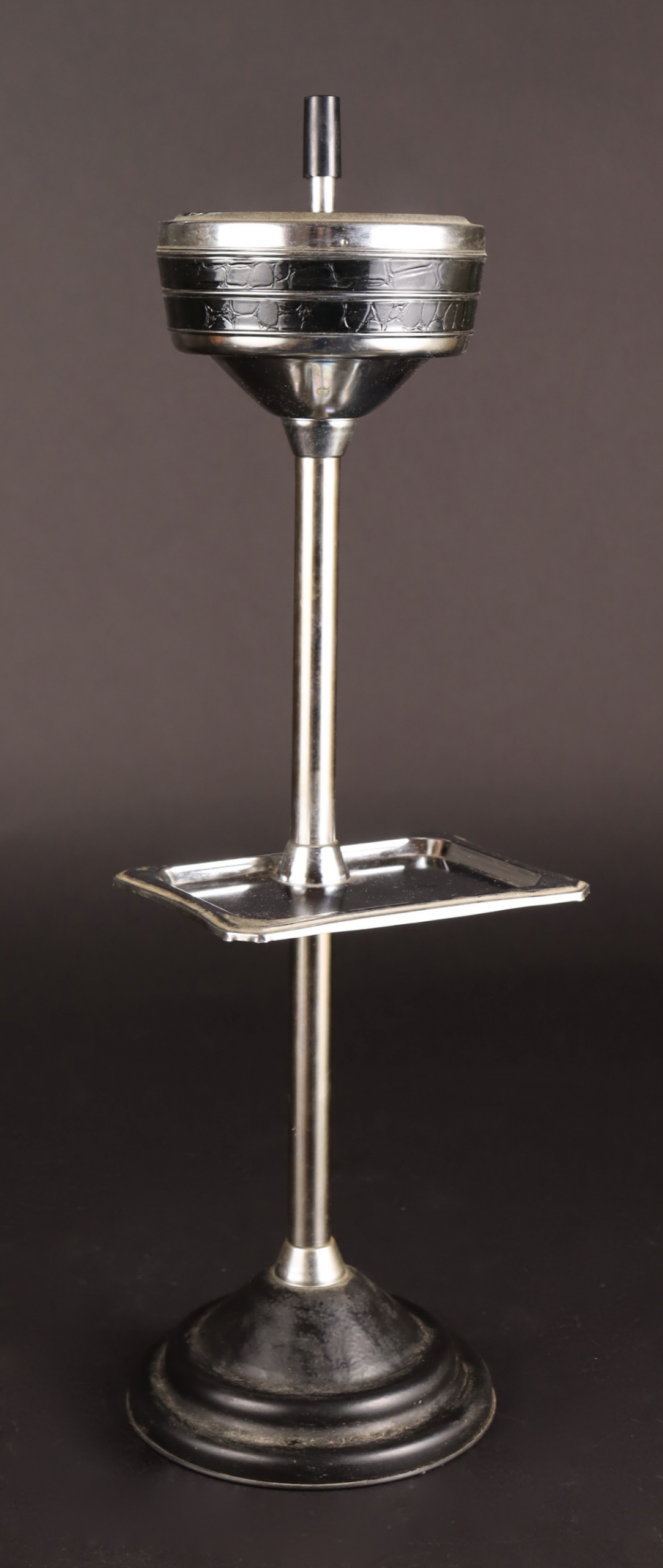
A few genres of ashtrays unrelated to dining are featured in this special ashtray, chief amongst them are four tall free-standing floor stand varieties including a memorable Art Deco era Frankart cast pewter ashtray with brass and copper accents, with a female nude doing the heavy lifting. Another is a Chase chrome floor ashtray stand with the added feature of “disappearing” the ashes and cigarette butts. Another appears to have been rescued from a Mid-20th century hotel, and the final grungy one found a new home in our “I Love Lucy” vignette full of comfort furniture and accessories. These free-standing ashtray stands have a lot of appeal and may have even been used next to the dining table to keep food and dishes and smoking separate from one another.
The one thing I have learned through both living and researching the topic of ashtrays is that EVERYONE has an ashtray story. Everyone. There is more than one ashtray museum, and the United States Military Ashtray Museum has at least 4 ashtrays owned by Adolph Hitler, who apparently did not smoke. There are World War I and II ashtrays made out of artillery shells.
Elvis Presley smoked but his manager/handler did not want that fact to be widely known. Elvis generally smoked Cigarellos if he smoked anything. Famous celebrity smokers such as cigar-smoking George Burns owned a lot of ashtrays. Other smokers like Lucille Ball and Desi Arnaz had Philip Morris as their TV advertising sponsor and a delightful and at the same time hideous booklet provides the images to prove it.
There are one or two inescapable and memorable quotes about smoking. One, of course, is by Mark Twain. He once wrote, “Giving up smoking is the easiest thing in the world. I know because I’ve done it thousands of times.”
A lessor known quote comes from Lin Yutang (1895-1976) who was a prominent 20th century Chinese scholar, writer and inventor. In China he is well-known for his invention of a Chinese typewriter. In 1937 he wrote, “Much as I like reasonable persons, I hate completely rational beings. For that reason, I am always scared and ill at ease when I enter a house in which there are no ashtrays.”
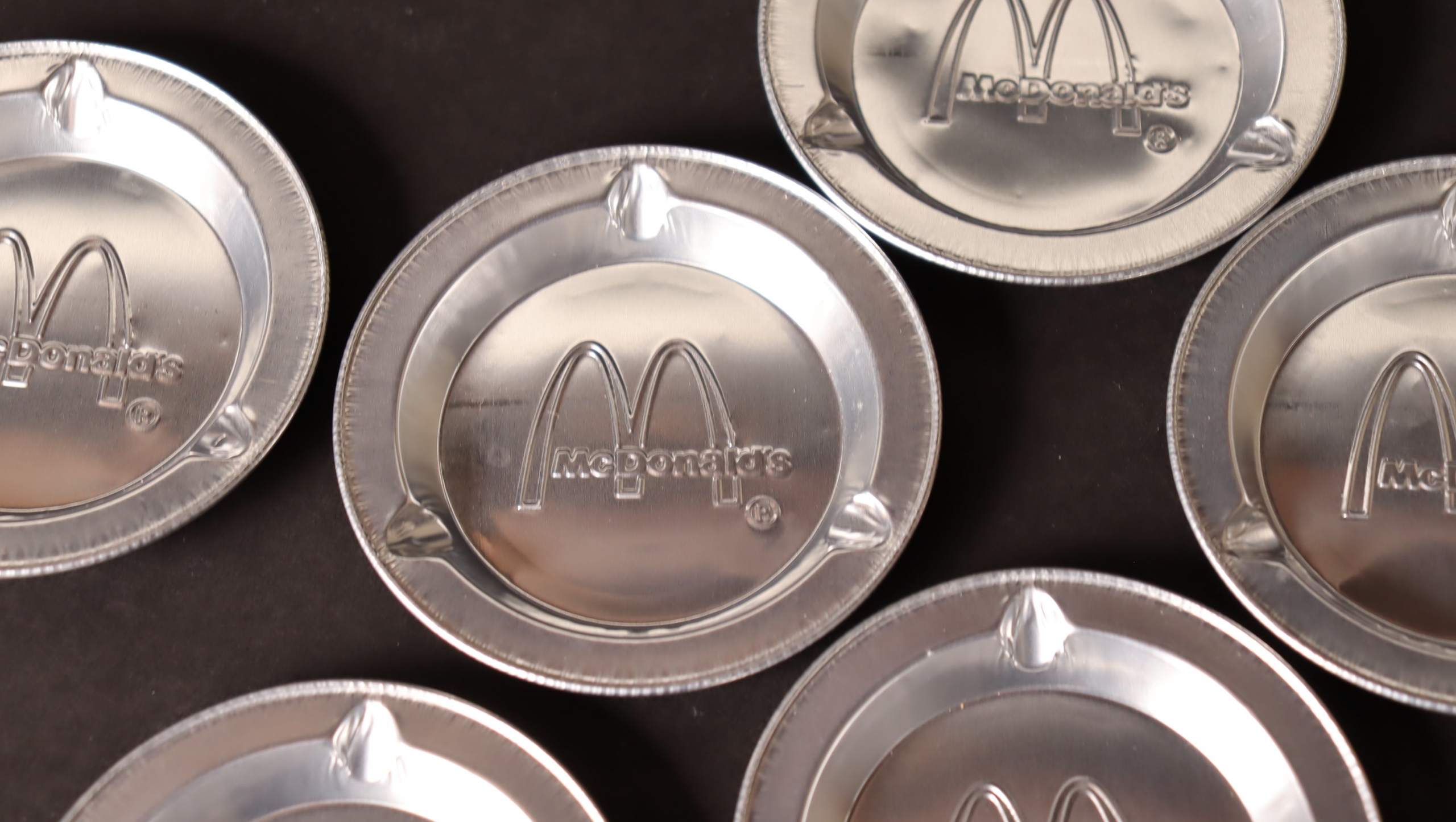
Not all ashtrays were intended to be kept and treasured with grandma’s floral china dishes. McDonald’s small disposable aluminum ashtrays are now collector’s items. They can be crumpled up and thrown away, or they can be reused as nut dishes, tidbit trays, and key holders. They were manufactured beginning sometime in the 1960s-1980s, after the original amber glass ones were discontinued. The smoking ban in restaurants went into effect in 1994. They were on their way out a few years before that. Some manufacturers of the disposable aluminum types have pallets full of them in their warehouses and are selling them at handsome prices in various ways. There are examples in the IMoDD permanent collection.
Not all smoking related tabletop objects are ashtrays. There are cigarette lighters, cigarette boxes, and silent butlers. Silent butlers used to be all around smokers and diners, but now some people look baffled even by the term and wouldn’t know one if they saw one. They are a lidded box in the shape of a small frying pan, usually made of metal, and have a hinged lid and a handle. They were used in the 20th century to remove and contain crumbs from the table or ashes from ashtrays.
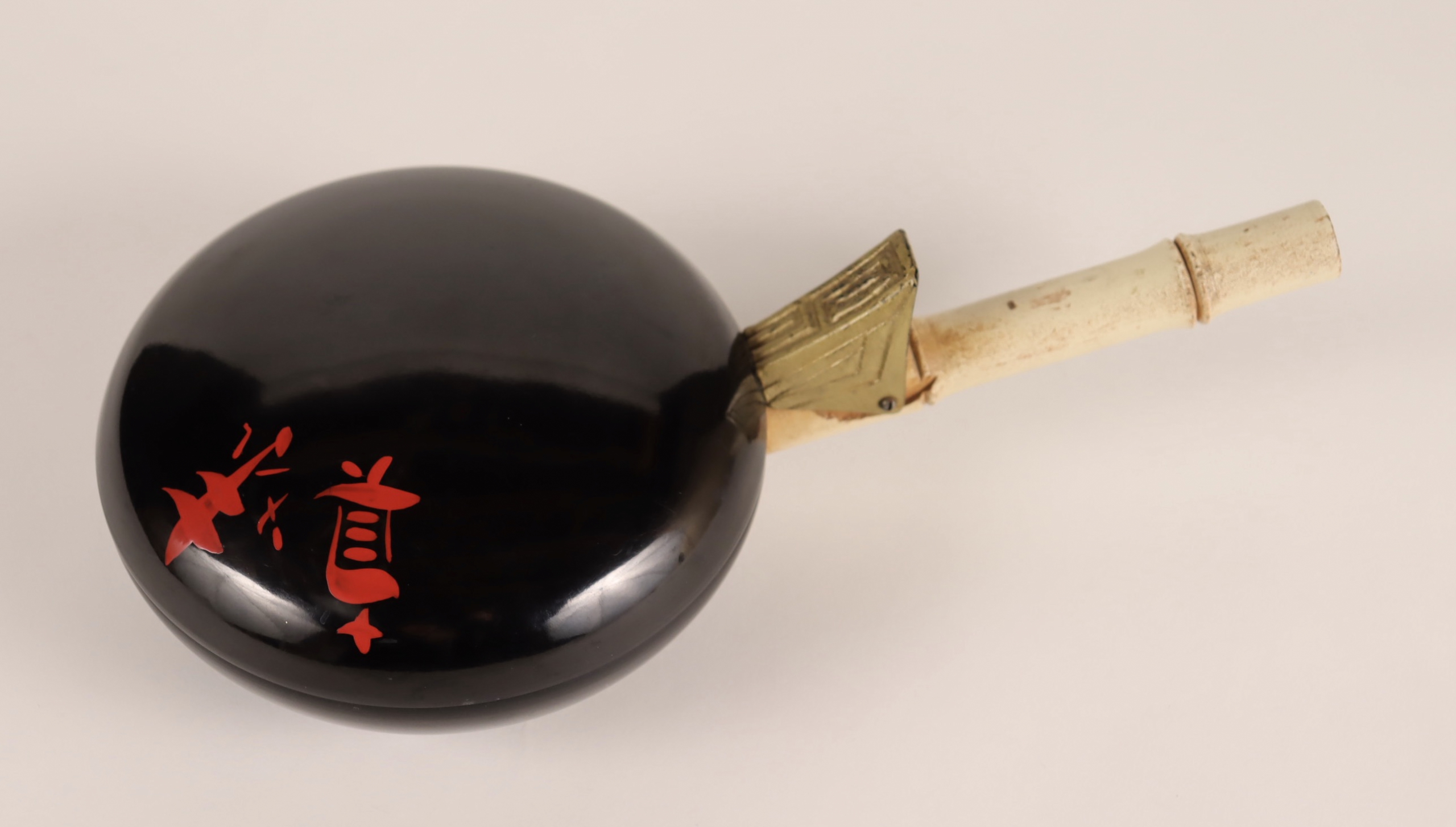
Around 1948, Kaye LaMoyne designed a silent butler as part of his Ebonyte line, early melamine pieces with a black, red or green lacquer look, probably manufactured by Branchell in St. Louis. The Ebonyte example has an Asian inspired bronze-looking metal hinge and two hand-painted Chinese characters on the lid that can be translated as “good taste.” There is a bamboo handle, matching other cup or bowl handles in this extraordinary dining set. (IMoDD 2020.55) While it seems a bit illogical to have a silent butler made of plastic, process of elimination tells one this is its intended function.
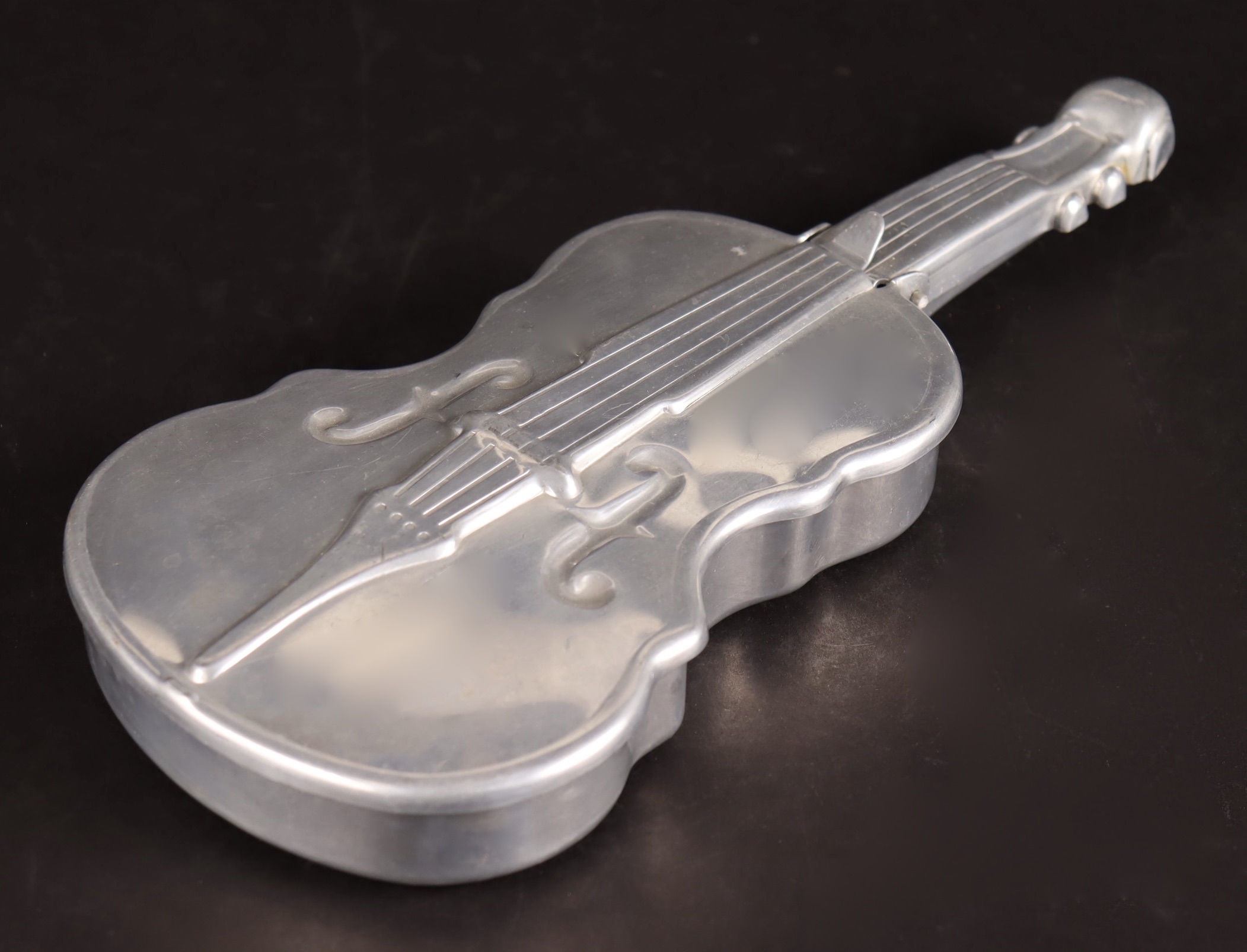
A second silent butler in the IMoDD collection is a charmer. In the shape of an aluminum violin and nearly a foot in length. This piece of Mount Vernon Ware created by Stolz & Associates of Cleveland in the 1950s, is a conversation piece, besides being a functional silent butler.
Everyone has a story about ashtrays. Everyone. This exhibition tells a story that begins with the intersection of dining and smoking at the table. Part of the narrative is historical and part is a personal journey. Just like many dining experiences, it is a shared journey with memories to savor and laugh about, and lessons to be learned. Beyond the beautiful designs of many ashtrays there are appalling and devastating tragedies that link us all together. Come for the dishes; stay for the ashtrays. Leave with the knowledge that the conversation about dining and ashtrays will be ongoing and spirited.
Further Reading
Joseph Bullmore, “Inside the Revival of the Vintage Ashtray,” L’Officiel 12/16/25.
Esther Zuckerman, “Pop Culture Takes Up Smoking Again,” The New York Times, 6/11/25.
Ezra Shales, Etiquette in Motion: A Comparative Consideration of Edith Heath’s Ashtrays and Mugs,” in Edith Heath: Philosophies (UC Berkeley Environmental Design Archives, 2021), 102-113.